

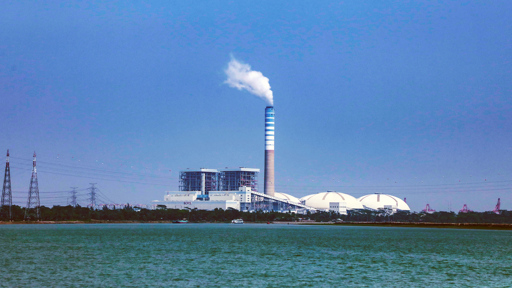
Riaz Panchayet used to farm papaya, cucumber, okra and bananas on his land in Madhupur village, located in southern Bangladesh’s coastal Patuakhali district. These days, he runs a small tea stall near one of the gates of the Payra Power Plant, and worry has replaced the seasonal rhythm of harvests. “I notice a layer of ash on the leaves of the plants and low production,” he says. “There are coconut trees on my farm; I climb them for pruning or collecting coconuts, and my shirt turns black due to the ash. We are used to bathing in an open pond, but for the last several years there has been an itching problem. My eyesight is affected, too. It is all happening because of the coal power plant.” Panchayet says he lost almost 1 hectare (2.4 acres) of land to the plant. The reaming 1 hectare, he says, is waterlogged by an ill-planned drainage system that leaves the power station’s discharge sitting stagnant on his fields. Across a large area of Kalapara subdistrict in Patuakhali, where the coal-fired Payra Power Plant is located, residents tell versions of the same story. A recent study linked local suffering related to air quality and fly ash to the power plant authority’s failure to maintain proper environmental guidelines for protecting the local environment and ecology. The Payra 1320 MW Thermal Power Plant, operated by Bangladesh-China Power Company Ltd., a joint venture between Bangladesh and China, started operations in 2020. The plant consumes 10,000 to 12,000…This article was originally published on Mongabay
From Conservation news via This RSS Feed.