

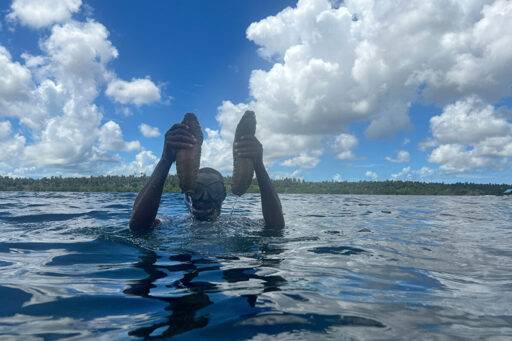
PEMBA, Tanzania — Like many coastal communities across East Africa, the residents of Shamiani have grown accustomed to watching the sea yield less and less. Warming waters, degraded marine habitats and decades of fishing pressure have all taken a toll on the resources that once sustained local livelihoods, according to community members. On Tanzania’s Pemba Island, a part of the semi-autonomous region of Zanzibar, Shamiani is no exception. Here, however, residents are trying something different. Ropes now mark out protected sections of shallow seagrass meadows, the result of months of community meetings and negotiations over how the area should be managed. For generations, the island’s coastal waters have supported fishing families. But in recent years, many residents say nearshore resources have steadily declined. Sea cucumbers, once abundant enough to be harvested and processed locally, have become increasingly scarce. Fishers and gleaners now work harder for smaller returns, trying to make a living from coastal waters that many say are less productive than they once were. A view of the no-take zone operated by Asili in Shamiani, on Pemba Island, where protected sections of shallow seagrass meadows are used to grow sea cucumbers. The area was established following months of community meetings and negotiations over its management. Image by David Akana/Mongabay. That decline is what led Asili, a Tanzania-based aquaculture company working with communities in Pemba since 2022 to ranch sea cucumbers inside locally protected marine areas. The model aims to restore depleted coastal ecosystems, generate income from a high-value export…This article was originally published on Mongabay
From Conservation news via This RSS Feed.