

ENSO variability in recent decades was more than 36 percent higher than during the preindustrial period.
On Thursday, the journal Science published a study showing that El Niño-related temperature swings in the Pacific have become stronger than at any point measured in the preindustrial portion of a roughly 1,000-year record.
RELATED:
Climate Change Adds Month of Dangerous Heat For 560 Million Children
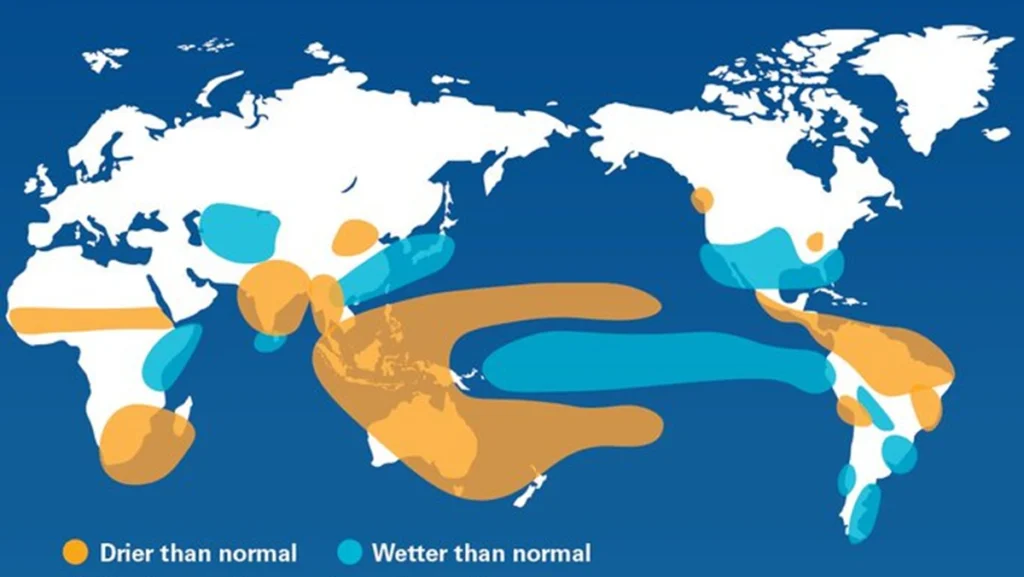
The findings add to evidence that global warming may be changing the El Niño-Southern Oscillation (ENSO), a natural climate cycle that affects weather around the world.
The study found that ENSO variability in recent decades was more than 36 percent higher than during the preindustrial period, with the strongest increase occurring over roughly the past 40 years.
ENSO includes the warm El Niño phase and the cold La Nina phase. Both can shift rainfall and temperatures far beyond the Pacific, affecting drought, floods and agriculture in many parts of the world.
2026 and 1997 are El Niño twins, both featuring 8°C ocean temperature anomalies beneath the surface of the Pacific.
But they’re not identical.
This year’s El Niño is warmer across a wider region, meaning there’s more heat in the tank and its impacts won’t exactly mirror 1997. pic.twitter.com/fxqNGGBjFc
— Ben Noll (@BenNollWeather) July 25, 2026
The recent increase was largely driven by more frequent and stronger El Niño events. The change also paralleled the rise in global temperatures, it added.
The findings come as a new El Niño develops in the tropical Pacific. The U.S. National Oceanic and Atmospheric Administration’s climate prediction center said on Aug. 13 that El Niño was strengthening, with a greater than 90 percent chance of a very strong event during the Northern Hemisphere fall and winter of 2026-27.
The new Science study does not indicate that every future El Niño will be stronger. It said, however, that recent eastern Pacific ENSO variability exceeds the range found in the preindustrial centuries covered by the coral record.
teleSUR/ JF
Source: Xinhua
From teleSUR English via This RSS Feed.