

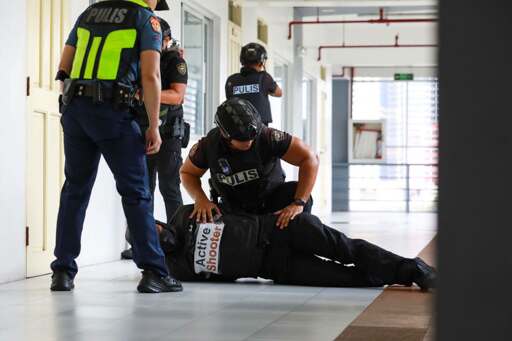
Psychiatrists and child mental health specialists insist that preparedness and psychological well-being should not be treated as competing priorities.
MANILA — The Department of Education’s (DepEd) plans to conduct a nationwide simultaneous school safety drill for active attack incidents has drawn concern from mental health professionals, who warned that hyper-realistic active shooter simulations may cause psychological harm to learners while offering little evidence that they improve school safety.
In a joint statement released on August 22, the Philippine Psychiatric Association (PPA) and the Philippine Society for Child and Adolescent Psychiatry (PSCAP) called for the deferment of any simulation of a live shooter attack drill, saying school preparedness must remain trauma-informed and evidence-based.
The two organizations stressed that they support efforts to make schools safe and resilient but argued that the methods used to prepare students and school personnel matter as much as the goal itself.
What prompted the call for deferment?
The statement came in response to a DepEd memorandum dated August 12 directing schools nationwide to conduct a nationwide simultaneous school safety drill for active attack incidents.
The PPA and the PSCAP said active attack simulations differ significantly from routine drills for earthquakes, fires, and other emergencies.
The groups said schools regularly conduct disaster preparedness exercises because these activities teach practical responses to real emergencies without exposing learners to graphic or highly realistic depictions of violence.
They argued that live shooter simulations introduce a different level of psychological risk because they often recreate violent scenarios that place participants in situations resembling actual attacks.
According to the groups, these exercises can expose children and adolescents to fear, uncertainty, and distress that may linger long after the drill ends.
What does the evidence say?
Mental health professionals based their position on studies and recommendations from medical, educational, and safety organizations.
The National Academies of Sciences, Engineering, and Medicine reported in 2025 that available evidence remains insufficient to conclude that active shooter simulations improve safety outcomes.
The report also advised schools against using high-intensity drills and deceptive practices.
The PPA and the PSCAP cited a large-scale study published in 2021 that analyzed 54 million social media posts from 114 schools in the United States.
Researchers found a 42 percent increase in language associated with stress and anxiety after shooter drills.
The same study documented a 39 percent increase in language associated with depression.
Researchers found that these effects remained evident for at least 90 days after the exercises.
The organizations also cited a 2020 policy statement from the American Academy of Pediatrics, which cautioned against involving children and adolescents in high-intensity crisis simulations.
The academy said schools should never rely on deception when conducting emergency preparedness exercises involving young people.
The groups also referenced guidance released this year by the National Association of School Psychologists, the National Association of School Resource Officers, the American Academy of Child and Adolescent Psychiatry, and Safe and Sound Schools.
The guidance recommended banning hyper-realistic simulations, requiring advance notice before drills, and involving school mental health professionals in planning and implementation.
Why are children considered particularly vulnerable?
Mental health experts said children process fear and traumatic experiences differently from adults.
The PPA and the PSCAP warned that realistic simulations can trigger strong emotional reactions among learners, especially those who have previously experienced violence, abuse, displacement, disasters, or other traumatic events.
The organizations noted that some learners may also have disabilities, sensory-processing needs, or mental health conditions that make them more vulnerable to distress during highly immersive drills.
Mental health professionals argued that schools should avoid preparedness measures that inadvertently create psychological harm while attempting to prevent physical harm.
The groups emphasized that protecting learners requires balancing security measures with children’s developmental and emotional needs.
What alternatives do professionals recommend?
The organizations said schools can strengthen safety measures without subjecting students to simulated violence.
They urged schools to prioritize practical security measures such as locks, controlled entry points, and perimeter protection.
They also recommended trauma-informed protocols developed with the participation of guidance counselors, psychologists, psychiatrists, and child psychiatrists.
Instead of staging live shooter simulations, the groups proposed the use of tabletop exercises.
These discussion-based activities allow teachers, school staff, parents, and administrators to walk through emergency scenarios and clarify responsibilities without exposing children to frightening situations.
Participants can discuss questions such as who secures classrooms, who contacts parents, and where students should be directed during an emergency.
The organizations said these exercises can improve coordination and preparedness while minimizing psychological risks.
They also urged schools to conduct needs assessments before implementing drills so that emergency plans reflect the realities of each school community.
Call for task force
The PPA and the PSCAP proposed the creation of a joint Mental Health Task Group composed of representatives from the Department of Education, the Department of Health, and professional mental health organizations.
The groups said the task force could generate Philippine-specific data on the effects of active attack drills before any nationwide program expands further.
They noted that most available research comes from other countries and stressed the need for evidence that reflects local conditions, school environments, and student experiences.
The proposed task force would also help ensure that future school safety policies integrate mental health considerations from the outset rather than as an afterthought.
School safety measures
The PPA and the PSCAP said their position does not oppose school safety initiatives.
The organizations stressed that they share the same objective cited by the DepEd: protecting Filipino learners.
“The joint request of PPA and PSCAP to defer the simulation of a live shooter attack drill is anchored in the same goal that guided DepEd’s directive, the protection of Filipino learners,” the groups said in their statement.
They argued, however, that preparedness efforts must rely on approaches that prevent harm rather than create new risks.
The organizations maintained that schools remain safest when security measures are preventive, trauma-informed, and grounded in evidence.
For mental health professionals, the question is not whether schools should prepare for emergencies.
The question is how schools can prepare children for danger without exposing them to unnecessary trauma.
As debates over school safety continue, psychiatrists and child mental health specialists insist that preparedness and psychological well-being should not be treated as competing priorities.
They argue that effective school safety policies must protect both the physical safety and mental health of learners so that schools remain places of learning, resilience, and hope. (RVO)
The post EXPLAINER: Why mental health professionals want DepEd’s live shooter drill deferred appeared first on Bulatlat.
From Bulatlat via This RSS Feed.