

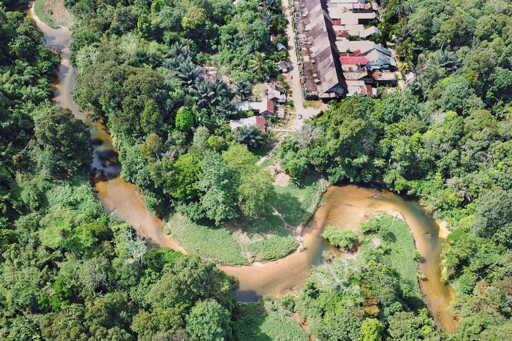
Villages in Indonesia’s West Kalimantan saw less forest loss during the COVID-19 pandemic when conservation groups provided health and livelihood support, a new study has found, suggesting social safety nets can help protect forests during economic crises. The peer-reviewed study, published last month in Lancet Planetary Health, suggests forest loss in West Kalimantan province on the Indonesian part of Borneo fell sharply during the pandemic, as weak timber demand and travel restrictions made logging less profitable and harder to carry out. At the same time, villages with access to alternative livelihoods and other support were less reliant on forests for income, the paper adds. The researchers say their study is among the first to combine household surveys with detailed satellite data to examine how the pandemic affected rural livelihoods and forest loss in the same communities, offering a closer look at how economic shocks and social support can influence pressure on tropical forests. “As the pandemic started, we expected economic hardships to cause illegal logging to increase again,” Skylar Hopkins, an assistant professor at North Carolina State University and the lead author for the new study, said in a statement. Mapping deforestation trends Before the pandemic, average forest loss was 52% lower in NGO-affiliated villages than in unaffiliated villages, the study finds. Indonesia has the world’s third-largest tropical forest area, a major store of biodiversity and carbon, long threatened by logging, agricultural expansion and fires. The researchers surveyed 10 villages in West Kalimantan in late 2021: six communities supported by…This article was originally published on Mongabay
From Conservation news via This RSS Feed.