
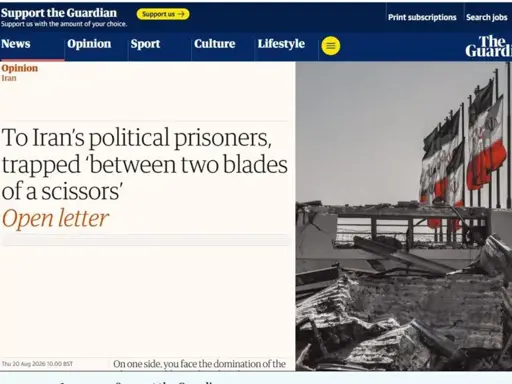

A letter published by the Guardian, called “To Iran’s political prisoners, trapped ‘between two blades of a scissors’” published on August 20, is receiving backlash from progressive media outlets like BreakThrough News, Vpol, and withdrawals from signatories like American historian Robin Kelley and Nisrin Elamin, a Sudanese professor at the University of Toronto.
Elamin said she didn’t agree with the content of the letter or the process through which her name was added to it, and said the letter drew a “false and harmful equivalency” between Iran and Israel.

Kelley, who withdrew his signature from the letter, said:
The circumstances in which we were asked to sign the letter were a bit shady. What appeared in the print wasn’t exactly what I had initially seen. But I take full responsibility for that.
View this post on Instagram
According to Ali Abunimah, executive director of the Electronic Intifada, Columbia University professors Rashid Khalidi and Nadia Abu El-Haj also removed their names from “the pro-imperialist, anti-Iran Guardian letter,” joining Kelley and Elamin.
Columbia professors Rashid Khalidi, Nadia Abu El-Haj quietly removed their names from the pro-imperialist, anti-Iran Guardian letter, joining Nisrin Elamin & Robin Kelley. No explanation given as far as I know for why they signed with such conviction and why they withdrew https://t.co/J1n9ts6NMT pic.twitter.com/q3ExS4ErMa
— Ali Abunimah (@AliAbunimah) August 25, 2026
Guardian’s letter slammed
BreakThrough News interviewed historian and Tricontinental director Vijay Prashad and Tehran-based journalist Navid Zarrinnal, both of whom called the letter a “failed” attempt to manufacture consent for war, with Zarrinnal adding that “literally no one read the letter” inside Iran.
Prashad said he does not believe Mumia Abu-Jamal, an incarcerated Black activist, signed the letter, adding:
His name was put on it. And that’s Mumia Abu-Jamal, who just recently had a completely different opinion about this war, saying this war is an enormous example for the people of the Third World.
“The Guardian should conduct an investigation,” Prashad added. The letter was “misaddressed,” arguing it was written in English and published in a British newspaper, meaning “it was never addressed to Iranians at all, but to Western liberals”
Zarrinnal, who joined the panel from Tehran, pushed back against the letter’s accusation of “hollow anti-imperialism,” arguing that Iran’s material support for Palestinian resistance represents “the most real, the most material expression of anti-imperialism and decolonization in the world right now.”
Zarrinnal added sarcastically:
Somehow writing a land acknowledgement under your emails is real anti-imperialism, but Iran actually assisting the Palestinians to gain back expropriated lands in a material way that is hollow anti-imperialism.
Vpol said that the letter appears amid threats of increased sanctions on Iran and “at precisely the moment new confrontation with Iran requires public legitimacy.”
Being vocal about Palestine has been an umbrella for actual “hollow anti-imperialists” who condemn genocide, but manufacture consent for the destruction of sovereign states and consequently killing Iranians, Syrians, Yemenis, Libyans and so on.
■ However, we join today with… pic.twitter.com/VYtSZ3fVa6
— VPol (@VocalPolitics1) August 24, 2026
Featured image via the Canary
By The Canary
From Canary via This RSS Feed.