

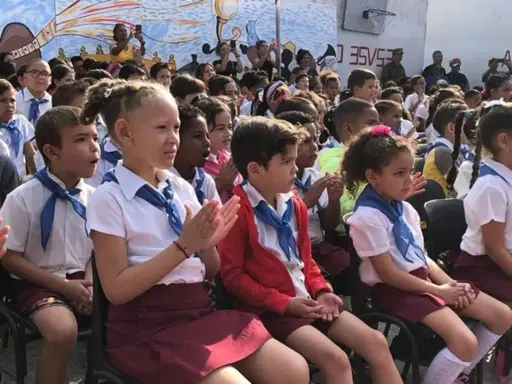
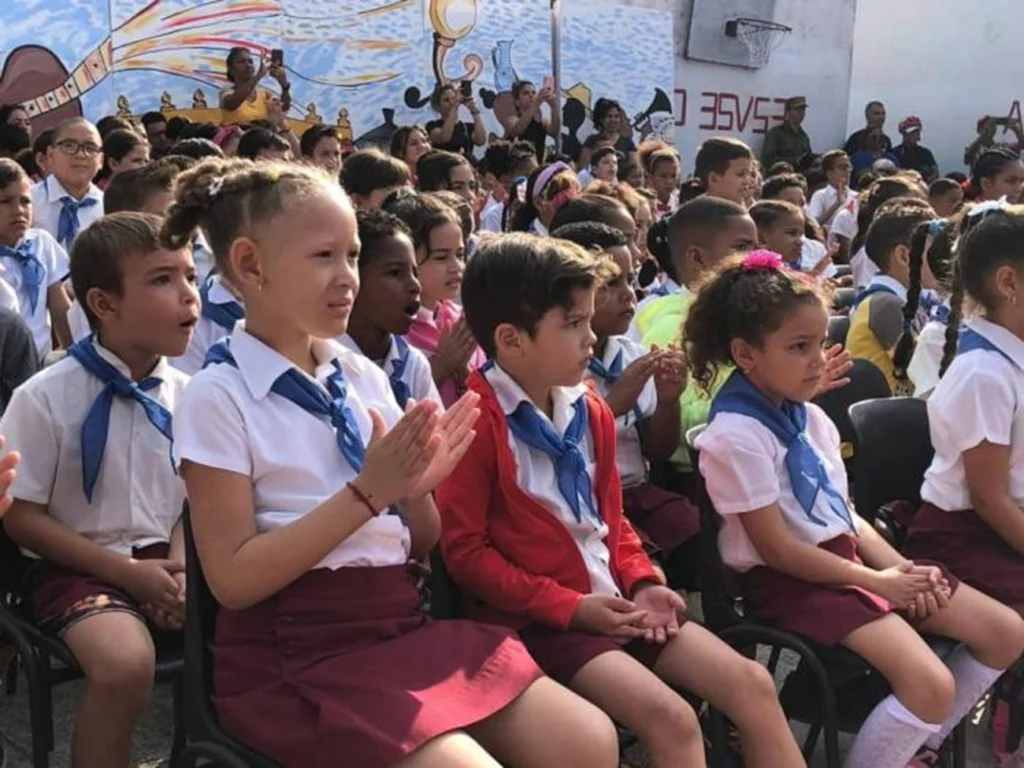
The new school year will adapt each institutional project to the conditions of the students and their communities.
On Wednesday, Education Minister Naima Trujillo reported that more than 1.5 million children and adolescents will begin the school year on September 1st, a period designed with “flexibility” and individualized responses.
RELATED:
Cuba and Vietnam Reaffirm Ties by Awarding Scholarships for Medical Studies
Trujillo emphasized that professionals in the sector have worked intensively to prepare educational facilities, even giving up vacations, to guarantee an orderly and safe start to classes.
She added that the new school year seeks to involve social and economic stakeholders, adapting each institutional project to the conditions of the students and their communities.
The implementation of double sessions is planned in some schools, in addition to complementary programs with youth participation, innovation projects, and cultural, sports, and technological activities.
Against all odds and with great effort, the Cuban government—currently fending off a US fuel blockade and economic war—has announced that schools across the country will reopen on September 1st.
Education in Cuba is free and universal, from kindergarten through Doctoral… pic.twitter.com/53oOeRuZt6
— David Ramírez Álvarez
(@DvidTwit) August 27, 2026
Among the innovative initiatives are collaborations with university students interested in computer science, artificial intelligence, music, or sports to offer more comprehensive learning experiences.
The Minister stressed the importance of rigorously monitoring students furthest from schools, who require specific and complex support to ensure their educational inclusion.
The start of the school year coincides with the opening of emergency shelters, established by the Code for Children, Adolescents, and Youth, to protect minors in situations of extreme vulnerability.
These shelters allow children and adolescents without parental care to receive immediate attention while it is determined whether they will be placed in foster homes, adoptive families, or safe environments that will assume parental responsibility.
#Cuba | Former South African Foreign Affairs Minister Nkosazana Dlamini-Zuma reflected on Fidel Castro’s legacy in Havana, highlighting Cuba’s contribution to African liberation struggles and the continued relevance of his ideas to the Global South.
She also called for… pic.twitter.com/q6NBKK4oIJ— teleSUR English (@telesurenglish) August 11, 2026
teleSUR: JP
Source: EFE
From teleSUR English via This RSS Feed.