

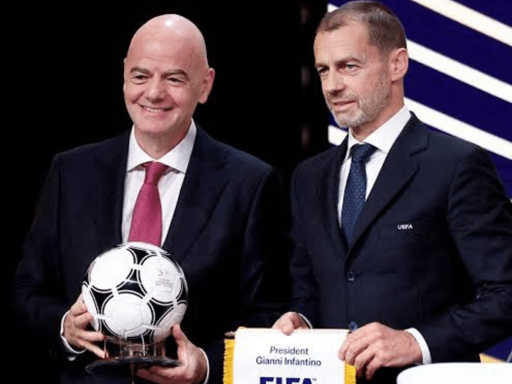

UEFA is poised to withdraw its threat to boycott FIFA competitions after receiving assurances that Gianni Infantino’s aborted plan to sell minority stakes in world cup commercial rights will not re‑emerge. The governing body is now ready to ease its stance. The matter is due to be discussed at Thursday’s executive committee meeting in Monaco.
The shift marks a significant moment in a dispute that has dominated global football politics for weeks. Earlier this month, UEFA insisted the conditions required to prevent a boycott had not been met. This was true even after Infantino apologised for errors and confirmed the FFE proposal was off the table.
Protecting UEFA players
UEFA’s position had been clear; guarantees were needed that FIFA would never again attempt to open governance or competitions to private ownership. The organisation has set the initial proposal as an attempt to disfigure the game. Europe’s 55 member associations voted to boycott all FIFA competitions until binding assurances were delivered.
Those assurances, sources say, have now been provided. While UEFA remains deeply critical of Infantino’s leadership, the governing body accepts that maintaining a boycott would risk harming players. In particular, it would affect those preparing for next month’s under‑20 women’s world cup.
Six European teams, including England, France, Italy, Portugal, Spain and hosts Poland are scheduled to compete in the tournament. UEFA insiders say the decision to step back from the boycott threat is not a concession. Instead, they describe it as a pragmatic move to avoid hurting young players and denying them a once‑in‑a‑lifetime opportunity.
One source close to discussions stressed that “this isn’t a climbdown”, insisting Infantino’s opponents “will continue until there are wholesale changes”. They added that the shift reflects “the reality of avoiding hurting young players” rather than any softening of Europe’s position on FIFA governance.
Infantino under sustained pressure
UEFA has led the backlash against Infantino since the FFE proposal emerged. The plan, which would have allowed private investors to buy stakes in a new commercial arm linked to World Cup rights, was met with widespread condemnation across Europe.
Infantino told national associations the proposal was “now off the table” and apologised for mistakes made during its development. However, UEFA maintained that assurances were still required to prevent similar attempts in future.
UEFA president Aleksander Ceferin has said he expects Infantino either to resign or face a challenge at FIFA’s presidential elections in March. European officials believe momentum is building behind calls for a change of leadership.
Europe’s long‑term strategy
Despite the expected withdrawal of the boycott threat, UEFA’s broader strategy remains unchanged. Senior figures say Europe will continue to push for structural reform within FIFA. This will include changes to leadership, governance and transparency.
The organisation believes the FFE proposal highlighted deeper concerns about FIFA’s direction under Infantino. While the immediate crisis may be easing, UEFA officials insist their campaign for reform will continue until there are wholesale changes.
What happens next
If the boycott threat is formally lifted on Thursday, preparations for the under‑20 Women’s World Cup will proceed without disruption. The tournament is scheduled to begin next month. Poland will host matches across multiple venues.
FIFA and UEFA have been approached for comment, though neither has publicly responded to the latest developments. Insiders expect both organisations to present a united front in the short term. Meanwhile, political tensions continue behind the scenes.
FIFA-UEFA’s fragile truce
The anticipated withdrawal of the boycott threat represents a fragile truce rather than a resolution. Europe remains deeply sceptical of Infantino’s leadership, and the assurances provided by FIFA are seen as a necessary step rather than a definitive solution.
UEFA’s stance reflects a balance between protecting players and maintaining pressure for reform. While the immediate threat to competitions may be receding, the underlying dispute over governance, transparency and leadership is far from settled.
UEFA’s readiness to drop its boycott threat marks a significant moment in football’s ongoing governance battle. Assurances from FIFA have eased the immediate crisis, allowing next month’s under‑20 women’s world cup to proceed as planned. Yet Europe’s push for change continues, driven by concerns over leadership and the future direction of the global game.
The dispute has exposed divisions among former players, drawn political attention and highlighted the fragility of trust between football’s major governing bodies. While the boycott may be lifted, the campaign for reform shows no sign of slowing. More importantly, the pressure on Infantino is set to intensify as March’s elections approach.
Featured image via the Canary
By Faz Ali
From Canary via This RSS Feed.