

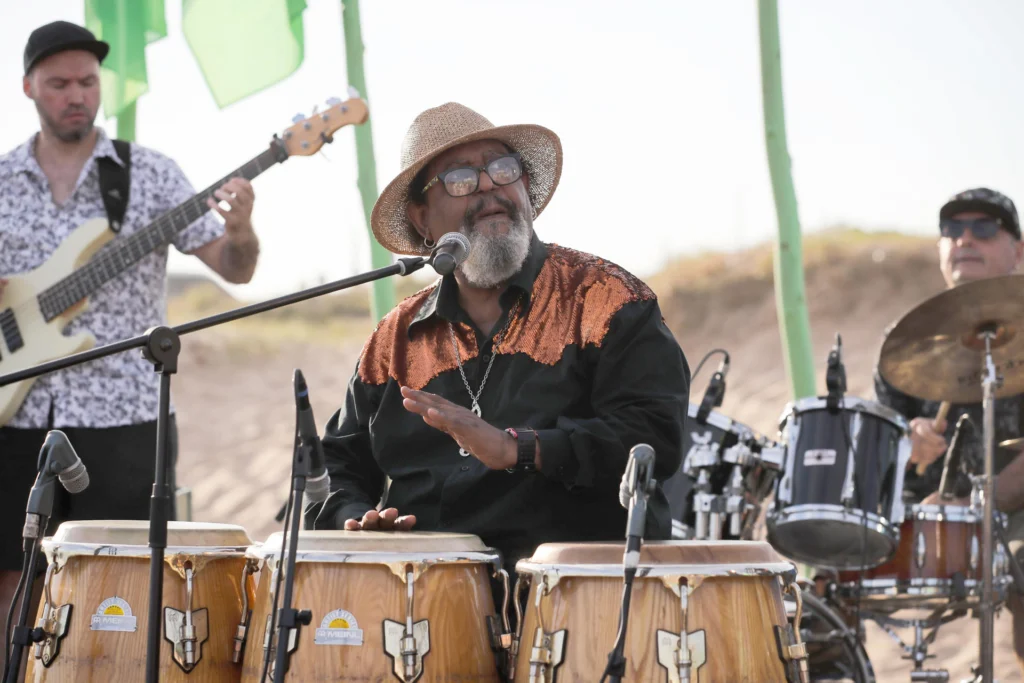
Rubén Rada, the Uruguayan singer who created candombe beat, died Wednesday in Montevideo at 83 after a month hospitalized with bilateral pneumonia.
Rubén Rada, one of the most influential figures in Uruguayan popular music, died this Wednesday in Montevideo at the age of 83.
The singer had spent a month in hospital battling bilateral pneumonia and associated complications. His family announced the news in an official statement that described the moment he passed.
RELATED: Brazilian Television and Theater Icon Laura Cardoso Dies at 98
“With pain we inform you that today, Wednesday, August 26 at 3:30 P.M. (local time) he left and now rests in peace our beloved husband, father and grandfather after fighting a month against pneumonia and its complications”, the relatives wrote.
They thanked followers and friends for their affection and dedicated a recognition to the medical team that cared for Rada.
RUBÉN RADA
1943 –Se fue un enorme artista, pero queda un legado que ya es parte de la memoria y de la identidad cultural del Uruguay.
Su obra atravesó generaciones, llegó a nuestras aulas y acompañó a docentes y estudiantes, despertando curiosidad, sensibilidad y orgullo… pic.twitter.com/7FOXrnzyKF
—
Fenapes (@FenapesUruguay) August 26, 2026

Text reads: “He was a huge artist, but there remains a legacy that is already part of the memory and cultural identity of Uruguay. His work crossed generations, came to our classrooms and accompanied teachers and students, arousing curiosity, sensitivity and pride for what we do. Rada made candombe a way of meeting and music a way to tell who we are. Thank you, Rubén, your art will continue to teach.”
Six Decades of Music
Ruben Rada had been rushed to a Montevideo hospital after doctors diagnosed a severe respiratory condition. His medical history included a coronary angioplasty in 2015 and a three day hospitalization in 2017 for a spike in blood pressure. He had also survived tuberculosis at the age of two.
The hospitalization interrupted his recent projects. His musical gathering cycle “¿Quién va a cantar?” (Who’s gonna sing?”), broadcast on YouTube, had just released its first episode featuring Sebastián Teysera of La Vela Puerca performing songs such as “El viejo” (“The elder”) and “Biafra“, from the band Tótem. Rehearsals for two concerts confirmed at the Sala Zitarrosa in Montevideo for October were also cut short.
Born in Montevideo on July 16, 1943, Rada began his career in 1958 as the vocalist of the jazz ensemble Los Hot Blowers under the pseudonym Richie Silver. That launch opened more than six decades of uninterrupted work that crossed genres and borders.
Fallece un emblema de la música rioplatense, Rubén Rada es bandera popular del Uruguay y fue un ser humano cercano, conocedor de la música y las raíces culturales, y cultor de encuentros. Abrazo grande a su familia y a todo el pueblo del hermano país. pic.twitter.com/VXQkSTIrYm
— Luis Bremer (@luisbremer) August 26, 2026
Text reads: “An emblem of Rioplatan music died, Rubén Rada is the popular flag of Uruguay and was a close human being, knowledgeable about music and cultural roots, and a lover of encounters. I give a big hug to his family and all the people of the brotherly country.”
Creator of Candombe Beat
Involved since childhood in the neighborhood comparsas, Rada moved through murga, the Cubanacán Orchestra and foundational groups such as El Kinto and The Hot Blowers. With Eduardo Useta and Mario “Chichito” Cabral, he formed the band Tótem in the 1970s and became a pioneer of candombe beat, a fusion of drums, electric guitars and songs in Spanish that broke the Anglo Saxon dominance of the era.
He also worked with the Fattoruso brothers on the album “Magic Time”, leaving classics such as “Montevideo“. In the 1980s he established himself massively in Argentina with records like “La Banda” (“The band”) and “La Rada“, turning songs such as “Cha-cha, muchacha (girl)”, and “Candombe for Gardel” into popular anthems.
His versatility extended beyond music. Rada created the children’s character Rubenrá and appeared in television, theater, radio and cinema. His work ranged from pure candombe to fusions with jazz, rock and pop.
The news of his death generated immediate reactions of admiration and respect on social networks in Latin America. His legacy as an emblem of Uruguayan identity, always carrying roots toward the most modern rhythms, left a mark on several generations.
Poder Ejecutivo decretó duelo oficial para este jueves 27 por el fallecimiento del músico uruguayo Ruben Rada.
El decreto presidencial también dispone que se tributen honores fúnebres en memoria del artista.
El velatorio se realizará en el Salón de los Pasos Perdidos del… pic.twitter.com/belGm9mphk
— Presidencia Uruguay (@compresidencia) August 26, 2026
Text reads: “Executive Power decreed official duel for this Thursday 27 for the death of the Uruguayan musician Ruben Rada. The presidential decree also provides for funeral honours to be paid in memory of the artist. The wake will be held in the Hall of the Lost Steps of the Legislative Palace from 2:00 P.M.”
From teleSUR English via This RSS Feed.