

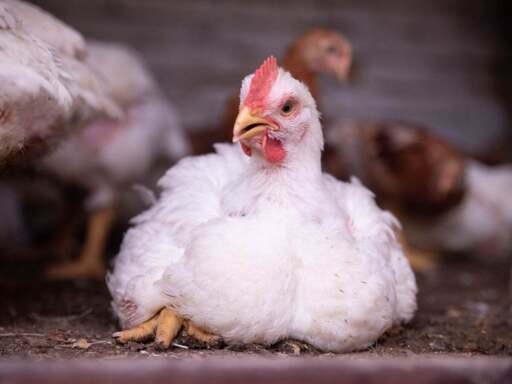

Higher-welfare poultry farming could be a “secret weapon” in curbing the nation’s most widespread cause of food poisoning, according to the RSPCA.
The call comes as a new study highlights fresh concerns about the spread of the bacterium campylobacter, the UK’s most common form of food poisoning, and the role that highly-intensive farming systems play in its spread.
An urgent switch to slower-growing chicken breeds on farms will not only “drastically improve” animal welfare. It could also offer a vital line of defence for public health and reduce strain on the NHS.
Campylobacter is largely harmless to healthy adult chickens. But it can be a major infection risk for humans, causing severe stomach cramps, diarrhoea and illness.
Now, the RSPCA says more government intervention and industry action to promote slower-growing breeds reared under higher-welfare systems could not only improve the lives of millions of animals’ lives, but simultaneously help stem food poisoning and illness in the human population.
The RSPCA view
Charlotte Arthur, poultry welfare expert at the RSPCA, said:
In preventing the spread of campylobacter, hygiene and biosecurity have always been the focus. But evidence also suggests more welfare-friendly poultry farming could be a secret weapon in efforts to reduce the spread of a bacteria that can be so dangerous to humans.
Slower-growing chickens live longer, experience fewer welfare problems and may also be less susceptible to some of the biological processes that allow campylobacter to spread.
These birds don’t just experience better lives – evidence suggests they may be better equipped to cope with infections such as campylobacter.
That’s why slower-growing breeds of chicken must be part of a serious conversation about reducing risk, and building resilience that doesn’t involve more antibiotics, keeping people healthier, safer, and reducing the strain on the nation’s doctors’ surgeries, pharmacies and the NHS.
By switching to slower-growing chickens, we will not only drastically improve animal welfare standards, but could quite literally keep people safer and healthier.
RSPCA Assured is the RSPCA’s ethical food label and farmed animal welfare assurance scheme. Farms on the scheme utilise slower-growing breeds. And they’re reared at lower stocking densities with environmental enrichment, such as perches and pecking substrates.
These higher welfare standards allow birds to exhibit natural behaviours and significantly reduce stress levels.
Evidence suggests that less stressed, slower-growing chickens develop stronger immune systems. This makes them less susceptible to infections and reduces the likelihood of bacteria like campylobacter spreading into tissues such as the liver.
Consequently, these practices not only improve animal welfare but could also lead to fewer human infections.
It comes as a study by the European Food Safety Authority links the practice of ‘thinning’ to increased campylobacter rates. This is due to the associated stress and biosecurity challenges.
‘Thinning’ refers to removing part of a chicken flock from a shed for slaughter before the rest of the birds. This lowers the stocking density and maximises space. But it causes distress and health risks for the remaining birds. And this can further contribute to the spread of campylobacter. On welfare grounds, the RSPCA banned thinning on Assured member farms in 2016. This move may contribute further to safer meat for consumers.
Arthur added:
While no farming system can eliminate campylobacter, higher-welfare farm systems address many of the same risk factors that are being identified. Animal welfare and public health should be part of the same conversation.
And while the benefits to a chicken’s life of better systems should persuade governments to act, we hope the case for better public health and better food safety will also encourage politicians and industry to act.
The RSPCA is calling on retailers, food businesses and government to move urgently towards prioritising slower-growing breeds and promoting higher-welfare farm systems.
Meanwhile, the charity is urging people to carry out kind acts for animals in their communities as part of a Summer of Kindness. More information is available on the RSPCA website.
Featured image via RSPCA
By The Canary
From Canary via This RSS Feed.