

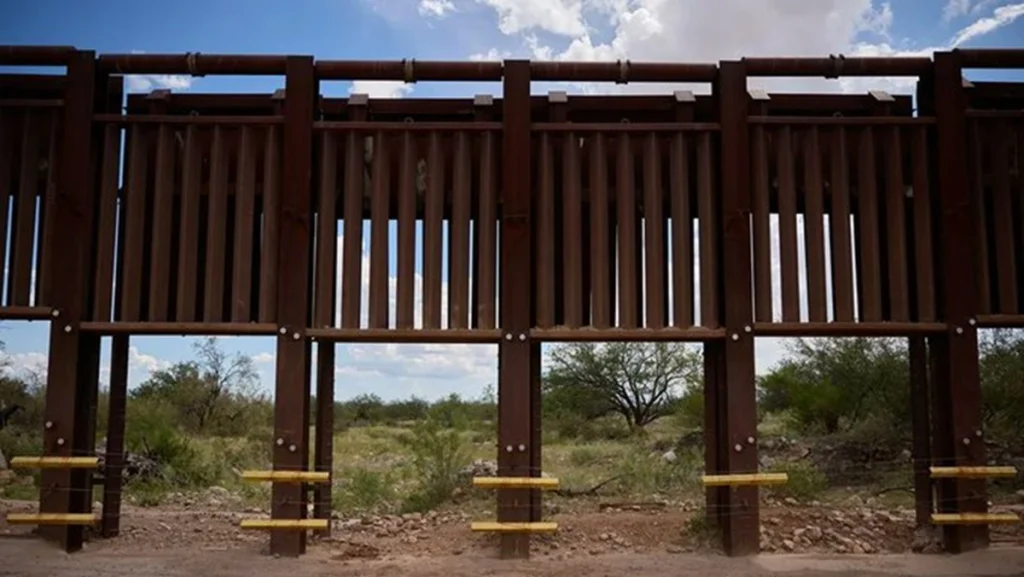
The Tohono O’odham Nation rejects the project because the wall crosses an Indigenous sacred area.
On Tuesday, Rodney Scott, commissioner of U.S. Customs and Border Protection (CBP), announced that the United States will resume construction of the “Tucson 5” project.
RELATED:
Border Patrol Arrests Father of Sailor Deployed on the USS Abraham Lincoln
The 100-kilometer-long wall along the Arizona-Mexico border will be built despite protests from the Tohono O’odham, which opposes the project because it crosses an area sacred to the Indigenous nation.
“This initiative will close one of the most dangerous smuggling and trafficking corridors along the southwest border: a remote desert area that for decades has facilitated drug trafficking, migrant deaths and cartel activities,” Scott stated.
The announcement came after a federal judge in California denied the Tohono O’odham Nation’s request to temporarily block construction of the border wall along its reservation in southern Arizona.
Bulldozers moved in last week, clearing protected desert bare. Dirt to the horizon.
This is Organ Pipe Cactus National Monument, in Arizona’s Sonoran Desert. Public land, protected since 1937.
It’s also a UNESCO International Biosphere Reserve, a designation given to places… pic.twitter.com/AzpMusbtB0
— Sammi
(@StoriesBySammi) August 25, 2026

In his ruling, the judge determined that the tribe had not demonstrated that the construction would illegally reduce its reservation or constitute a federal invasion, as argued in the lawsuit filed last June.
On Tuesday, Democratic Rep. Adelita S. Grijalva and three other House representatives urged the Department of Homeland Security (DHS) and the Department of the Interior (DOI) to immediately suspend construction until the federal government has conducted meaningful consultation with the Tohono O’odham Nation.
“We are deeply concerned that the federal government has not conducted meaningful consultation with tribal nations regarding projects that could affect sacred sites, cultural resources and ancestral territories,” the lawmakers wrote in their petition.
The U.S. representatives’ letter also raises concerns about the use of taxpayer funds for secondary border barriers and urges DHS to adopt more effective and cost-efficient approaches to border security, including modernizing and strengthening ports of entry.
teleSUR/ JF
Source: EFE
From teleSUR English via This RSS Feed.