

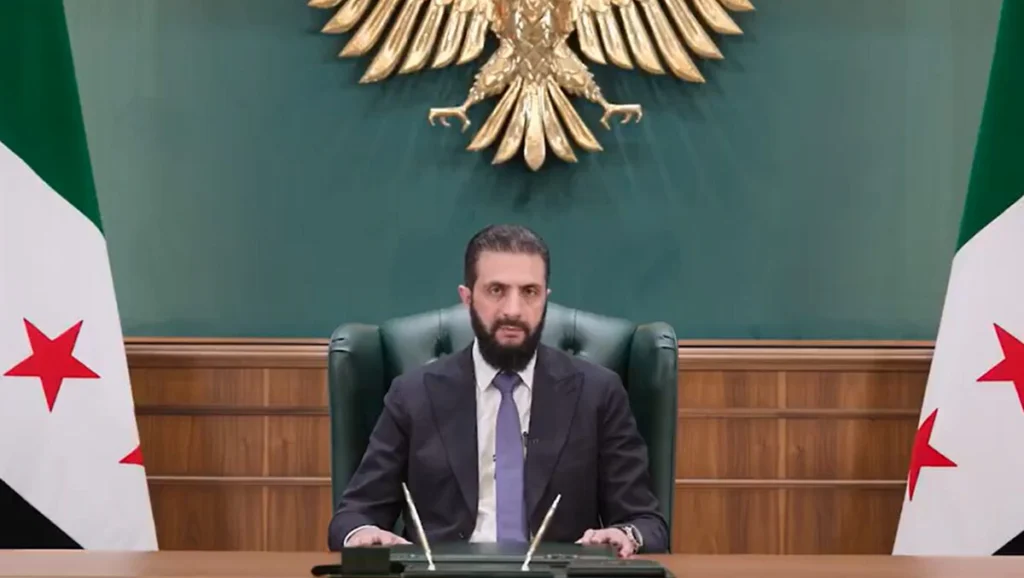
Syria’s geographic position gives it particular importance in U.S. calculations toward several international competitors.
Washington’s formal removal of Syria from its list of state sponsors of terrorism has marked another milestone in a striking transformation of relations between Washington and Damascus, less than two years after the fall of the former Syrian government.
RELATED:
U.S. Removes Syria From State Sponsors of Terrorism List
The decision, formally announced Monday, ended a designation that had been in place since 1979 and removed a separate layer of U.S. restrictions that remained even after Washington dismantled much of its broader sanctions architecture against Syria last year.
Analysts say the decision reflects Washington’s changing geopolitical calculations in the Middle East, not least prompted by Syria’s strategic position and altered regional alliances following the fall of Bashar al-Assad’s government in December 2024.
But while the removal of sanctions and other restrictions offers Syria a greater opportunity to reconnect with the international financial system and attract reconstruction investment, experts caution that sanctions relief alone will not resolve the profound economic and institutional challenges left by years of conflict.

In a sign of warming relations between Damascus and Washington, the #US State Department on Monday removed #Syria from its list of state sponsors of #terrorism after 47 years.
Only three countries remain on the list: Cuba, North Korea and Iran. pic.twitter.com/kjm5aqLIU2
— FRANCE 24 English (@France24_en) August 25, 2026
FROM ISOLATION TO ENGAGEMENT
The removal of Syria from the State Sponsors of Terrorism list did not, by itself, dismantle the bulk of U.S. economic sanctions against the country. Most broad U.S. sanctions had already been removed through a series of steps beginning in 2025.
In May 2025, the United States authorized transactions that had previously been prohibited under the Syrian Sanctions Regulations, followed by an executive order issued by U.S. President Donald Trump on June 30 terminating the national emergency underlying the Syria sanctions program and revoking six executive orders that formed its foundation.
In August 2025, Washington further relaxed export controls, allowing U.S.-origin goods, software and technology intended purely for civilian use, as well as consumer communications devices and certain civil aviation items, to generally be exported to Syria without individual licenses.
The United States also adopted more favorable licensing treatment for exports related to telecommunications infrastructure, sanitation, electricity generation and civil aviation, while maintaining tighter controls on sensitive dual-use goods and problematic end users.
Syria’s designation as a state sponsor of terrorism, however, remained in place until Monday. Its removal means Syria is no longer subject to restrictions specifically arising from that designation, including prohibitions under U.S. terrorism-list sanctions regulations.
Washington simultaneously revoked the designation of al-Nusrah Front, also known as Hay’at Tahrir al-Sham, as a Specially Designated Global Terrorist organization, while the Treasury removed the group from its sanctions list.
For Syria, therefore, Monday’s decision represents not the beginning of U.S. sanctions relief, but another major step in a broader dismantling of the legal and political architecture that had isolated Damascus from Washington for decades.
WHY IS WASHINGTON RE-ENGAGING DAMASCUS?
Analysts see the policy shift as driven by considerations extending well beyond bilateral relations. Mohammad Nader al-Omari, a researcher specializing in international relations and conflict management, told Xinhua that the fall of the former government presented Washington with a geostrategic opportunity to reshape Syria’s regional orientation after decades of close relations with Russia and Iran.
He said Syria’s geographic position gives it particular importance in U.S. calculations toward several regional and international competitors.
He also pointed to Washington’s interest in creating conditions for a security or peace arrangement between Syria and Israel and protecting broader U.S. economic and strategic interests in the region.
These considerations, al-Omari said, have given Syria greater importance in Washington’s regional strategy, though its position remains fluid because the country continues to face internal challenges while also sitting at the intersection of competing regional interests, particularly those of Türkiye and Israel.
Syrian writer and journalist Ali Youssef noted that Israeli security and Washington’s effort to disrupt military supply routes used by Iran and its regional allies are central to the U.S. approach toward the new Syrian authorities.
The speed of the U.S. policy shift is notable. Relations that were defined for decades by sanctions and confrontation have increasingly moved toward direct engagement, economic opening and cooperation on regional security issues.
Syria’s Al-Sharaa says Syria is ‘SHAKING’ ITS ‘DARK PAST’ after US DROPS ‘STATE SPONSOR OF TERRORISM’ designation
'To the GREAT Syrian people… YOU’VE DONE IT AGAIN:
SANCTIONS have been LIFTED’
Offers ‘DEEPEST GRATITUDE’ to POTUS Donald Trump pic.twitter.com/07EkAOXI9Z
— RT (@RT_com) August 24, 2026
CAN POLITICAL OPENING DELIVER ECONOMIC RECOVERY?
For Damascus, one of the most consequential questions is whether political normalization with Washington can translate into investment and reconstruction.
Previously, international banks and companies often avoided the Syrian market because of sanctions-related restrictions as well as legal, regulatory and procedural risks. Removing sanctions-related barriers could give investors greater confidence in considering projects in Syria and boost its reintegration into the international economic system, said al-Omari.
That is particularly important for a country facing enormous reconstruction needs after years of conflict that have damaged housing, electricity networks, transport infrastructure, factories and public services. But al-Omari cautioned against equating sanctions relief with economic recovery.
“Removing sanctions and designations alone is not enough to make Syria an attractive environment for investment,” he said, noting that potential investors will also assess transparency and governance, security, judicial independence, the banking system, investment legislation and property protections.
Likewise, Youssef said improved access to international banking could encourage investors interested in Syrian reconstruction, but argued that security conditions would remain decisive in determining whether capital actually enters the country.
He identified infrastructure, electricity and water networks as areas requiring particular attention, while stressing the importance of strengthening domestic economic activity and reviving agriculture.
The distinction is increasingly important as Damascus seeks to convert diplomatic breakthroughs into tangible economic gains.
For al-Omari, the latest U.S. decision gives the Syrian economy a wider opening to the outside world, but does not guarantee that the opportunity will translate into actual investment.
The scale of its economic impact, he said, will ultimately depend on the Syrian government’s ability to carry forward domestic reforms, improve its legal and institutional environment, and establish greater political and security stability.
teleSUR/ JF
Source: Xinhua
From teleSUR English via This RSS Feed.