

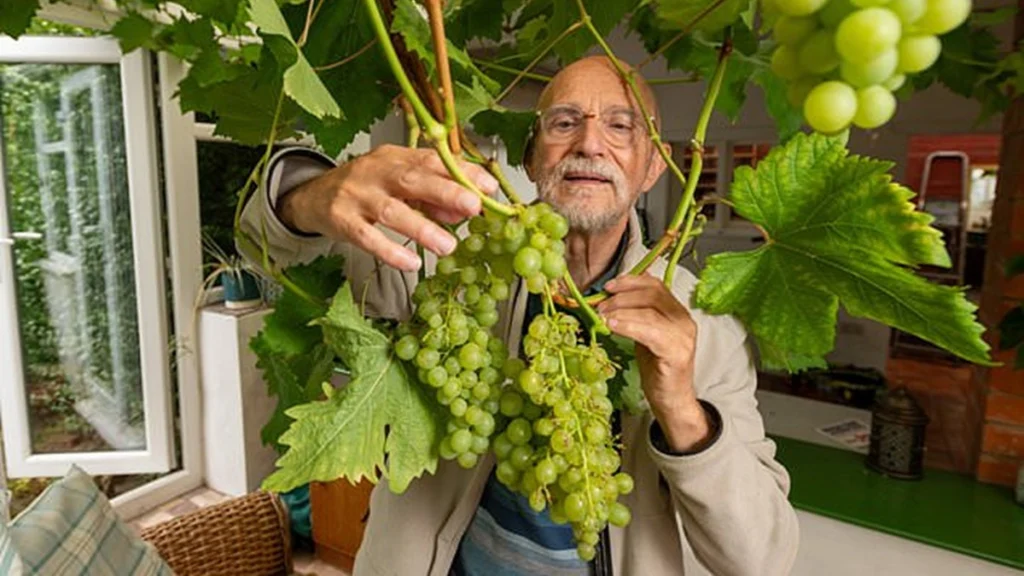
Producers adapt to climate change, rising costs and weaker wine consumption.
This week, the Association of European Wine Industries (AIVE) said heat has brought forward the grape harvest in Europe’s main producing countries to unprecedented levels, amid winemakers’ efforts to adapt to climate change and ensure profitability.
RELATED:
Extreme Drought and Heat Devastate Summer Harvests Across Europe
Spain
In Spain, the earliest harvest on record is moving forward this August as producers expect to surpass 2025 harvest figures despite successive heat waves.
Industry sources indicate that the harvest will grow 10% year over year and are confident in higher productivity because of improved vineyard health conditions.
Almost all wineries have brought the harvest forward by a month because of high temperatures, in a harvest also affected by rising costs and low prices at the point of origin. This has led producers to demand compliance with the food supply chain law to prevent sales at a loss, among other measures.
France
France is experiencing an unprecedentedly early harvest this year: The first grapes were picked in mid-July in Languedoc, in the south, something never recorded before. A month later, Champagne authorized the start of the harvest on Aug. 12, another historic record.
The early harvest extends across much of the country. In Saint-Emilion, Bordeaux, grapes began to be picked on Aug. 19, while in Alsace, in the east, the harvest officially began Aug. 18. In some areas of the Loire, in central France, the harvest could end before the month is over.
High temperatures and drought this summer have accelerated grape ripening to unprecedented levels. The heat is also affecting grape size, their rapid ripening and the yields of some harvests.


French vineyard workers forced to start before dawn to avoid heat
In Bordeaux’s vineyards, the working day now begins before sunrise due to increasingly hot temperatures. Wine estates in France are bringing forward the start times for their seasonal workers as… pic.twitter.com/Gnr4729RtP
— AFP News Agency (@AFP) June 22, 2026
Italy
In Italy, the harvest has been brought forward in some areas to the end of July, such as in Pavia, in the north, while in other regions, such as Veneto, Abruzzo and Alessandria, it has been brought forward by about 10 days. In Tuscany, the harvest of grapes for white and sparkling wines has been brought forward by nearly two weeks.
The sector’s two major organizations, Assoenologi and the Italian Wine Union (UIV), have decided to release harvest forecasts once the harvest is complete because they can change significantly beforehand given climate variability.
In addition, a new investment aid program for vineyard sustainability is active this year as part of the Common Agricultural Policy (CAP).
Portugal
According to the Institute of Vine and Wine, estimated production for the 2026-27 campaign will reach 6.7 million hectoliters, 12% higher year over year, although nearly 4% below the average of the past five campaigns.
Grapes are ripening in many regions nearly a week earlier than usual, beginning an increasingly early harvest. A good to very good-quality harvest is expected due to the favorable evolution of water reserves and weather conditions.
Along with increasingly unpredictable production cycles caused by climate change, there are other challenges, such as lower wine consumption, competition from other beverages, commercial instability, higher production costs and increased regulatory pressure. This has led Portugal’s wine sector to seek to increase the value of domestic wine in international markets.
A series of heat waves broke records and is taking a toll in Europe this summer.
This animation shows the daily max surface air temperature across Western Europe from May 1 to Aug. 19, 2026 using the @NASAGoddard GEOS model. https://t.co/HRvJ05kPLI pic.twitter.com/4m6YBNuX4y
— NASA Earth (@NASAEarth) August 24, 2026
Germany
In Germany, with the start of the harvest in the second week of August, the 2026 harvest began approximately one week earlier than the average of the past five years, according to data from the German Wine Institute (DWI).
The sunny summer has caused grapes to ripen very quickly and, thanks to the dry and warm weather, they are in “excellent” condition in all wine-growing regions, concentrated mainly in the south and southwest, although the pronounced lack of rain is also causing problems in younger vineyards.
Joachim Rukwied, president of the German Farmers’ Association (DBV), estimated a small but good-quality harvest.
Switzerland
In Switzerland, drought has forced many producers to bring the harvest forward by several weeks compared with the usual period, which runs from late September to mid-October.
Nora Dauphin-Viret, an adviser to the Swiss Wine Federation, confirmed that harvests beginning in August “are increasingly common” for certain varieties and regions, something the industry is closely monitoring although “it is not a problem in itself,” since this year’s warm and dry conditions are also limiting the pressure from certain diseases.
The scientist said it is necessary to “adapt the harvest date to each variety and each plot to preserve the balance of the grape,” while clarifying that the crisis in the sector is driven by declining consumption, pressure on prices and marketing difficulties.
teleSUR/ JF
Source: EFE
From teleSUR English via This RSS Feed.