

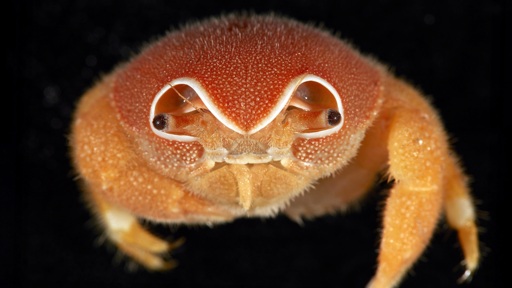
The Indian Ocean accounts for about a fifth of global ocean area, with 90% of it reaching deeper than 1,000 meters (3,280 feet). Yet compared to the Pacific and Atlantic, its deep-sea biodiversity is relatively understudied — particularly the seamounts of the ocean’s central eastern region. An expedition that surveyed dozens of these volcanic underwater mountains around the Christmas and Cocos islands, located southwest of the Indonesian island of Jakarta between Australia and Sri Lanka, has revealed remarkable marine animal biodiversity along the Indian Ocean seafloor. Published in Deep-Sea Research Part II: Topical Studies in Oceanography in June, the resulting study details 149 new species, including a sea cucumber from the genus Oneirophanta, a new fish from the greeneye family (Chlorophthalmus), and a parasitic barnacle from the genus Rhizolepas. Researchers surveyed at depths ranging from 94 to 5,431 m (308 to 17,818 ft), mapping a dark abyssal seafloor punctuated by 40 to 120-million-year-old volcanic seamounts that can be up to 70 kilometers (43 miles) across. They had never been studied before, study lead author Tim O’Hara, a marine scientist at Museums Victoria in Melbourne, told Mongabay. “People had been around the islands in shallow water before, but no one had looked at life in the deep. It was a massive hole in the data,” O’Hara said. Mapping remote underwater mountains Getting to these sites required time. The islands are so remote that, leaving from Darwin on the northern coast of Australia, it took nearly seven days to arrive at Christmas…This article was originally published on Mongabay
From Conservation news via This RSS Feed.