

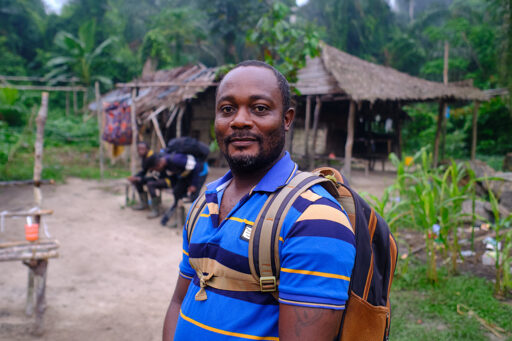
In 2024, the price of cacao on world markets spiked dramatically, nearly quintupling from what it had been a year earlier. Prices have since dropped, but along with a land crunch in Côte d’Ivoire, the world’s top producer of the commodity, the prospect of high financial rewards have helped to drive a rapid expansion of new plantations in the forests of southeastern Liberia. This region contains some of West Africa’s last intact rainforest. The land on which these plantations are being developed is customarily owned by local communities, and many of their residents have been eager to reap the rewards of the cacao market. Handshake deals between them and migrants from neighboring Côte d’Ivoire and Burkina Faso is now driving a wave of deforestation. “The people of the southeast, where you have a lot of forests, have realized or seen that cocoa can give them more money than they get from other traditional things like charcoal burning and subsistence farming,” says Liberian journalist James Giahyue. “It’s like a new phenomenon, and a new opportunity.” As editor-in-chief of news outlet The DayLight, Giahyue has guided extensive coverage of environmental issues in Liberia. He was an integral member of a Mongabay reporting team that published an investigation into deforestation there this past July. He spoke to Ashoka Mukpo from his base in Monrovia. The following interview has been lightly edited for clarity. Mongabay: A big part of the cocoa story in Liberia is migration. So many of these cocoa workers that…This article was originally published on Mongabay
From Conservation news via This RSS Feed.