

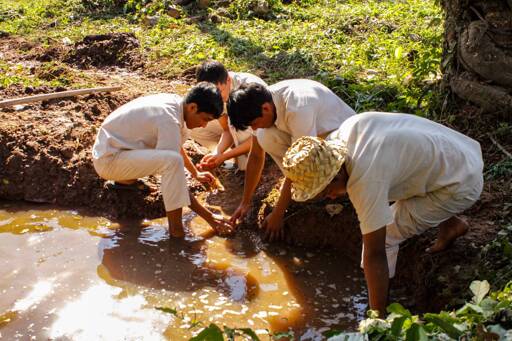
SANTA CRUZ DE LA SIERRA, Bolivia — When Rolando Ágreda was 16, a severe drought hit his community of Ascensión de Guarayos in the Bolivian Amazon in 2022. Rumors spread that the municipality’s only water reservoir was dwindling. But it was the communal spring-fed pool, or paúro, that Ágreda had been visiting since childhood that evaporated first. “Confusion was the strongest feeling,” Ágreda says in a video call. “But also sadness, because for everyone I know that place represents joy.” According to the Guarayú Indigenous People, who settled the area around Ágreda’s village of Ascensión de Guarayos in the 18th and 19th centuries, woodland spirits guard the paúros, and the community is responsible for maintaining them. But with urbanization, the arrival of non-indigenous Bolivians, and modern water infrastructure, this Indigenous knowledge had nearly disappeared. Ágreda says only three of his 28 classmates knew about paúros. “The others didn’t. It was easy not to know because [the paúros] had been neglected: The grass was so overgrown that they looked like abandoned lots. You would never imagine that there was a pool of water in the middle,” he says. A mural in Ascensión de Guarayos, where ranching is putting pressure on nature. Image by Douwe den Held. With help from his teachers, Ágreda launched a districtwide competition during the spring semester of 2022 to restore paúros across the municipality, which involved locating them, removing trash and clearing vegetation from the walls so water could filter through. By June 2022, they had restored…This article was originally published on Mongabay
From Conservation news via This RSS Feed.