

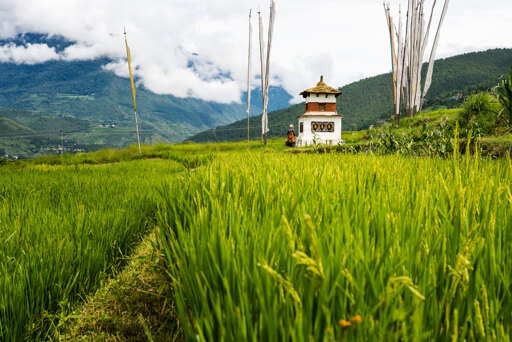
Bhutan is a Himalayan kingdom sandwiched between China and India. Forty percent of its 800,000 citizens work in the agriculture sector. The mountainous country is famous for its breathtaking landscapes and its unique policy of “Gross National Happiness,” instituted in 1972 by Jigme Singye Wangchuck, the fourth king of Bhutan. My guests on the Newscast this week say this philosophy is the backbone of the nation’s food system, and its plan for full food self-sufficiency by 2029. “Our food system isn’t just about producing food. It’s about sustaining our landscapes, our communities, and our culture,” says renowned chef and restaurateur Bleu Tshering Dorji. She owns two restaurants in the nation’s capital, Thimpu. She explains the unique challenges farmers she works with face due to climate change and steep mountain terrain. “We are a mountainous landlocked country, and only a small percentage of our land is, I think, actually suitable for agriculture. We don’t have the luxury of just expanding farmland. We have to make better use of the land that we sort of already have,” she says. “Labor is becoming extremely scarce as young people sort of move away from agriculture, and farmers still have to deal with issues like wildlife conflict, unpredictable weather, and also getting their produce to the market,” Bleu says. She adds the outflow of young people from rural areas, where most of the population currently lives, presents its own set of challenges. “We need our young Bhutanese people to be able to see farming as…This article was originally published on Mongabay
From Conservation news via This RSS Feed.