

This is Part Two of a two-part series examining Jacobin’s article “It’s Prime Time for Socialists.” Please read Part One
Free Speech and Multiparty Democracy Are Not Socialist Principles
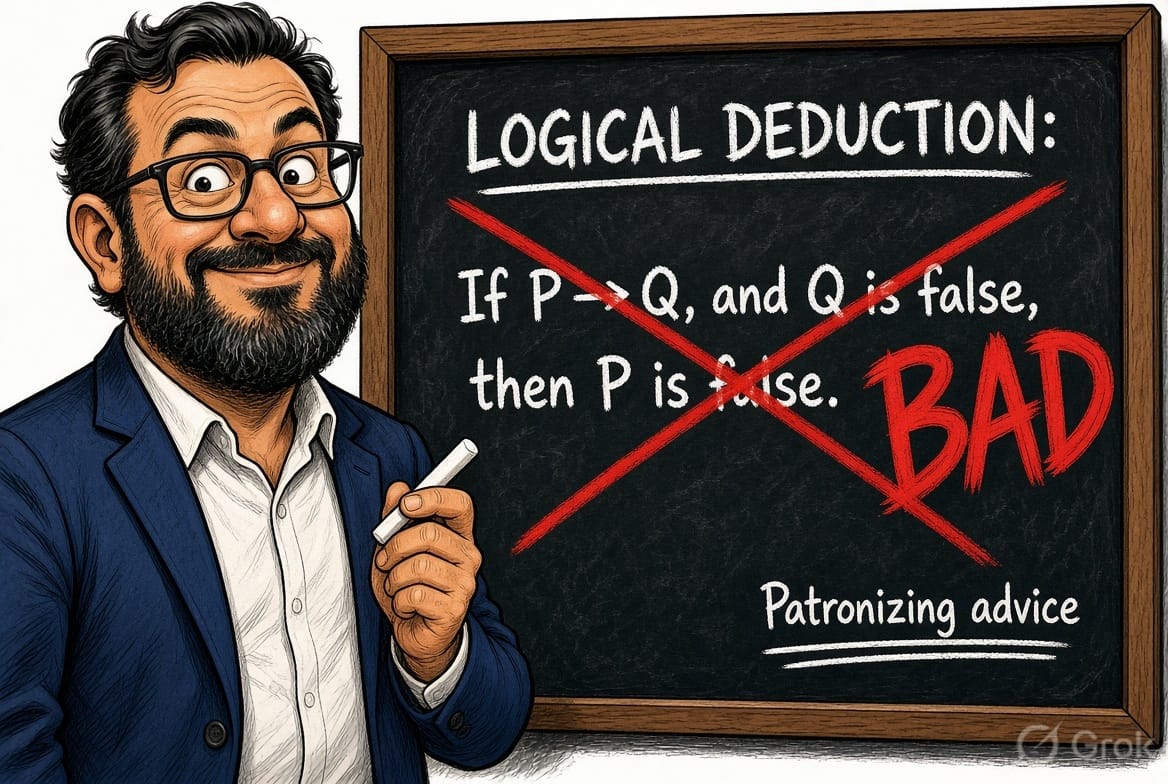
Logic Boy frets: “The problem is that this does exactly nothing to reassure anyone that we really are committed on principle to free speech and multiparty democracy."
But why should that be the problem? Why should socialists be “committed on principle” to free speech and multiparty democracy at all? Marx didn’t spend his life critiquing bourgeois parliaments only to have his heirs genuflect before them. In the Critique of the Goethe Program, Marx clearly defines socialism.
"Between capitalist and communist society there lies the period of the revolutionary transformation of the one into the other. Corresponding to this is also a political transition period in which the state can be nothing but the revolutionary dictatorship of the proletariat.
Burgis isn’t judging revolutionary movements by revolutionary standards. He’s holding them to liberal benchmarks and calling their failure to conform a political vice. That’s not Marxism. That’s liberalism with a socialist sticker.
As for the commitment to free speech, the German Social Democrats already ran this experiment. Otto Braun, the Social Democratic Minister-President of Prussia, refused to shut down the Nazi press even as it openly organized for the destruction of the republic and the labor movement. The commitment to formal “free speech” and multiparty norms was treated as a principle higher than the survival of the working class itself. We know how that ended.
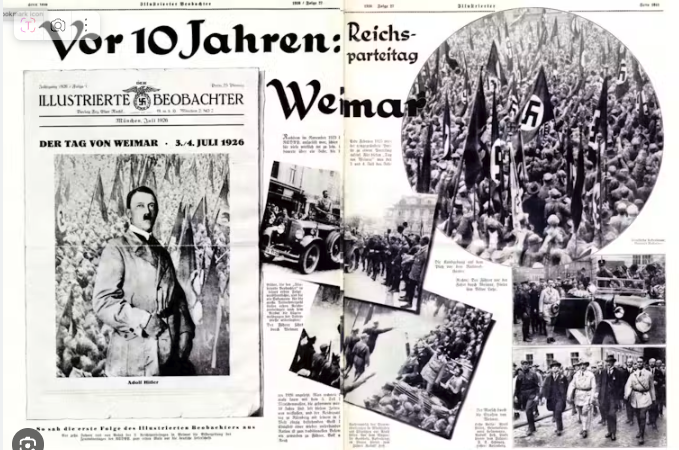
Nazi newspapers from the Weimar Republic
Liberalism with Marxist Labels
Logic Boy insists:
“The points we should be relentlessly making instead are that societies are far less likely to liberalize when they’re faced with external threats, and in any case US policy should focus on what the United States can reasonably bring about — alleviating suffering by dropping sanctions and normalizing relations.”
The idea that U.S. policy ever sought to “alleviate suffering” is a liberal fairytale. Washington does not impose blockades and sanctions out of an accidental policy failure or a well-meaning misunderstanding about how to encourage societies to “liberalize.” The suffering is not collateral damage; it is the entire strategic objective.
The empire’s own declassified records state this without ambiguity. In the foundational April 6, 1960 State Department memorandum on Cuba, Deputy Assistant Secretary of State Lester D. Mallory conceded that the majority of Cubans supported the revolutionary government and that no effective internal opposition existed. His explicit prescription was deliberate immiseration:
“The only foreseeable means of alienating internal support is through disenchantment and disaffection based on economic dissatisfaction and hardship… [E]very possible means should be undertaken promptly to weaken the economic life of Cuba […] to bring about hunger, desperation and overthrow of government.”
Treating economic warfare as an unfortunate mistake that Washington might benevolently undo to “alleviate suffering” is not sober strategy. It erases the structural logic of imperialism, substituting the declassified reality of deliberate state-engineered starvation for a toothless bedtime story.
Let’s pause on that word: “liberalize.”
In this context, “liberalize” effectively means accepting the Washington consensus. It means opening markets to Western capital. It means adopting the policy preferences of the State Department. It means, in practice, surrendering sovereignty to the very empire that spent a century trying to destroy these states. No genuine socialist state should seek to “liberalize” in that sense. To present this as a neutral, apolitical goal is to accept the framework of the enemy and call it wisdom.
He further quotes DSA cochair Ashik Siddique during an appearance on CNN regarding Cuba:
“Many decades of US policy at this point have shown that if we want to expand democracy across the world, military regime change and economic blockades are not the way to do it.”
Siddique’s framing falls into the exact same trap: it accepts the empire’s founding myth that the United States is attempting to “expand democracy,” haggling merely over the efficiency of the toolkit. As with Burgis’s neocon concessions on Iraq, this approach concedes the enemy’s moral framework before the argument even begins.
The United States has never imposed blockades or organized regime change to “expand democracy.” It did so to stamp out any alternative that threatened the regional capitalist order. Washington’s own internal documents make this explicit. As a declassified April 1961 State Department Summary Guidelines paper frankly acknowledged when assessing the real threat of the Cuban Revolution across the hemisphere:
“Latin America today is in a state of deep unrest. Most of its countries are economically underdeveloped and socially backward. The distribution of land and other forms of national wealth greatly favors the propertied classes. The masses suffer from poor housing, malnutrition and illiteracy. In many countries large rural groups, which include most of the Indian peoples, are not integrated into the economic and social life of the nation. The poor and underprivileged, stimulated by the example of the Cuban revolution, are now demanding opportunities for a decent living. Meanwhile, the population is increasing much more rapidly than the rate of production.”
The imperial apparatus was never terrified of a lack of democratic procedure; it was terrified that the masses would see Cuba’s example and demand land, food, healthcare, and a decent life at the expense of propertied elites. Treating U.S. aggression as a misguided, ineffective attempt at “democracy promotion” replaces material reality with a liberal bedtime story—one that disarms the anti-imperialist movement before it even steps into the arena.
These Aren’t Socialist Policies
And what is the grand platform we are supposed to be watering down to avoid offending congressional reactionaries? Logic Boy insists that our political program is mostly straightforward, pointing out that “socialist policies like Medicare for All and reducing the workweek to thirty-two hours are already quite popular.”
Except for one minor detail: these are not socialist policies. Medicare for All and a thirty-two-hour workweek are social-democratic reforms within capitalism.
They modify the terms of exploitation and the degree to which labor and healthcare are commodified, but they leave the private ownership of the means of production and the structural power of capital entirely intact. Calling them “socialist” is a rhetorical inflation that dilutes the meaning of socialism altogether, confusing a better-managed capitalism with the actual goal of collective, democratic ownership of productive assets. Lenin would have rightly called this phrase-mongering: the use of socialist labels to dress up reformist content, creating the superficial appearance of radicalism while remaining firmly trapped inside the framework of existing property relations.
Raising Consciousness, Not Lowering the Bar
Logic Boy complains that because the socialist vision of collective ownership “lies entirely outside the map of ‘normal’ political disagreement,” opponents will naturally paint us as insane ultraradicals. His “solution” is that the movement must rigorously police its own “less persuasive and defensible ideas.”
In the same breath, he whines that instead of persuading those to our right—the vast majority of the public—socialists fell into the bad habit of proving their leftist bona fides to those further left during our decades in the political wilderness, habits that must now be urgently shed.
Both passages express the exact same inverted, tailist logic. Lenin’s position was precisely the opposite: you do not lower your politics to the existing level of the reactionary or backward masses just to avoid being called names or to make yourself appear more palatable to the polite establishment. Your job is to work to elevate their political consciousness. As he laid out in What Is to Be Done?:
“But what else is the function of Social-Democracy if not to be a ‘spirit’ that not only hovers over the spontaneous movement, but also raises this movement to the level of ‘its programme’? Surely, it is not its function to drag at the tail of the movement.”
The revolutionary party always fought for social, democratic, and labor reforms as part of a totalizing strategy aimed at transforming consciousness and breaking the existing political map open—not as a method of squeezing themselves inside the respectable boundaries of capitalist debate. After all, did Bolshevik discourse ever neatly fit within the Tsar’s mainstream map of political disagreement? Logic Boy treats the current, reactionary common sense of the public as a fixed, immutable constraint that socialists must bow to. The actual revolutionary approach treats that common sense as the precise obstacle that must be shattered and changed.
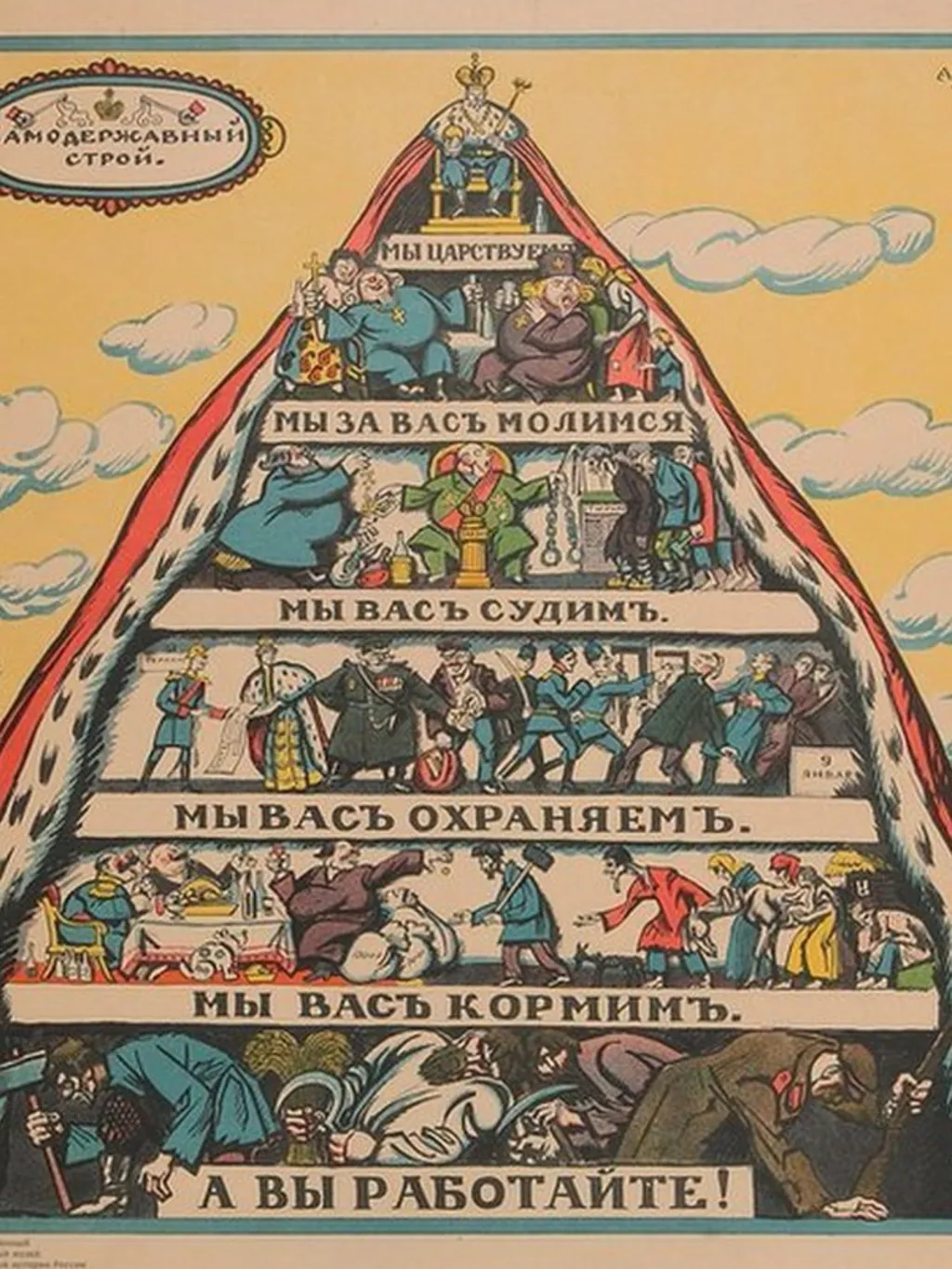
Bolshevik Poster explaining class-based exploitation
Logic Boy claims that during the long decades when socialists only had to justify themselves to one another, there were strong incentives to adopt hard-line positions. In his telling, when power felt permanently out of reach, politics inevitably shrank into symbolic moral protest, making the purest possible posture the only remaining activity. This completely misrepresents both the history and the task. Socialists are not primarily engaged in an insular game of justifying themselves to other socialists. The core program of revolutionary Social-Democracy—clearly established since at least 1905—has always been oriented outward toward the masses. The central task is to reach the broad working class and oppressed layers to raise their political consciousness, not to perform radicalism for an internal audience or retreat into sterile purity contests.
The German Social Democrats already showed where the opposite approach leads. By 1921 the SPD had abandoned Marxism in practice. The party moved decisively toward “ideological pluralism.” Its policies were no longer determined by orthodox Marxist theory. What remained of Marxism was increasingly rhetorical rather than a guide to revolutionary action. It had become a reformist party that still occasionally spoke in Marxist language while operating entirely within the bounds of the bourgeois state. That is the real destination of the politics Logic Boy is recommending.
If Logic Boy is mainly occupied with how socialists look to polite society, or with refining formal arguments against the right in books and debates, he is simply not doing the actual work of elevating mass consciousness. He is substituting the secondary, academic activity of intra-left and left-versus-right argumentation for the primary political task.
The “Maximalist” Demands, Examined
Logic Boy complains that the new DSA platform contains “multiple lapses into dubious maximalism,” singling out its stance on borders. What does the platform actually say? It demands that we Abolish ICE: end detention and deportations, punish federal agents’ brutality, legalize migration, grant amnesty for all immigrants regardless of status, provide a path to citizenship for all permanent residents, and end visa caps and quotas.Calling this “dubious maximalism” is historically absurd.
Ronald Reagan—one of the most fiercely right-wing presidents of the modern era—signed the Immigration Reform and Control Act of 1986, which granted mass amnesty and legalization to roughly 2.7 to 3 million undocumented immigrants, following it up in 1987 with executive action covering their minor children. A massive amnesty policy was actually enacted by the American right. When a self-described socialist starts panicking over demands for basic legalization and an end to the ICE regime as some wild, self-sabotaging ultra-left excess, he has managed to position himself safely to the right of Ronald Reagan.
That kind of argument simply does not survive contact with the historical record.Logic Boy next targets the DSA platform’s language on policing and prisons as another prime example of “dubious maximalism.” What does the platform actually say?
Under the banner of End Mass Incarceration and Police Immunity, it calls to demilitarize police departments, disempower police unions, and redirect funding to public services as steps toward fully abolishing the police and prison system which protects the rich and jails the poor—while treating drug addiction and mental illness as health issues rather than crimes, ending qualified immunity, and empowering civilian oversight bodies.That crucial qualifier matters immensely: the target is explicitly the carceral apparatus “which protects the rich and jails the poor.” This is a class-political characterization of the existing state apparatus, not a mindless demand for zero accountability. The charitable, accurate reading is that the goal is to stop criminalizing poverty, addiction, and mental illness, rather than releasing violent offenders indiscriminately.
Even so, the phrasing remains strategically clumsy. Ordinary people—and every political opponent—hear “abolishing the police and prison system” and immediately picture a lawless vacuum, making it an easy target for weaponization. But the deeper irony is that significant parts of these concrete demands aren’t even uniquely radical. Rand Paul has spent years explicitly calling for the demilitarization of police departments, criticizing the 1033 program that transfers military surplus equipment to local police, and backing broader criminal justice reforms. Large portions of this plank have clear precedent on the libertarian right, meaning they can hardly be dismissed as pure ultra-left maximalism.
More fundamentally, this entire muddled framing only arises because the DSA is not a real socialist party. A genuine revolutionary socialist organization would never center its program on the negative, moralistic language of “abolishing the police and prison system.” Instead, it would pose the positive alternative: the dictatorship of the proletariat, the smashing of the bourgeois state machine, and its replacement by organs of workers’ power—including proletarian militias as the new armed force of the working class. The discussion would be about class power and the conscious reconstruction of the state, not the technocratic or moralistic language of abolition. Because the DSA remains trapped entirely within a social-democratic horizon, it is stuck with the weaker, easily attacked negative framing that Logic Boy loves to swat at.
Accountability Requires a Party
Logic Boy notes that DSA-affiliated politicians who actually have to face voters routinely decline to defend the more maximalist elements of the platform. Some socialists then scramble to argue about how to hold these politicians “accountable.” Logic Boy suggests it would be far more productive to simply question the movement’s own political instincts, claiming it’s unrealistic to load a platform with radical ideas and then demand firm consensus around the whole package.Lenin already demolished this style of reasoning more than a century ago, with characteristic sarcasm:
“That is how all the opportunists, all the reformists, argue… The demand for a constituent assembly is a big demand. It cannot be achieved immediately… We must choose—between the existing evil and a very small rectification of it… And by achieving the small thing, we shall facilitate our struggle for the big one.”
“To what conclusion does this argument inevitably lead? To the conclusion that we need no revolutionary programme, no revolutionary party, and no revolutionary tactics. What we need are reforms, nothing more.”
This completely misses the structural reality. You cannot meaningfully hold politicians accountable if they are not actually members of your party and subject to its iron discipline. This is precisely why Lenin insisted that socialists must participate in bourgeois elections under their own independent party banner, armed with their own distinct program, their own candidates, and their own strict organizational control. Without that, “accountability” degenerates into a toothless moral complaint directed at politicians whose real electoral base, funding, and career incentives lie entirely elsewhere—in this case, safely inside or adjacent to the Democratic Party. As Lenin observed of American bourgeois democracy:
“Freedom in the U.S.A. is most complete. And for a whole half-century—since the Civil War over slavery in 1860–65—two bourgeois parties have been distinguished there by remarkable solidity and strength… The fight between these two parties has been mainly over the height of customs duties. Their fight has not had any serious importance for the mass of the people. The people have been deceived and diverted from their vital interests by means of spectacular and meaningless duels between the two bourgeois parties.”
More importantly, the idea that softening the platform is the way to win reforms is itself wrong. As Lenin explained in the same 1906 article:
“Actually, reforms are won as a result of the revolutionary class struggle, as a result of its independence, mass force and steadfastness. […] By merging our slogans with those of the reformist bourgeoisie we weaken the cause of revolution and, consequently, the cause of reform as well, because we thereby diminish the independence, fortitude and strength of the revolutionary classes.”
“The most effective way to secure real reforms is to pursue the tactics of the revolutionary class struggle.”
The problem is not primarily “bad instincts” about platform language. It is the total absence of an independent working-class party structure capable of fighting as a class force rather than negotiating the terms of its own moderation.
Listen to Winners, Not Losers
Burgis’s consistent thread is that socialists have a chance to rally broad support behind a short-term social-democratic agenda and slowly build support for a more radical socialist horizon. This requires carefully thinking about what we want, how to get it, and how to assemble a popular majority. This is a completely different mindset from one focused on reassuring one another of radical commitment. “We need to act like America is watching, because it is.”
This is a counsel of perpetual caution from someone who has never participated in, let alone led, a successful socialist revolution. A simpler and more reliable maxim applies: listen to winners, not losers.The historical record of successful socialist revolutions and the states that emerged from them—the Soviet Union, China, Vietnam, Cuba, and others—provides the actual reference points. Those who seized power, defended it against imperialist assault, and transformed their societies are the ones whose strategic experience is worth studying.
Advice about carefully calibrating rhetoric so as not to alarm “America” comes from a very different place.The practical result of the social-democratic approach Burgis recommends—adapting to existing common sense, seeking respectability within bourgeois institutions, carefully calibrating demands so as not to alarm the broader public, and treating multiparty bourgeois democracy as the ultimate standard—has been demonstrated before.The historical toll of this “respectable” path is damning. In her book German Social Democracy and the Rise of Nazism (1993), historian Donna Harsch chronicles that fateful day in the Reichstag:
When the Social Democratic deputies rose as a body to vote with the bourgeois parties, the chamber, including Hitler, broke into a storm of applause. The German Nationalists burst into Deutschland, Deutschland, über alles, and many Social Democrats joined in. Hoegner later reflected, ‘It was as if we Social Democrats, ever cursed as the prodigal sons of the fatherland, for one eternal moment clasped Mother Germany to our hearts.’"
It is a history book that should be mandatory reading for Ben Burgis and anyone else currently steering the DSA toward the “safe” middle ground of bourgeois politics. Donna Harsch’s work doesn’t just record the end; she meticulously maps every “strategic” compromise and “responsible” pivot that preceded it. She lays out the warning signs in bright, red, flashing lights, demonstrating that the road to the Reichstag applause wasn’t an accident—it was the inevitable destination for a movement that prioritized “respectable” integration over independent class power.
If you are more afraid of being labeled an “ultra” by the New York Times than you are of the trajectory that leads a movement to abandon its principles in the name of national unity, you aren’t just miscalculating—you are actively repeating the most catastrophic mistake of the twentieth century.
So the real choice is fairly straightforward: a dictatorship of the proletariat that eradicates illiteracy, eliminates smallpox, lifts hundreds of millions out of poverty, and builds actual working-class power—or a politics so refined and carefully calibrated that it ends up clapping along with Hitler. Choose wisely.
If you’ve made it this far, and found our article illuminating, please remember we are 100% reader supported. If you think this work matters, throw us a few dollars so we can keep going. The empire certainly isn’t funding us.
From Historic.ly via This RSS Feed.