

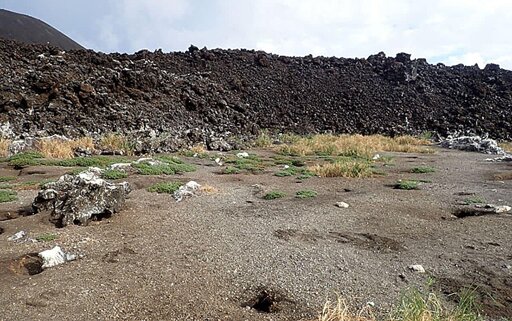
Opportunities to directly observe how life colonizes newly formed land and how ecosystems subsequently develop are exceedingly rare. In a study published in the Journal of Plant Research, researchers at University of Tsukuba used genetic analyses to investigate the origin of Eleusine indica, a grass species found on Nishinoshima, an active volcanic island in the northwestern Pacific south of mainland Japan. Having newly emerged, the island offers a unique natural laboratory for understanding the earliest stages of biological colonization and ecosystem development.
From Biology News - Evolution, Cell theory, Gene theory, Microbiology, Biotechnology via This RSS Feed.
You must log in or # to comment.