

Bullets:
Public opinion has shifted decisively against new data center buildouts, especially at the grassroots level.
Much of that opposition derives from soaring power demand, which places heavy strains on electric grids, driving up utility bills for households.
But huge supply chain problems loom for all the equipment and labor needed for new capacity buildouts.
Just a handful of suppliers build gas turbines, which are in high demand by the industry, and also by thousands of utilities and other buyers across the world.
Severe production backlogs have pushed delivery dates past 2030, and costs have gone up three times in just six years.
China is rapidly building out its AI data center infrastructure, with no public opposition, and amid falling power prices.
Inside China / Business is a reader-supported publication. To receive new posts and support my work, consider becoming a free or paid subscriber.
Report:
Good morning.
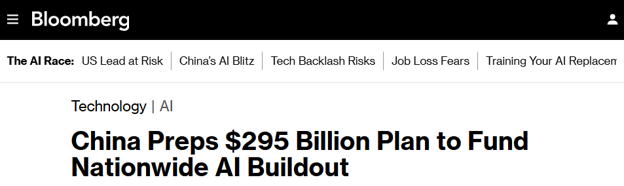
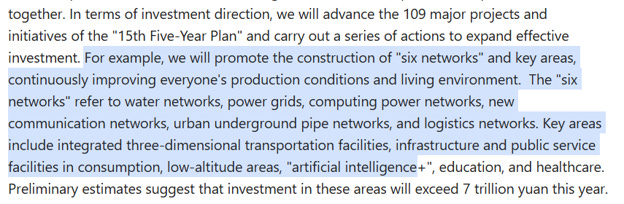
China is investing heavily in its Artificial Intelligence industry, with plans to pass the United States by 2030. We would refer to this as a “whole-of-government effort” to build their infrastructure for AI, and it’s part of the Six Networks program rolled out earlier this year. Six Networks is a comprehensive plan for water, electric grids, computing power and communications networks, underground pipes, and logistics. For this year China’s investment in those networks will be over a trillion dollars US:
Computing power is strongly correlated with national power, the thinking goes, and Huawei and Tencent and a score of others are building out dozens of facilities across the rural areas of China. There is no public opposition to data center construction in China, which is in stark contrast to the United States or in Europe. And that’s largely a function of electricity prices.
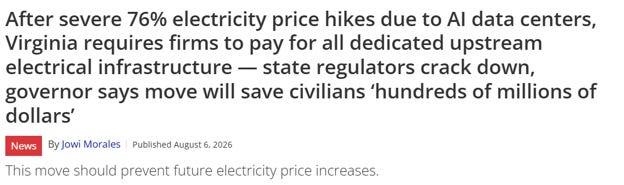
AI data centers gobble up lots of power, and that strains the existing grids in the United States. The soaring, double-digit percentage increases in household power bills are driven by demand from AI, and local governments and regulators are pushing back. In Virginia, companies who want to build new data center capacity are required to pay for all the power generation themselves. In other areas, new AI capacity has been put on hold entirely, by officials who now understand that it’s likely to cost them in November, when voters head to the polls again.

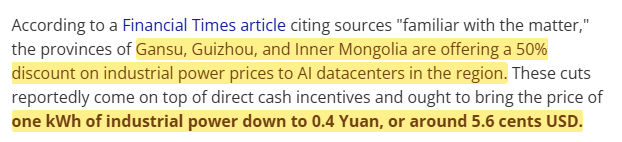
When we compare the relative costs of electricity to power the AI center that’s down the street in the United States, compared to the one in rural China, they jump off the page. Everything makes more sense. Gansu, Guizhou and Inner Mongolia are offering discounts in their electricity rates to attract data centers. Their charge per kilowatt hour of power is 0.4 yuan, which is under 6 cents. That puts them as one of the lowest cost power producers in the world.
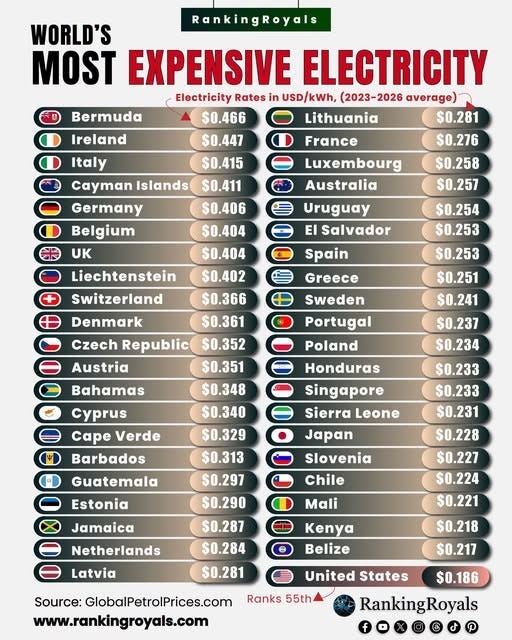
The United States ranks 55th most expensive worldwide, at 18.6 cents per kilowatt hour. Running an AI data center in Nei Mogu costs less than a third what it would in the average American town.
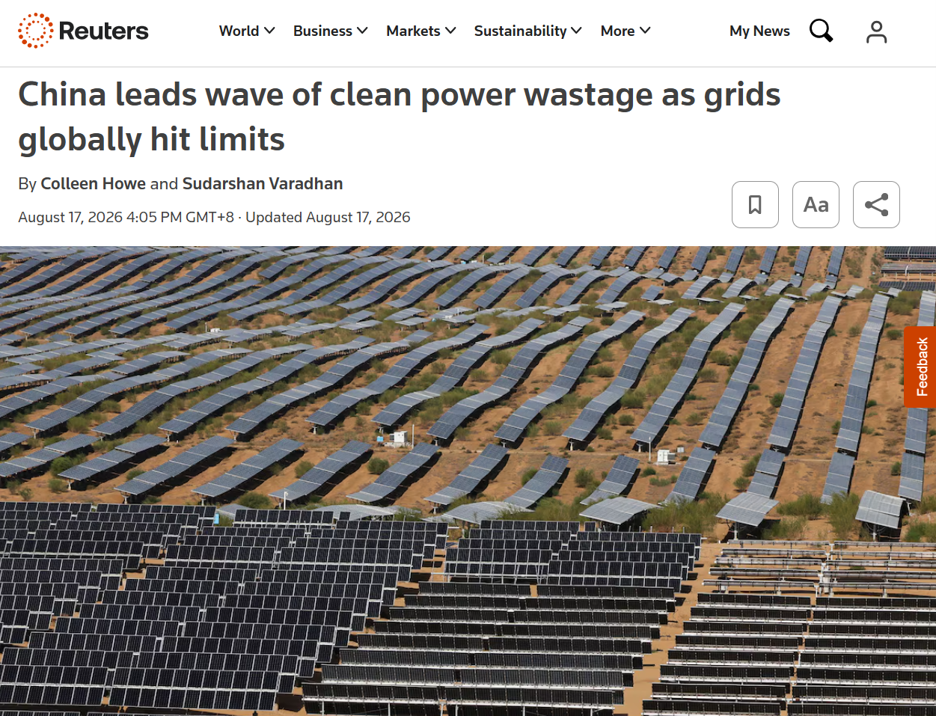
Chinese renewable plants produce so much power that much of it is actually rejected; it’s not even needed. This is called curtailment, and for the first six months of the year—in half a year—China’s power grid managers rejected enough electricity from clean sources to keep the lights on in Mexico for a full year.
Power producers and local governments in North and West China are trying to find new customers to plug something in, and if the data centers create local jobs, and also generate high-value exports in the new token economy, then so much the better.
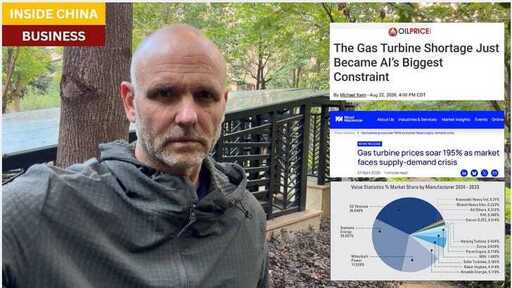
So builders of new data center capacity in the United States and Europe are facing economic problems, with power costs. And the issue too is a lightning rod in local politics. But another major challenge lies in the supply chains for all that power generation equipment. We’ll look today at just one of those, which is large natural gas turbines. GE Vernova is a major supplier to that market, and if you order one today, it’s coming five years from now, in 2031. These shortages and production backlogs are widely known inside the industry, but nobody wants to talk about them.
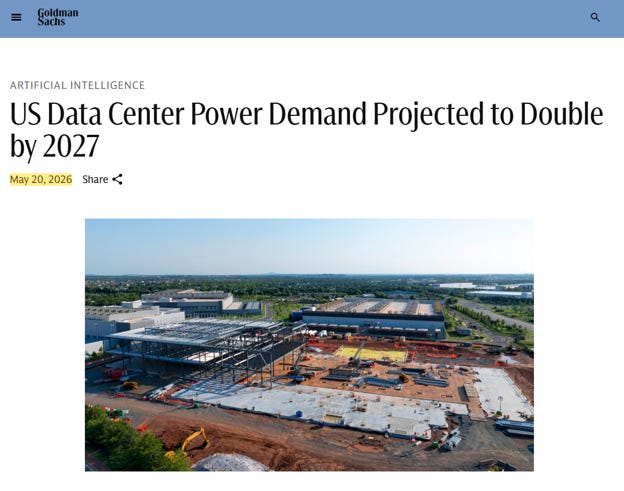
This is a report from Goldman Sachs, Data Center Power Demand Projected To Double by next year. But it’s dated this year, May, and we’re more than halfway through 2026. AI power demand forecast is for 66 GW in 2027; it was 31 gigawatts last year. Only half of the capacity scheduled for the next two years will come online, on time. Longer delays are baked in, already, and they’re accelerating, depending on how far out the project is scheduled to open.
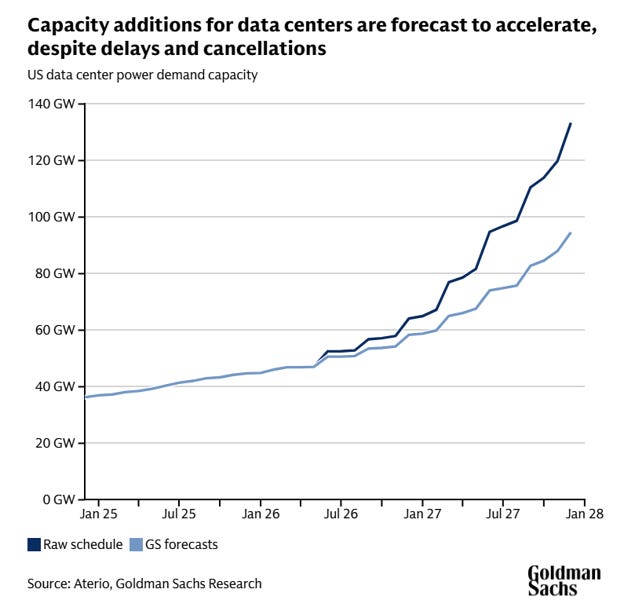
US and European builders of data centers are hitting supply chain crunches for nearly everything. But without power, GPU’s can’t be plugged in, and production of power generation equipment is years behind.
The backlog at GE is 116 gigawatts, just for gas power equipment, and the company is “taking reservations” for deliveries in 2031. They have also announced plans for a gradual increase in production.
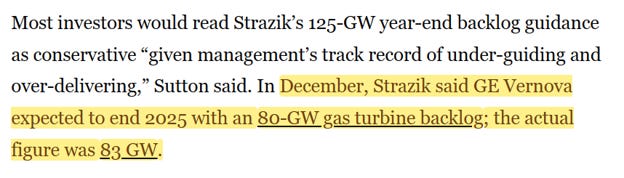
Last December, GE forecast their backlog would be 80 gigawatts, but finished the year with a backlog of 83 gigawatts actual. So their backlog is growing faster than GE was telling their investors. “Management’s track record of under-guiding and over-delivering.” That’s a reference to over-delivering orders and profits, not the actual turbines.
Siemens is another major supplier of gas turbines. Sales were up 62%. Shipments of gas turbines were 6 gigawatts for the quarter, but that was against 15 gigawatts in new orders. That difference gets added to their backlog, which stands now at 69 gigawatts. Lead times at Siemens are a minimum of three years.
Mitsubishi: orders rose 56% in the third quarter. Large gas turbines backlog is 35 gigawatts, also up over half from last year.
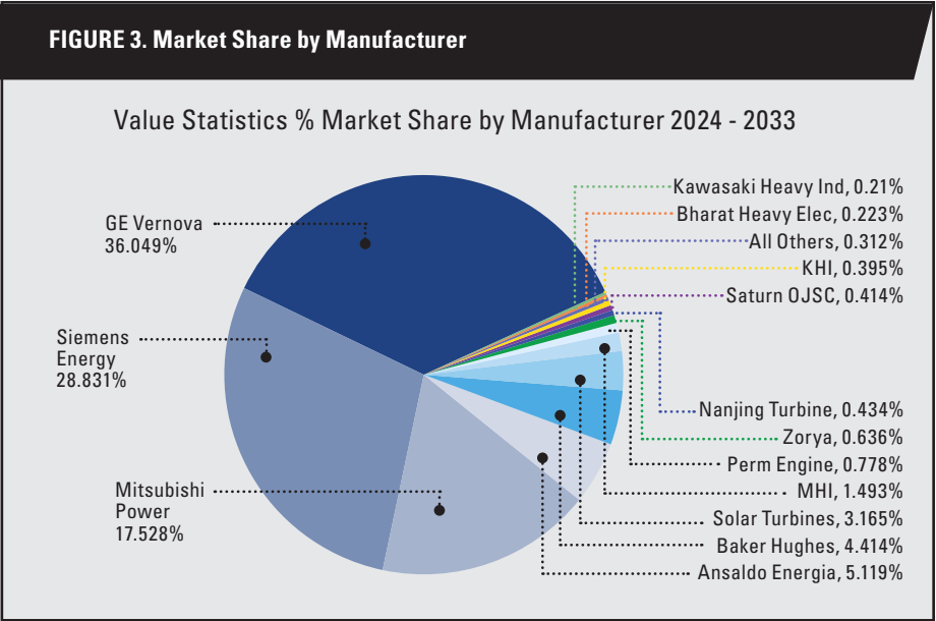
Those three companies represent far over half the global market share for gas turbine manufacturing, and there are major backlogs at all of them.
OilPrice points out that all those backlogs from the Big 3, added up, is 220 gigawatts, which is somewhat misleading. Sixty three gigawatts’ worth of back orders for GE are reservations—down payments from buyers who are paying just to hold their place in line. At Siemens, it’s actual backlog, and at Mitsubishi they didn’t include data for smaller turbines.
The companies are measuring different things, but collectively are still far short of Goldman’s estimates for what the AI industry needs for next year.
General Electric builds 20 Gigawatts of turbines a year, for all their customers. Before AI data centers were placing their big orders, the line had already formed for other utilities, and other countries, and other industries who need new power sources. And even if GE sent all their turbines to the Silicon Valley billionaires, they’re way short. The turbines which are to be delivered to data centers next year, were ordered years ago.
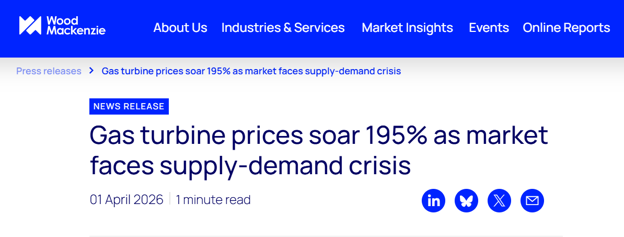
Naturally the prices for all that hardware are going vertical. Costs have almost tripled in under a decade. The supply chain today is highly concentrated, jammed across a small number of key suppliers. The foundries and welders and machinists who previously worked in this industry are gone, bought out and laid off, and never replaced. The industry doesn’t even have enough people who know how to install them.
So today the large natural gas turbines take more than five years to build and deliver; smaller units take up to three years. In just the past six months, gas turbine prices increased 50%. The entire manufacturing system for this equipment is hitting hard ceilings: not enough castings, not enough factory space, not enough smart people in the factories, not enough smart people on the construction sites.
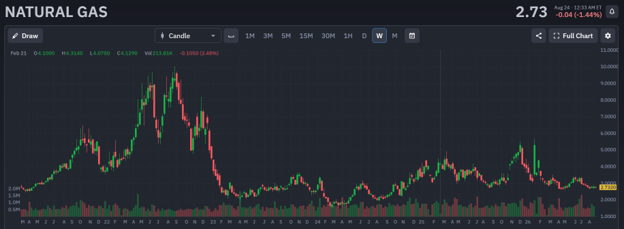
There are no problems with the cost of fuel, after the turbines DO get built and delivered and set up. Natural gas prices are at multi-year lows.
Natgas producers in the United States want the same for their production that solar and wind farms in Western China want: more customers for their energy. But that means more gas turbines, and so they are hitting limits too.
It’s happy days at the turbine makers, though. OEM’s are Original Equipment Manufacturers, and their managements have turned these long wait times into another profit center. Slot reservation agreements put all the risk on the customer. If the data center DOES get built, it converts to a paid order. If not, the OEM keeps the deposit and sells the slot, or the unit itself, to someone else.
Be Good.
Resources and links:
China Preps $295 Billion Plan to Fund Nationwide AI Buildout
https://www.bloomberg.com/news/articles/2026-06-09/china-prepares-295-billion-plan-to-fund-nationwide-ai-buildout
郑栅洁主任在十四届全国人大四次会议经济主题记者会上答记者问
https://www.nda.gov.cn/sjj/swdt/xwfb/0306/20260306222350429116656/_pc.html
China shifting massive AI data center complexes to rural provinces to tap surplus energy
https://www.tomshardware.com/tech-industry/data-centers/china-shifting-massive-ai-data-center-complexes-to-rural-provinces-to-tap-surplus-energy-eastern-data-western-computing-strategy-has-chinese-tech-giants-huawei-and-tencent-building-ai-infrastructure-guizhou
China goes rural with data centers in quest to power AI
https://techxplore.com/news/2026-08-china-rural-centers-quest-power.html
China’s data centers face little pushback amid AI boom: ‘That’s a matter for the state
https://www.nbcnews.com/tech/tech-news/data-center-politics-china-vote-controversy-debate-pro-con-rcna589411
After severe 76% electricity price hikes due to AI data centers, Virginia requires firms to pay
https://www.tomshardware.com/tech-industry/data-centers/after-severe-76-percent-electricity-price-hikes-due-to-ai-data-centers-virginia-requires-firms-to-pay-for-all-dedicated-upstream-electrical-infrastructure-state-regulators-crack-down-governor-says-move-will-save-civilians-hundreds-of-millions-of-dollars
Chinese provinces offer steep power discounts to AI companies using China-made chips
https://www.tomshardware.com/tech-industry/big-tech/chinese-provinces-offer-steep-power-discounts-to-ai-companies-using-china-made-chips-country-continues-its-aggressive-push-towards-ai-independence-and-homegrown-silicon
China leads wave of clean power wastage as grids globally hit limits
https://www.reuters.com/business/energy/china-leads-wave-clean-power-wastage-grids-globally-hit-limits-2026-08-17/
The Gas Turbine Shortage Just Became AI’s Biggest Constraint
https://oilprice.com/Energy/Energy-General/The-Gas-Turbine-Shortage-Just-Became-AIs-Biggest-Constraint.html
US Data Center Power Demand Projected to Double by 2027
https://www.goldmansachs.com/insights/articles/us-data-center-power-demand-projected-to-double-by-2027
GE Vernova reports second quarter 2026 financial results and raises 2026 financial guidance
https://www.gevernova.com/sites/default/files/gev/_webcast/_pressrelease/_07222026.pdf
GE Vernova gas turbine backlog climbs to 116 GW
https://www.utilitydive.com/news/ge-vernova-gas-turbine-backlog-climbs-to-116-gw/826039/
Siemens Energy’s gas turbine backlog nears 70 GW as company expands manufacturing
https://www.utilitydive.com/news/siemens-gas-turbine-backlog-nears-70-gw-as-company-expands-manufacturing/827390/
Mitsubishi’s large-frame gas turbine backlog reaches 35 GW
https://www.utilitydive.com/news/mitsubishi-gas-turbine-backlog-earnings/827761/
Gas turbine prices soar 195% as market faces supply-demand crisis
https://www.woodmac.com/press-releases/gas-turbine-prices-soar-195-as-market-faces-supply-demand-crisis/
5-year waits and rising costs: How demand is redefining the gas turbine market
https://www.utilitydive.com/news/5-year-waits-and-rising-costs-how-demand-is-redefining-the-gas-turbine-mar/813385/
Worldwide Gas Turbine Forecast 2025
https://www.turbomachinerymag.com/view/worldwide-gas-turbine-forecast-2025
We were wrong about DeepSeek. Now Chinese AI companies export trillions of AI tokens.
New York Times, The Data Center Backlash Bursts Into the Midterms
https://www.nytimes.com/2026/08/23/us/politics/data-centers-midterm-elections.html
China explores new AI ‘Silk Road’ with token outbound
https://interestingengineering.com/inside-china/china-explores-new-ai-silk-road-with-token-outbound
Inside China / Business is a reader-supported publication. To receive new posts and support my work, consider becoming a free or paid subscriber.
From Inside China / Business via This RSS Feed.