

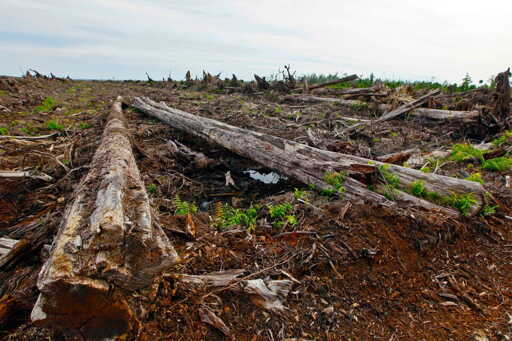
JAKARTA — A new study of palm oil concessions linked to Indonesian supply chains finds no evidence that corporate zero-deforestation commitments have led to additional reductions in deforestation. Tropical countries such as Indonesia continue to lose their forests at an alarming pace. In 2025, the world lost 4.3 million hectares of tropical primary forest, equivalent to more than 11 football fields of forest a minute . To curb this trend, palm oil-producing countries have introduced national policies in the past decade, while companies have increasingly adopted zero-deforestation commitments (ZDCs). When viewed through a before-and-after lens, Indonesian palm oil ZDCs appear highly successful at reducing deforestation. To determine how effective these commitments actually are, an international team of researchers compared deforestation trends in Indonesia’s palm oil sector — the world’s largest producer and exporter of the commodity — between concessions linked to supply chains with ZDCs and those without them. Using public databases to identify companies that have adopted ZDCs, the study, published in the Proceedings of the National Academy of Sciences (PNAS), found that companies had largely complied with their commitments. However, it found no evidence that those commitments produced an additional reduction in deforestation in Indonesian palm-oil concessions beyond broader changes affecting the sector. In both ZDC-linked and non-ZDC concessions, the study says, . During the full implementation period for ZDCs from 2018 to 2020, annualized deforestation fell to around 0.5% in both groups. In the researchers’ preferred, the decline was 6.5 percentage points in ZDC-linked concessions and 6.63…This article was originally published on Mongabay
From Conservation news via This RSS Feed.