

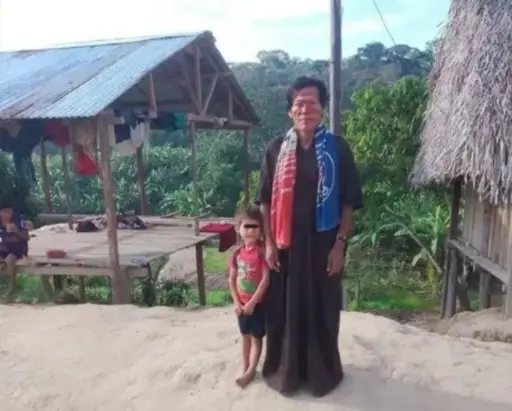
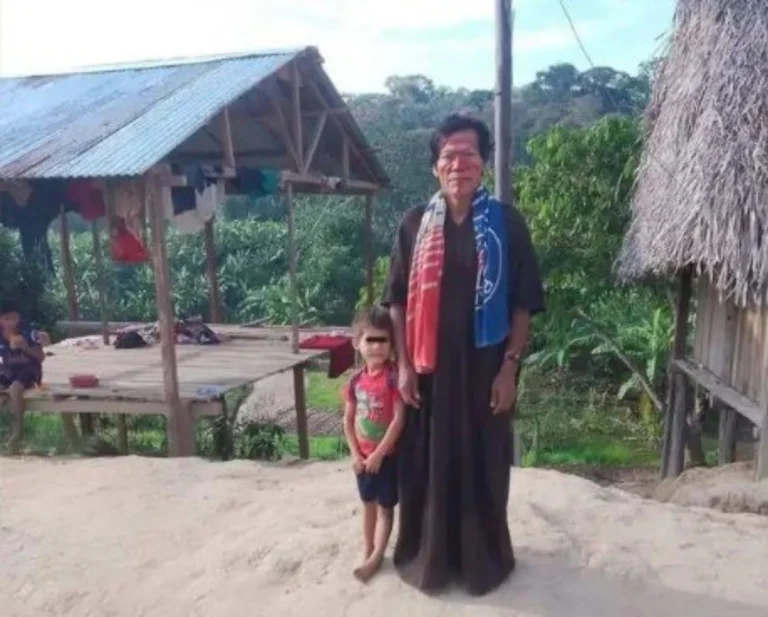
Américo Pascuala was shot dead while monitoring his community’s territory in Ucayali, prompting Indigenous groups to demand an investigation.
Indigenous leader Américo Pascuala was shot dead in Peru’s Ucayali region after confronting intruders who were extracting copaiba resin from trees inside his community’s territory, Indigenous organizations said.
RELATED: Recent Peru Earthquake Reopens Debate Over Disaster Response Capabilities
Pascuala, leader of the Onconashari Native Community in the Yurúa district, was carrying out monitoring and patrol duties when he encountered the intruders, according to the Regional Organization of Ucayali (ORAU), part of the Interethnic Association for the Development of the Peruvian Rainforest (Aidesep).
He confronted the intruders and was shot dead, ORAU said.
Indigenous organizations said Pascuala had previously reported the presence of people entering the community’s territory without authorization but received no support from authorities to address the situation.
Text Reads:  Indigenous leader Américo Pascuala, from the Onconashari Native Community, was shot and killed in the Ucayali region of Peru after catching intruders extracting copaiba resin on communal land. The leader was carrying out monitoring and surveillance duties when he confronted the invaders and was shot and killed. The Ucayali Regional Organization (ORAU) and the National Human Rights Coordinator (CNDDHH) condemned the crime.
 The organizations stated that the victim had reported the presence of invaders without receiving support from the authorities, and that unauthorized entry into Onconashari lands has been reported for 26 years. The CNDDHH demanded an immediate investigation by the Public Prosecutor’s Office and the Police, with an intercultural approach.
The National Coordinator for Human Rights (CNDDHH) condemned the killing, saying the circumstances were not unknown to the state. The organization said unauthorized incursions into Onconashari territory and threats against community members had been reported to the Ministry of Culture and the National Police for 26 years.
The CNDDHH called on prosecutors and police to launch an immediate and thorough investigation with an intercultural approach, determine those responsible for the killing and provide guarantees and protection for Indigenous people.
Copaiba trees produce a resin used for medicinal purposes, including as an anti-inflammatory, healing and antiseptic substance. The resin is also used in the cosmetics, hygiene and pharmaceutical industries.
Indigenous Amazonian organizations said at least 35 Indigenous leaders have been killed in Peru since 2020 for defending their territories against criminal groups and illicit extractive activities.
From teleSUR English via This RSS Feed.