

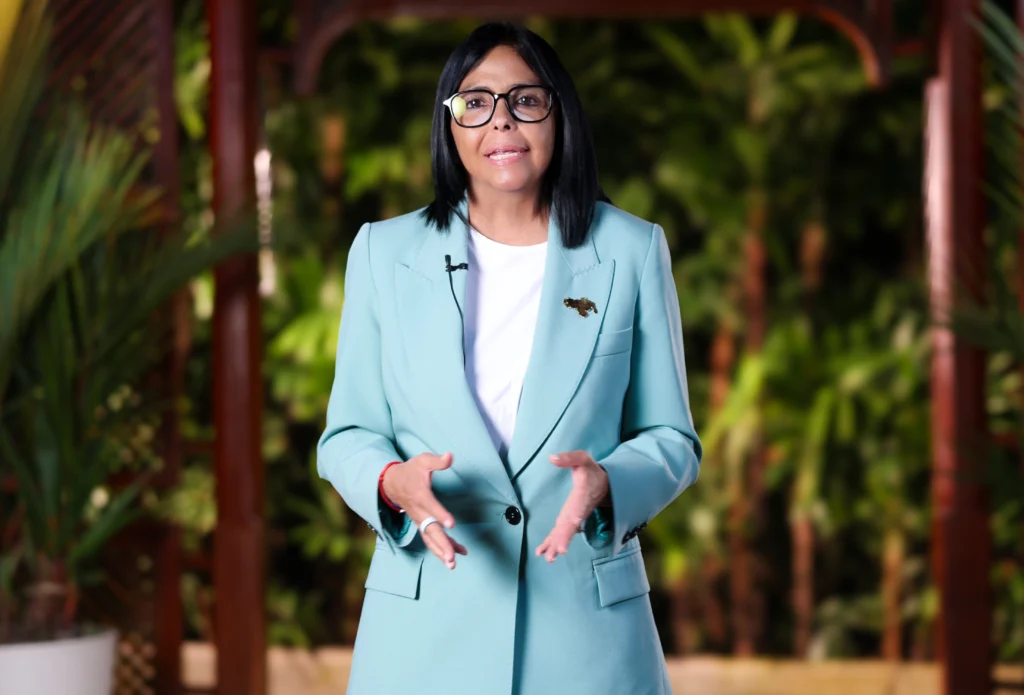
Venezuela’s Acting President reported this Monday that 28% of the debris has removed, two months after the devastating earthquakes of June 24, meanwhile the housing recovery continues.
During a national address, the Venezuelan Acting President Delcy Rodríguez presented a comprehensive balance of social assistance and habitat rehabilitation work carried out across the country.
The Plan Clean Dignified and Safe Plan, implemented in coordination with local teams, international technicians and specialists from the United Nations (UN), has cleared approximately 580,000 tons of rubble under strict environmental protection protocols.
RELATED: Venezuela Advances in Reconstruction Plan Two Months After Earthquakes
Rodríguez emphasized that the debris removal process is not merely a logistical operation but a task with deep human meaning for affected communities. “Those debris are not simply materials to be removed. There were homes, memories and, in some cases, the entire history of a family. That is why we are doing this work with respect and dignity while we advance in the recovery of every community,” she stated.
The operation has prioritized areas where rescue and recovery efforts required maximum caution, and the inclusion of UN specialists has guaranteed that international standards guide every phase of the clearance work. Authorities have also ensured that recovered materials are processed under environmental protocols that prevent additional harm to the affected regions.
Housing Recovery Accelerates
In the housing sector, the Acting President reported the delivery of 335 completely new homes, directly benefiting 1,172 people. In addition, authorities completed the comprehensive rehabilitation of 1,001 additional buildings, an effort that has favored another 3,503 citizens.
The institutional goal, Rodríguez assured, contemplates delivering more than 4,000 additional homes before the end of the current year. The Bolivarian government maintains permanent assistance for families who remain in shelters or temporary transit situations following the natural emergency.
The housing program combines emergency response with long-term urban planning. Each newly delivered home represents not only a roof for affected families but also a step toward restoring the social fabric of communities that lost schools, health centers and public spaces during the quakes.
Rehabilitation work has included structural reinforcement, repair of basic services and the restoration of community infrastructure, ensuring that families return to safe and dignified conditions. Local crews have worked alongside national brigades to accelerate the pace of delivery, while the government coordinates with regional authorities to identify priority cases.
The Acting President highlighted that the reconstruction process maintains a permanent channel of dialogue with affected communities. Citizen participation in the identification of housing needs, she explained, has been fundamental to guarantee that public resources reach the families that need them most.
Ver esta publicación en Instagram
Una publicación compartida de teleSUR English (@telesurenglish)
The affected regions continue to receive humanitarian support, and authorities have promised to maintain the same intensity of work until every family displaced by the June 24 earthquakes has a dignified place to live. For Venezuela, the reconstruction has become a national priority that tests both institutional capacity and social solidarity in the face of adversity.
From teleSUR English via This RSS Feed.