

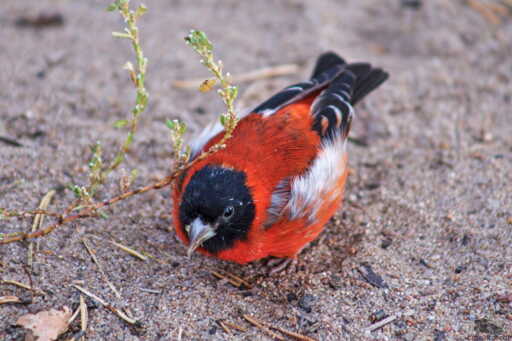
WICHABAI, Guyana — At sunrise in Guyana’s South Rupununi, Leroy Ignacio stops beside a tree scored with large claw marks. The animal responsible was a giant anteater. “They even rub their backs on the trunk to leave a scent behind,” says Ignacio, president of the South Rupununi Conservation Society (SRCS), as he demonstrates the motion. Indigenous researchers had long observed anteaters (Myrmecophaga tridactyla) climbing and marking trees, behaviors previously documented by scientists only in isolated cases. Working with four Indigenous communities, SRCS placed cameras at trees identified by locals. The resulting 883 recorded visits suggested the solitary animals use the trees to communicate. For nearly a quarter-century, SRCS has built a multi-community approach to conservation grounded in traditional knowledge. Its members are villagers, farmers and teachers who work with participating communities to research wildlife, develop conservation guidelines and teach local ecology. Before SRCS, Indigenous-led conservation in the Rupununi was mostly in the form of scattered projects and traditional stewardship by Makushi and Wapichan communities. But the discovery of an endangered bird, the red siskin (Spinus cucullatus), gave several South Rupununi communities a reason to organize across village boundaries. A flock of red siskins in Upper Takutu-Upper Essequibo, Guyana. Image by Nick Athanas via Flickr (CC BY-NC-SA 2.0). A multi-community movement It all began with a scientific trip, recounts Ignacio. In 2000, researchers from the Smithsonian and the University of Kansas, both in the U.S., came to the South Rupununi to survey birds. Duane De Freitas and other young Indigenous residents…This article was originally published on Mongabay
From Conservation news via This RSS Feed.