

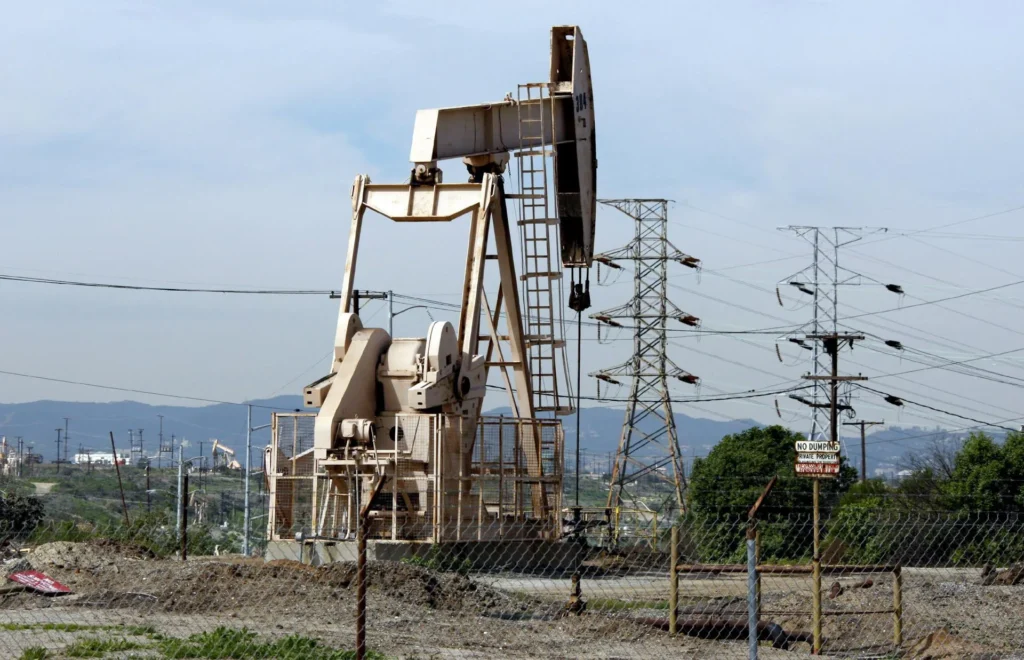
The U.S. Strategic Petroleum Reserve (SPR) fell to 298.7 million barrels in the week ending August 21, reaching its lowest level since November 1982, according to Department of Energy and Energy Information Administration (EIA) data.
The all-time minimum stands at 288.1 million barrels, recorded in the week ending November 26, 1982. The current figure reflects 20 consecutive weeks of declines since late March, a period in which authorities released 116.7 million barrels of crude from the emergency stockpile.
The total could fall further to 243.4 million barrels if the Department of Energy completes the release of 172 million barrels within 120 days. President Donald Trump authorized the measure, and Energy Secretary Chris Wright announced it in March as part of the strategy to stabilize fuel markets.
RELATED: United States Reaches Historic 40 Trillion Dollar Public Debt
Established in December 1975 after the Arab oil embargo, the U.S. Strategic Petroleum Reserve (SPR) has a storage capacity of 727 million barrels. Between December 2009 and July 2011, official statistics recorded volumes above 726 million barrels, an inventory that has declined in recent years as a result of successive conflicts.
The reserve represents the main strategic tool of the United States to respond to supply disruptions and sudden price increases. Crossing the 300-million-barrel threshold marks a symbolic milestone, since the federal stockpile has not stood at such reduced levels in more than four decades.
The SPR was designed as an emergency cushion for the nation’s energy security, and its drawdowns have historically been reserved for exceptional situations. The current release represents one of the largest operations in the reserve’s history, both in volume and speed.
US oil reserves are HISTORICALLY LOW:
The Strategic Petroleum Reserve (SPR) fell -5.3 million barrels last week, to 293.4 million barrels, the lowest since 1983.
Since the start of the Iran war, the US has been drawing heavily on its strategic reserves to help offset… pic.twitter.com/ZOeJJUWd9y
— Global Markets Investor (@GlobalMktObserv) August 20, 2026
Hormuz Closure Context
The latest reduction follows Trump’s decision to extract crude to contain the rise in energy prices caused by the closure of the Strait of Hormuz. The strategic waterway shut down as a consequence of the conflict initiated on February 28 by Washington and Israel against Iran.
Local media warned in May that the Trump administration was draining the SPR at an accelerated pace compared with previous governments, placing inventories at their lowest levels since the early 1980s. The warnings preceded the current decline, which has now brought the reserve below 300 million barrels.
The sustained drawdown reduces the strategic margin available to the United States to face future emergencies in a context of high international tension. Federal officials continue to evaluate the evolution of the conflict in the region and its impact on global energy supply.
With the release program still in progress, the SPR’s trajectory depends on the duration of the Hormuz closure and the evolution of crude prices. The Department of Energy maintains that the reserve retains sufficient capacity to guarantee supplies, although historical comparisons show that current inventories approach the minimum levels of the early 1980s.
Each barrel released reduces the buffer available to Washington in a scenario where the closure of Hormuz continues to disrupt global oil flows.
From teleSUR English via This RSS Feed.