

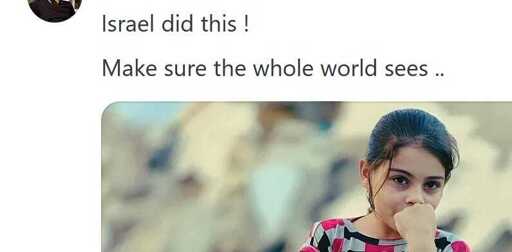
By BettBeat Media – Aug 22, 2026
The digital hallucination of resistance in the age of live-streamed genocide.
Gil Scott-Heron told us in 1970 that the revolution would not be televised. He understood that the medium of television was not a neutral conduit for truth but a mechanism of control, a kind of narcotic that turned citizens into spectators and political life into entertainment. But Scott-Heron could not have foreseen the more perfect trap that awaited us: a system in which the spectators would believe themselves to be actors, in which the oppressed would mistake the expression of their anguish for the exercise of their power, in which the act of witnessing genocide would be folded seamlessly into the same feed that sells you sneakers and dating advice. The revolution will not be televised. It will also not be tweeted, shared, hashtagged, or posted. Your feed is where revolutions go to die.
For three years, the people of Gaza have been exterminated in what scholars, human rights organizations, and the International Court of Justice itself have identified as a (most) plausible genocide. The images are everywhere. Children pulled gray and lifeless from rubble. Hospitals bombed into craters. Entire family lines erased from the civil registry. Rape, torture, and famine weaponized against a trapped and innocent population. And we have seen all of it. We have seen it in high definition, in real time, on our phones while waiting for coffee. We have shared it. We have commented. We have added our broken heart emojis, our “never again” captions, our flags in our bios.
And it has not mattered. The bombs have not paused. The siege has not lifted. The killing has expanded — into Lebanon, into the West Bank, into whatever territory presents itself next. Three years of the most documented atrocity in human history, and the documentation has saved no one.
Visibility is Not Power. awareness is Not Action
This is the great revelation of our time, and we refuse to face it: visibility is not power. Awareness is not action. The entire architecture of social media is built on the premise that expression equals participation, that sharing equals solidarity, that the performance of moral outrage is morally equivalent to resistance. It’s a lie. It is perhaps the most effective lie ever told to a population that imagines itself to be free.
“You are angry about genocide? Post about it. Feel the small neurochemical reward of likes and shares”
The corporate digital platforms on which we conduct our so-called activism are not public squares. They are privately owned machinery designed to harvest human attention, sell it to advertisers, and algorithmically manage the boundaries of permissible discourse. They do not merely fail to amplify dissent, they actively contain it. Your post about Gaza is shadow-banned, reach-throttled, shown only to those who already agree. You are not broadcasting to the world. You are whispering inside a sealed room engineered to feel like a stadium. The algorithm ensures you preach only to the choir. And it makes sure you mistake the choir’s applause for the sound of change.
Don’t believe it? Go to YouTube. There are mammoth channels with millions of subscribers you have never heard of: entire universes of content thriving in corners of the platform you have never once been shown. The algorithm chose not to introduce you. Now look at the channels discussing Palestine, the genocide, or the arms trade scraping by with tens of thousands of subscribers, occasionally hundreds of thousands if they’re lucky, perpetually demonetized and suppressed. The infrastructure of reach is not broken. It is working precisely as intended. Your world feels vast.
But it’s a cage.
Risk-free Activism
Chris Hedges once wrote that the liberal class, in its capitulation to corporate power, had abandoned its role as the conscience of the nation. What we witness now is something even more degrading: the conscience itself has been captured, commodified, and rendered inert. The liberal poster, the progressive influencer, the leftist with a following: these figures perform the aesthetics of dissent without any of its costs. They curate feeds of righteous anger. They build brands out of other people’s suffering.
One of our most credible Palestinian contacts has accused Norman Finkelstein of precisely this: a man who once publicly declared he had given up on Palestine, only to resurface years later as a prominent critical voice once the genocide made the cause impossible to ignore. To respect their privacy, I will not name this contact, but their point stands: when advocacy becomes a career, can the advocate be accused of benefiting from the suffering? The genocide is content. Resistance is a genre. And at no point does any of it require these figures to risk anything: their comfort, their safety, their social standing, their job, or even their afternoon.
“The screen is a trap. It captures your attention and returns to you the sensation of agency while ensuring you remain alone, atomized, and unthreatening”
Meanwhile, the monstrosity of death operates undisturbed. The United States continues to supply the bombs. European governments continue to provide diplomatic cover, arms contracts, and ideological legitimacy to a settler-colonial project that has dispensed entirely with the pretense of restraint. And the BRICS nations, except Iran, continue their trade with it. ICE raids escalate across American cities, torturing and sexually abusing minors in detention centers, tearing families apart in dawn operations that mirror the tactics of the worst authoritarian regimes throughout history. And what is the response? A post. A share. A story that disappears in twenty-four hours. We have perfected the art of feeling without acting, of knowing without doing, of witnessing without intervening.
The Pressure Valve: Social Media as a Psychological Pacifier
The most insidious function of social media activism is not that it fails to produce change. It is that it provides the psychological sensation of having produced change. This is its true purpose within the system. It is a pressure valve. It allows the rage and grief that might otherwise build into ungovernable collective action to dissipate harmlessly into the digital void.
You are angry about genocide? Post about it. Feel the small neurochemical reward of likes and shares. Experience the fleeting sense of community with others who have also posted. And then (and this is the critical part): go on with your day. Go to work. Pay your taxes, a portion of which funds the very munitions you have just condemned. The system remains whole. Your conscience has been soothed at zero cost to power.
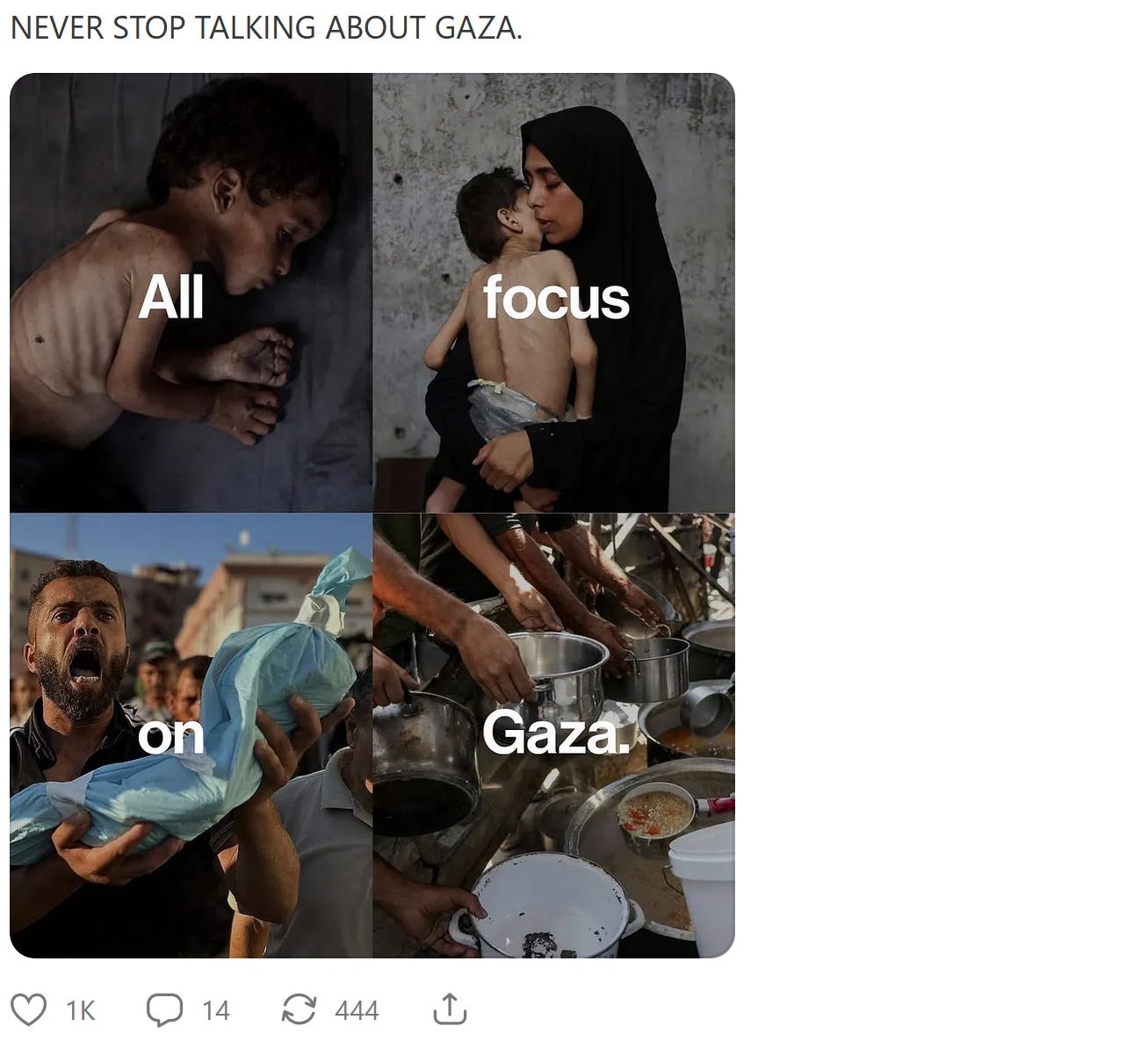
The fallacy: that ‘never stopping talking’ is the same as never stopping fighting. It isn’t, and it never was.
The civil rights movement did not triumph through awareness campaigns. The apartheid regime in South Africa did not fall because people shared infographics. The Algerian Liberation War did not end because the French expressed sadness about mass murder. These struggles required bodies in the streets, sustained economic disruption, personal sacrifice, legal consequences, and the willingness to be beaten, jailed, fired, and ostracized. They required people to make their opposition material — to cost the system something. A share costs nothing. A like costs nothing. And power does not respond to what costs nothing.
#Revolution
The revolution will not be hashtagged, neither will it go viral. It will not trend. It will not be optimized for engagement. It will not come with share buttons or comment sections. It will not fit in a tweet or a reel or a carousel post. It will be uncomfortable, unpopular, and invisible to the algorithm. It will require things that cannot be done from a screen: the risk of the body, the sacrifice of convenience, the dissolution of the carefully curated self. It will require us to be less interesting online and more effective in the world.
Every minute spent crafting the perfect post about atrocity is a minute not spent organizing a tenant union, blockading an arms shipment, confronting a politician in person, or building the parallel institutions that can sustain resistance over years, not news cycles. Every hour spent arguing with strangers in comment sections is an hour not spent in the physical company of comrades, developing the trust and discipline that real movements require. The screen is a trap. It captures your attention and returns to you the sensation of agency while ensuring you remain alone, atomized, and unthreatening. None of us is immune to it. Neither am I.
Those in power understand this perfectly. They are not afraid of your posts. They are afraid of what you might do if you stopped posting and started acting. They are afraid of general strikes, of port blockades, of civil disobedience that disrupts the flow of commerce and the machinery of war. They are afraid of organized, disciplined, sustained collective action that imposes costs they cannot ignore. They are not afraid of hashtags. They have never been afraid of hashtags.
The people of Gaza cannot be saved only by our awareness. They need us to make their suffering politically and economically unbearable for those who enable it. They need us to act in ways that matter, not in ways that perform. And every day we substitute the performance for the act, we become complicit in the very atrocity we claim to oppose.
Put down the phone. The revolution will not be hashtagged.
– Karim
(Substack)
From Orinoco Tribune via This RSS Feed.