

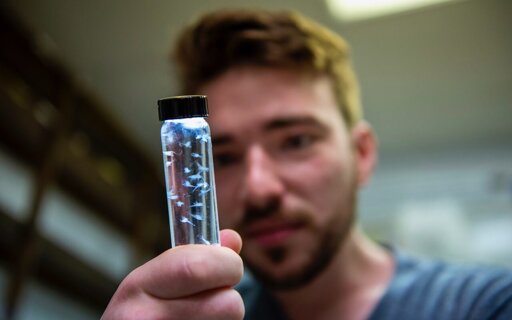
The future of Maine’s lobster industry may depend on a creature the size of a sesame seed. Researchers at the University of Maine have discovered that planktonic baby lobsters, or larvae, preferentially feed on Calanus finmarchicus, a tiny, calorie-rich zooplankton species, during one of the most vulnerable stages of their lives. Their new study upholds a theory advanced by scientists in the past decade that may be relevant to recent declines in Maine’s lobster harvest.
From Biology News - Evolution, Cell theory, Gene theory, Microbiology, Biotechnology via This RSS Feed.
You must log in or # to comment.