

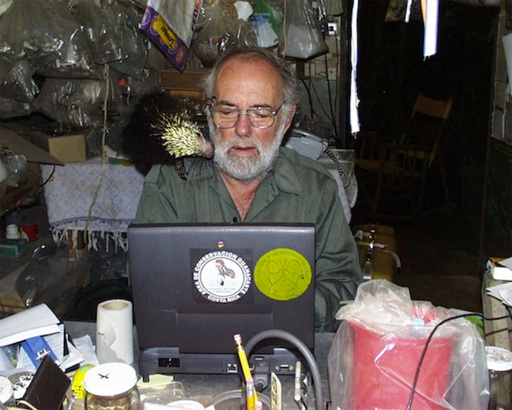
In northwestern Costa Rica, the forest did not return all at once. First the cattle were removed. Then the fires had to be stopped. Introduced grasses made the old ranchlands burn too easily. Fence lines had to be watched. Seeds had to arrive by wind, birds, bats, and the stomachs of passing animals. People had to believe the land could become something other than pasture, and then stay long enough to see it happen. A park on paper can still burn. It can still be poached, logged, ignored, or resented. The work requires science, salaries, political agreements, national investment, school programs, local trust, and daily maintenance. It requires people who remain after the first burst of money and attention has passed. Popular accounts sometimes reduced the story to a solitary figure: an American ecologist with a beard, a camera, a theory, and a park. It was never that simple. For more than half a century, Daniel Hunt Janzen has worked in tandem with Winnie Hallwachs, his wife, scientific partner, and frequent interpreter to the human world. Around them grew a larger Costa Rican undertaking, carried by park leaders, field staff, parataxonomists, teachers, donors, government ministers, neighbors, and families who turned a conservation idea into a working landscape. Janzen is now 87. His field work has slowed, and he has stepped back from university teaching to focus on his role as Chief Scientist of the Guanacaste Dry Forest Conservation Fund (GDFCF), the nonprofit conservation organization he and Hallwachs founded with his…This article was originally published on Mongabay
From Conservation news via This RSS Feed.