

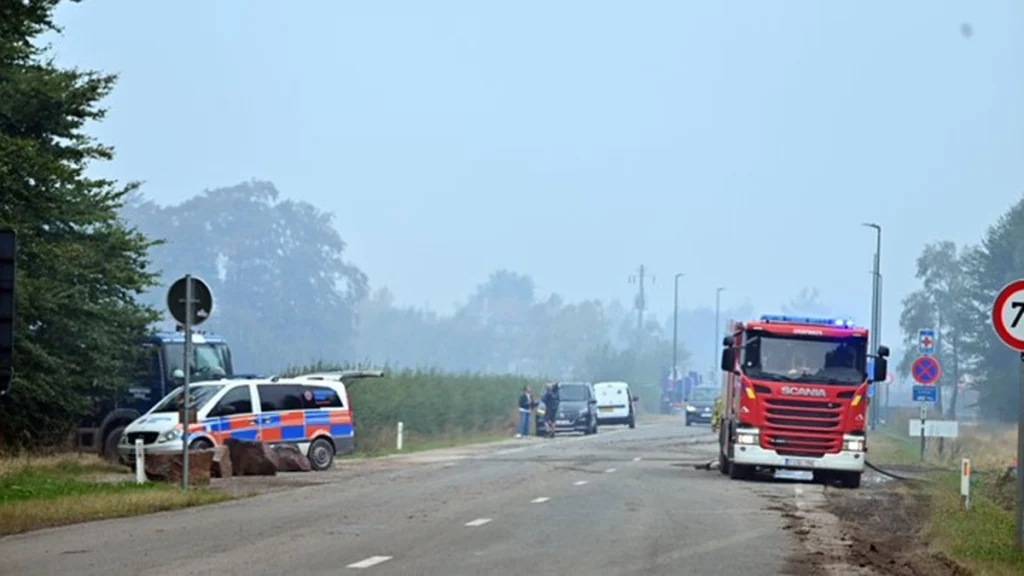
The fire in the Hautes Fagnes nature area has burned 3,366 hectares and now covers a 27-kilometer perimeter.
On Monday, the fire in the Hautes Fagnes nature area in the Belgian province of Liege in the east remained active more than a week after it began, following several flare-ups overnight, and now covers a 27-kilometer perimeter.
RELATED:
Colombia Ombudsman Urges National Support as Tolima Wildfires Burn Over 20,000 Hectares
Although the fire has been under control since Aug. 20, small flare-ups and the accumulation of smoke due to weak winds are the main concerns for firefighting services, which recommend that residents remain inside their homes and close doors and windows.
The latest report from firefighters indicated that 3,366 hectares have already been burned since the fire began Aug. 14 on the border between Belgium and Germany.
Belgian Interior Minister Bernard Quintin recently announced that the federal government will propose a “national resilience plan” to address large-scale fires such as the current one, the largest in Belgium’s history.
Le terrible calcul concernant l’incendie des Hautes Fagnes : au total, la zone incendiée fait 27 kilomètres de périmètre https://t.co/bdtq9UmUol
— RTL info (@rtlinfo) August 23, 2026
The text reads, “The grim calculation concerning the Hautes Fagnes wildfire: in total, the burned area covers a perimeter of 27 kilometers.”
European Commissioner for Crisis Management Hadja Lahbib will visit the areas affected by the fire in Belgian and German territory on Tuesday, where she will meet with local and national authorities, visit affected residents and oversee the response of firefighting teams on the ground.
“The devastation in Hautes Fagnes is a clear reminder that the risk of wildfires is changing across Europe. Our firefighters and emergency services are on the front line, working tirelessly to protect communities,” Lahbib said.
The Belgian European commissioner recalled that “Europe responded by sending teams and aircraft from across the continent to fight the fires and support those affected” as soon as Belgium requested assistance through the European Civil Protection Mechanism.
After the mechanism was activated Aug. 15, the European Commission provided emergency satellite mapping from Copernicus and coordinated the deployment of two aircraft from Sweden, six helicopters from the Netherlands, Germany and Norway, and specialized firefighting teams from the Netherlands and Spain.
The European Commission described the 2026 fire season as “exceptionally serious,” noting that by Aug. 12, the area burned had already doubled the average for that time of year. The European Civil Protection Mechanism has been activated 10 times so far, resulting in the deployment of more than 700 firefighters, more than 200 vehicles and 38 aircraft.
teleSUR/ JF
Source: EFE
From teleSUR English via This RSS Feed.