

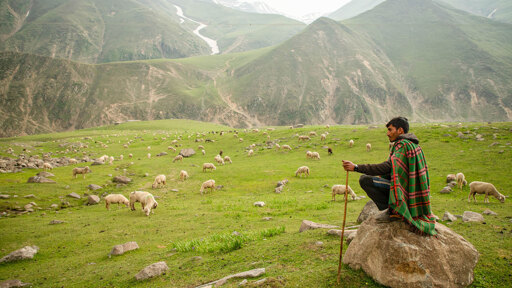
Cattle are a central part of the identity of Andrew Msami’s Maasai community in northeast Tanzania. Herd size determines social position, and many people keep all their wealth in livestock, not banks. But in recent years, Msami and others have been forced to sell the animals and buy goats, which can handle drought better but are less financially and culturally valuable. Msami says adapting to a shifting climate has been a part of Maasai life for generations, but recent conditions represent an existential threat.
“We have to adapt because it’s like desertification is attacking our identity,” Msami told Grist. “If you lose your identity, it means you have lost everything.”
The Maasai are pastoralists, a term that describes the roughly 500 million people around the world who tend herds of livestock like cattle, goats, and sheep. They often move with the animals as they seek grass and water. Because they live and work in places with arid conditions and extreme temperatures, they are particularly vulnerable to climate change.
Around the world, drought and land degradation threaten rangelands, which make up roughly half of the planet’s landmass, and the pastoralists from Tanzania and Sudan to Nepal and Mongolia that rely on them. Desertification is occurring at 30 to 35 times the historical average, threatening even the most resilient communities. That’s on top of an influx of invasive species, extractive industries, tourists, and other threats.
To address these overlapping crises, Msami and hundreds of other pastoralists are in Mongolia this week for the United Nations Convention to Combat Desertification, or UNCCD. They are calling for stronger protections for Indigenous pastoral traditions, greater access to funding and resources to combat the crisis, and official recognition that generations of experience living on increasingly marginal lands offers lessons for adapting to a hotter, drier world.
“We want to give the world a message that it’s not only the land that you will have to really look at,” said Msami, who is the program lead for the Pastoralists Indigenous Non-Governmental Organizations Forum, or PINGOs Forum, which is a network representing over 50 pastoralist organizations in Tanzania. “But you look at the people in that land, and maybe their lives should not be disturbed or sacrificed for the development of the world.”
That message must first overcome a global environmental movement that has not always prioritized rangelands and the peoples who steward them.
In 1992, world leaders gathered at the historic United Nations Earth Summit in Brazil, where they identified three great environmental challenges: climate change, biodiversity loss, and desertification. Global conferences were established for each, creating a forum where the world would develop plans to tackle them. In the decades since, trillions of dollars have flowed toward the first two, while desertification has largely been relegated to a problem for the developing world to address.
“But now the history is catching them because when you look at Spain, France, even Sweden, all those countries, they have a bigger drought ever since the last two years,” said Hindou Oumarou Ibrahim, who is Mbororo from Chad and the first chair of the Indigenous peoples caucus at UNCCD. “So it is becoming a developed countries issue, and now they start paying more attention, but still it does not get the same attention on the level of political will or finance.”
Although this is the 17th meeting of the convention, Ibrahim described this year’s event as “unique, historic, and particular.” That is because it is the first with a formal caucus specifically for Indigenous peoples, something not found at the climate and biodiversity conferences. Because of that, Ibrahim and others consider this gathering a unique opportunity for Indigenous pastoralists to advocate for their rights and advance their goals on the international stage.
Read Next
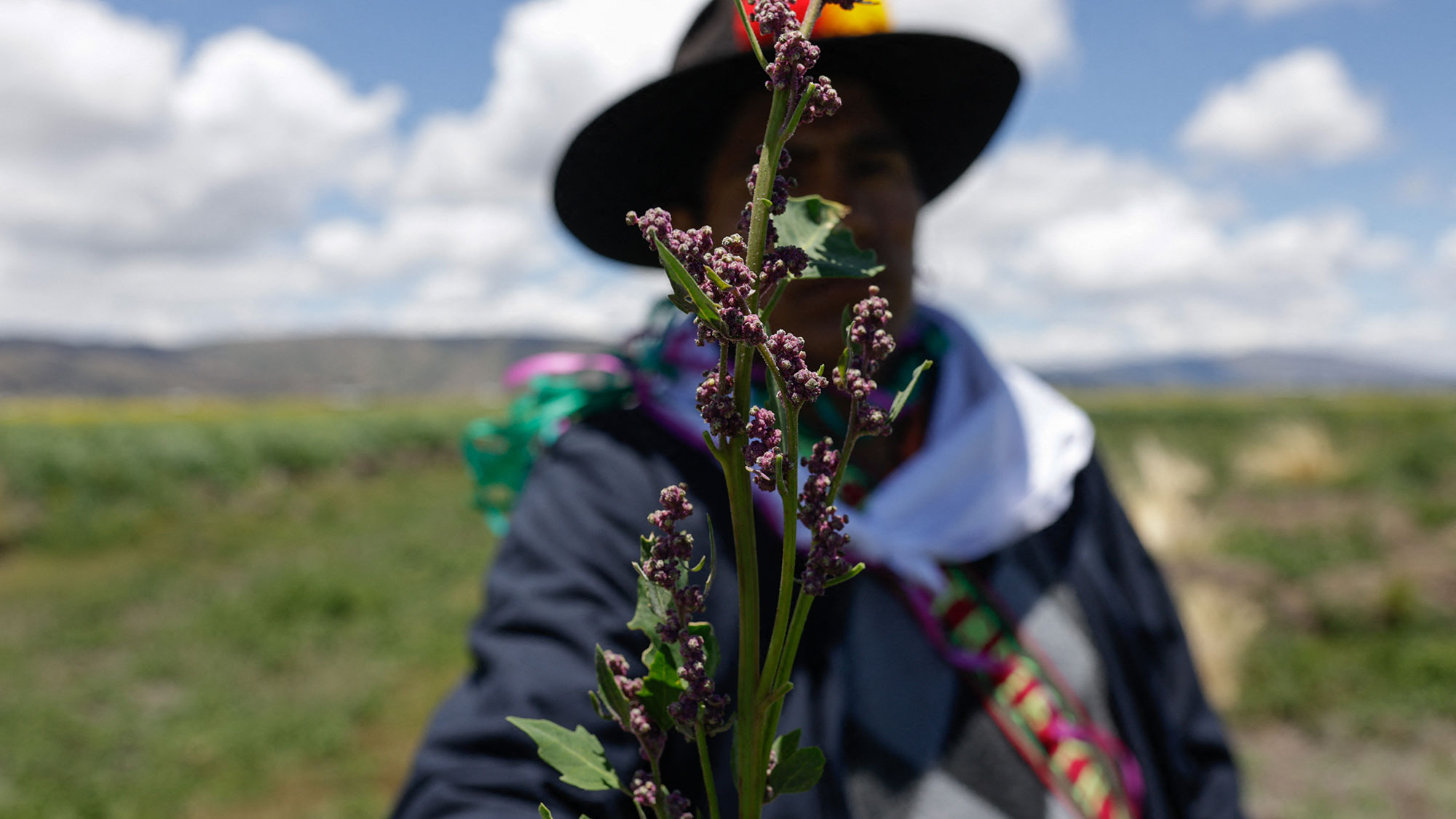
Indigenous cultural practices are a climate solution, report finds
The gathering also comes during the United Nations’ International Year of Rangelands and Pastoralists, which Ibrahim said has had a positive impact on raising awareness of the challenges communities like his face and the contributions they are making to climate resilience.
Despite those signs of progress, attendees in Mongolia said that the Indigenous caucus has faced resistance. In the first week of the conference, Ibrahim led a protest to demand full participation for the caucus and for its official functions to be established.
As the world increasingly works to address drought, Ibrahim and others are concerned that, after decades of being overlooked, a global focus could sideline them even further. About a third of Mongolia’s population practice pastoral lifestyles, for example, but often have no role in global climate discussions.
Some countries have responded to drought and land degradation by restricting pastoralist herd sizes and restricting movement. That comes despite scientific evidence that pastoralism boosts biodiversity and supports climate resilient landscapes, among other benefits.
But Ibrahim said that the rate of desertification has accelerated beyond the point where traditional knowledge alone is enough. She said in Chad, the desert is advancing two kilometers, or 1.2 miles, each year. “We have the land degradation very, very fast, and of course we use our knowledge to try to restore the land,” she said. “We try to fix it, but it is still there.”
That’s why a call for greater legal protections and resources for their livelihoods is central to this year’s conference. “Securing land and mobility rights is not separate from climate adaptation,” said Solange Bandiaky-Badji, who is coordinator and president of the Rights and Resources Initiative, a global coalition of over 200 organizations focused on land rights. “It is a fundamental part of building resilience.”
Bandiaky-Badji says the rest of the world should learn about climate adaptation and resilience from pastoralists. But, she said, none of their expertise and experiences matter unless countries protect rights to land and mobility. The right to free, prior, and informed consent, which requires that Indigenous peoples have a say in what occurs on their lands and in their waters, is one that Bandiaky-Badji said needs greater enforcement. Because pastoralists are mobile, their land rights are not always recognized, and pastoralist leaders often do not receive an invitation to negotiate agreements and solutions.
Both Ibrahim and Bandiaky-Badji said global climate change and biodiversity conferences should follow the UNCCD’s focus on active inclusion of Indigenous voices.
But beyond that, Bandiaky-Badji said desertification and rangelands can no longer be treated as secondary issues. “There is a link between climate resilience, protecting biodiversity, and restoring landscapes,” she said. “They’re all interrelated. And until we start seeing them as interrelated, we might have these different COPs, but it will not really solve the systemic problem that we have been dealing with. And the climate crisis is a systemic problem that we need to deal with.”
This story was originally published by Grist with the headline Living with drought has taught pastoralists lessons the world needs on Aug 24, 2026.
From Grist via This RSS Feed.