

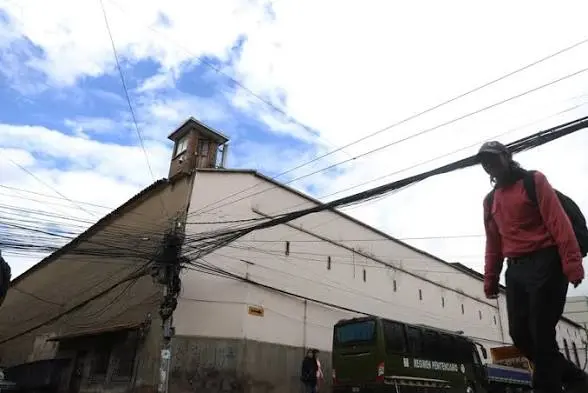
Bolivia’s Ombudsman’s Office issued a warning on Sunday over grave human rights violations inside the country’s penitentiary centers, spotlighting a critical overcrowding predicament, inadequate staffing, and a breakdown of sanitary and medical services, as detailed in its 2025 annual torture-prevention mechanism report.
The prison population nationwide reached 33,058 in 2025, marking an almost 100% increase from the 17,305 inmates recorded five years earlier. The resulting pressure has pushed incarcerated individuals into hallways and improvised sleeping quarters. The report also notes systematic delays in disbursing the daily 8-boliviano (roughly $0.69) food allowance, alongside failing septic systems, water shortages, and unchecked garbage accumulation.
RELATED: Bolivia Jails Argentine Adviser Over Attempted Femicide
Police presence is insufficient, multidisciplinary teams are absent, and public defense coverage remains scarce, particularly in provincial jails. More than half of the current prison population lacks a final conviction, leading the ombudsman’s office to assert that the system operates as a human repository, systematically undermining the presumption of innocence.
Drug-related offenses account for 60% of female incarcerations. As of late 2025, roughly 190 children were living behind bars with their mothers, without access to specialized meals or a designated daily stipend.
A mere 86 healthcare workers are tasked with attending to the entire prison population, and an estimated 90.64% of deaths occurring in custody are attributed to diseases directly linked to the saturated system and limited medical access.
The National Mechanism for the Prevention of Torture (MNP) put forward 14 measures, including judicial “decongestion” hearings to expedite alternative sentences and procedural benefits, reinforcing care for female inmates and their children, guaranteeing multidisciplinary teams, and strengthening job reinsertion programs.
From teleSUR English via This RSS Feed.