

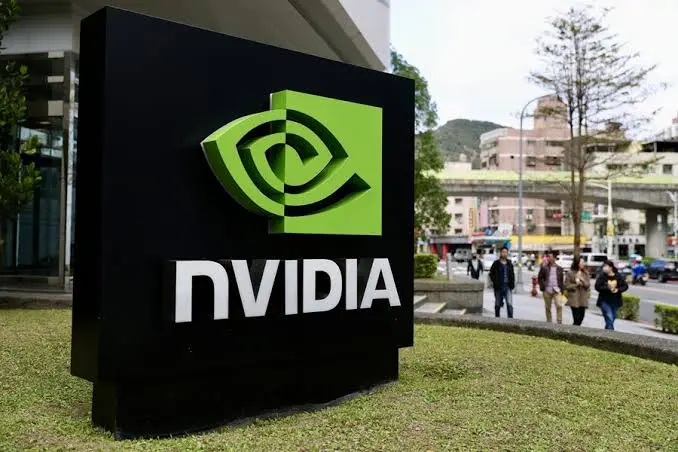
Nvidia AI investment reaches $6B: Poolside deal targets open-source AI to rival China’s DeepSeek. Explore tech transfer, engineering hires, and market implications.
Related: China To Limit Access to Nvidia Chips: FT
Nvidia AI Investment: $6 Billion Deal Targets Open-Source Platform to Rival Chinese Models
Nvidia AI investment reached a historic milestone on Saturday, August 22, 2026, as the U.S. graphics processor giant announced a $6 billion licensing agreement with AI startup Poolside to develop a powerful open-weight artificial intelligence model. The deal, valued at $6 billion for a non-exclusive license to Poolside’s “Model Factory” technology plus an additional $1 billion equity investment at a $12 billion pre-money valuation, aims to create a highly competitive open-source platform capable of challenging Chinese AI heavyweights like DeepSeek and Kimi K3, while also presenting a lower-cost alternative to closed-model U.S. rivals such as OpenAI and Anthropic.[wsj][packetnebula][runtimewire][forklog]
The transaction includes the transfer of technological rights and the direct incorporation of 109 Poolside engineers into Nvidia’s workforce, enabling the semiconductor firm to integrate advanced engineering capabilities to accelerate the creation of its new open-source system. The alliance represents an operational shift designed to reduce operational costs compared to proprietary tools, facilitating corporate user customization of algorithms according to international market demands.[wsj][packetnebula][runtimewire][forklog]
Nvidia AI Investment: Open-Source Strategy and Engineering Integration
The Nvidia AI investment initiative marks a strategic pivot toward open-weight models, which are generally far cheaper to operate and allow easy customization by developers and enterprise users. By licensing Poolside’s Model Factory—the system behind the Laguna family of open-weight coding models—Nvidia gains a ready-made operation for building U.S.-based open AI ecosystems, directly challenging both Chinese frontier models and American closed-system giants.[wsj][packetnebula][runtimewire][x]
For detailed coverage of the deal, see The Wall Street Journal: Nvidia Is Spending $6 Billion to Build a Powerful U.S. Alternative to Chinese AI
The $6 billion licensing payment will be distributed to Poolside’s existing investors by the end of 2027, while the startup remains independent under its three co-founders. The non-exclusive nature of the license allows Poolside to continue using and licensing the technology to other companies, ensuring flexibility in the competitive AI landscape. Nvidia’s $1 billion equity investment at a $12 billion pre-money valuation further solidifies the partnership, providing Poolside with capital to expand its operations while Nvidia integrates the Model Factory into its Nemotron open-weight model initiative.[packetnebula][runtimewire][note][winzheng]
For technical analysis of the Model Factory license, see Packet Nebula: Nvidia’s $6B Poolside Deal: 109 Hires, Non-Exclusive
The integration of specialized engineering teams is expected to reinforce Nvidia’s global leadership in data processing and AI model development. Industry analysts highlight that the bet on open source will accelerate innovation cycles within the global tech sector, as open-weight models enable faster iteration, lower costs, and broader accessibility for developers worldwide. Nvidia will maintain technical development investments to ensure compatibility with its latest-generation graphics processors, leveraging its hardware dominance to support the new open-source ecosystem.[wsj][runtimewire][forklog][x]
The announcement generated high expectations in the tech ecosystem due to its potential impact on pricing and distribution of computational solutions. Technical delegations are set to initiate operational transitions over the coming weeks to advance the final design of the open-weight model, which aims to rival leading frontier models within the next year. The project also puts pressure on closed frontier systems from OpenAI and Anthropic, offering a customizable, cost-effective alternative for enterprise and research applications.[wsj][forklog][wccftech][x]
Inicia en Shanghái la Conferencia Mundial de Inteligencia Artificial. Xi Jinping llamó a garantizar la seguridad de la IA: “Debe ser una herramienta confiable para la humanidad”. Rusia y China anunciaron nueva organización mundial para el desarrollo de la IA. #China… pic.twitter.com/9bIdMhh9Mu
— teleSUR TV (@teleSURtv) July 17, 2026
Geopolitical Context: U.S.-China Tech Competition, Open-Source Dynamics, and Global AI Governance
The Nvidia AI investment unfolds against a backdrop of intensifying U.S.-China technological competition, where AI development has become a strategic priority for both nations. China’s rapid penetration of open-weight models like DeepSeek and Kimi K3 has disrupted the global AI landscape, offering high-performance alternatives to U.S.-dominated closed systems while challenging export controls and sanctions regimes aimed at limiting Beijing’s access to advanced semiconductors.[wsj][forklog][x][economictimes.indiatimes]
Regionally, the deal reinforces U.S. efforts to consolidate AI infrastructure and maintain technological sovereignty in the face of Chinese advancements. By investing in open-source ecosystems, Nvidia seeks to counterbalance China’s state-backed AI initiatives while fostering a domestic innovation environment that can compete on performance, cost, and accessibility. The move aligns with broader Biden administration policies promoting open AI research and public-private partnerships to sustain U.S. leadership in critical technologies.[wsj][runtimewire][forklog][x]
Globally, the Nvidia AI investment reflects a shift toward open-weight models as a counterweight to proprietary systems, with implications for AI governance, intellectual property, and market competition. Open-source platforms enable broader participation in AI development, reducing barriers for smaller firms, academic institutions, and Global South actors who lack resources for closed-model licensing. However, the trend also raises questions about safety, accountability, and dual-use risks, as open-weight models can be more easily modified for malicious applications.[runtimewire][note][economictimes.indiatimes][buttondown]
The Poolside deal also highlights the growing convergence of hardware and software in AI development, as Nvidia leverages its GPU dominance to support end-to-end AI infrastructure, from training and inference to evaluation and deployment. This vertical integration strategy positions Nvidia as a full-stack AI provider, capable of competing with cloud giants like Microsoft, Google, and Amazon, while also challenging specialized AI firms like OpenAI and Anthropic.[wsj][winzheng][wccftech][kucoin]
Furthermore, the Nvidia AI investment signals a maturation of the AI market, where licensing deals and equity partnerships are becoming as important as acquisitions for securing talent and technology. The non-exclusive nature of the Poolside license allows for flexible collaboration and multi-party innovation, contrasting with the acquisition-heavy strategies of previous years. This approach may set a precedent for future AI deals, balancing competitive advantage with ecosystem development in an increasingly crowded and complex market.[packetnebula][runtimewire][forklog][note]
Los fabricantes chinos alcanzaron una participación del 97% en los envíos mundiales de robots humanoides durante el primer semestre de 2026, con la entrega de aproximadamente 19.100 unidades y un incremento interanual del 272%, lo que consolidó al país como principal proveedor… pic.twitter.com/s1MIj0RPjh
— teleSUR TV (@teleSURtv) August 18, 2026
From teleSUR English via This RSS Feed.