

Lula Rio rally consolidates broad coalition: Paes endorsement, working-class outreach, and electoral strategy in Bolsonaro stronghold. Explore key outcomes.
Related: 5 Key Outcomes from Lula Trump Call on Trade and Elections
Lula Rio Rally: First Campaign Event Consolidates Broad Coalition in Strategic State
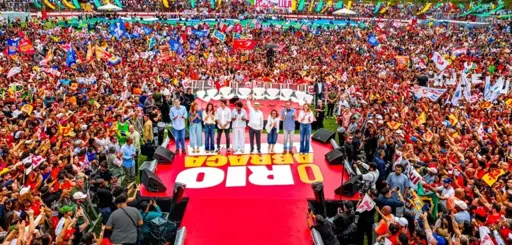
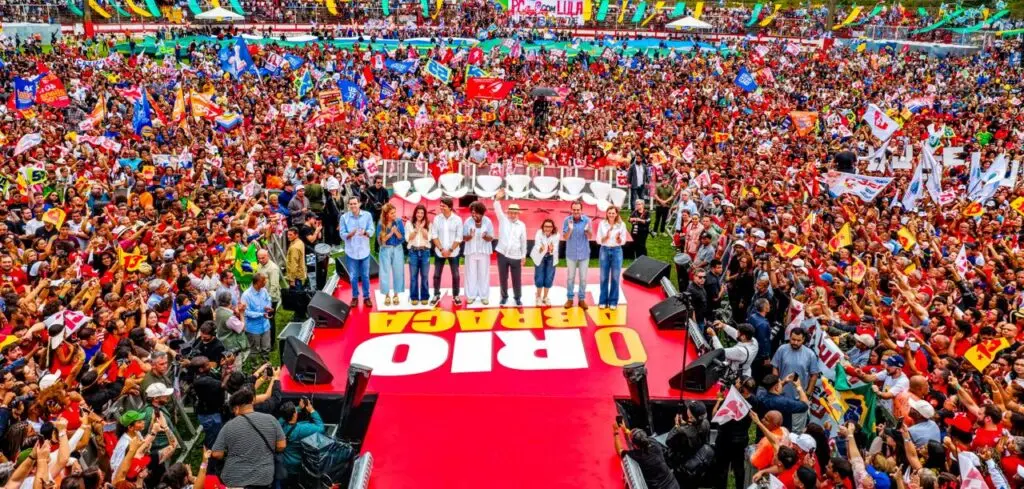
The Lula Rio rally on Saturday, August 22, 2026, marked President Luiz Inácio Lula da Silva’s first major campaign event in Rio de Janeiro, held at the historic Moça Bonita stadium in the working-class neighborhood of Bangu. The rally aimed to consolidate a broad-front coalition, uniting progressive and traditional right-wing sectors in a state long considered a conservative stronghold of the Bolsonaro family.[oglobo.globo][oglobo.globo][www1.folha.uol.com][telesurtv]
The event, organized just one week before the official start of the electoral propaganda period, underscored Lula’s strategy to maintain direct contact with working-class bases in the historic cradle of Brazil’s labor movement. The stadium, founded by factory workers, symbolizes regional working-class resistance, making it a fitting venue for Lula’s campaign launch in a state where the Workers’ Party (PT) has lost ground since 2018.[oglobo.globo][www1.folha.uol.com][telesurtv][itatiaia.com]
Lula Rio Rally: Alliance with Paes and Electoral Strategy
During the rally, Eduardo Paes, candidate for Rio state governor from the Social Democratic Party (PSD), reaffirmed his support for Lula, despite the PSD fielding its own presidential candidate nationally. The decision to integrate into Lula’s regional support platform consolidates an alliance spanning the center-left and traditional right, a strategic move to counter the influence of Flávio Bolsonaro and his allies in the state.[oglobo.globo][oglobo.globo][opovo.com][cnnbrasil.com]
For details on the Paes-Lula alliance, see O Globo’s coverage: Lula and Flávio Hold Simultaneous Campaign Events in Rio
The territorial contest in Rio is particularly significant due to its large electoral roll and status as a historic bastion of Brazilian conservatism, represented by the Bolsonaro family. Despite the deep-rooted presence of his opponents in the region, voting intention polls position Lula at the forefront of preferences for the upcoming Brazilian elections, with recent Datafolha surveys showing him leading with 39% against Flávio’s 33%.[oglobo.globo][www1.folha.uol.com][deia][tvtnews.com]
In response, opposition sectors executed simultaneous launches in the region, with Flávio Bolsonaro headlining a rally at the Maracanãzinho complex to promote his gubernatorial proposal. Flávio’s event also served as the joint launch of PL party candidates in the state, including Douglas Ruas, Paes’ adversary in the race for state government.[oglobo.globo][cnnbrasil.com][deia][g1.globo]
For official updates on the electoral calendar and campaign coverage, the Superior Electoral Court (TSE) of Brazil and Brasil de Fato maintain real-time reports and schedules. These sources provide verified information on candidate agendas, polling data, and regulatory compliance throughout the campaign period.[oglobo.globo][noticias.r7][metropoles]
For TSE’s official campaign calendar, see: Tribunal Superior Eleitoral – Eleições 2026
Strengthening Lula’s Leadership and National Ambitions
According to Edinho Silva, PT’s national president, the expansion of state-level alliances reflects Lula’s political strength. “President Lula is notably expanding the policy of alliances in the states, which demonstrates the solidity of his leadership, the strength of his candidacy, and the strength of his government,” Edinho stated. He attributed this capacity to the presence of federal programs in the states, which facilitates regional agreements.[oglobo.globo][telesurtv][itatiaia.com][opovo.com]
The challenge, however, lies in transforming this political reach into electoral advantage. With alliances spanning different ideological spectrums, the PT is betting on Lula’s strength in the states to sustain the presidential candidacy while simultaneously expanding its presence in state governments, the Senate, and the Chamber of Deputies. This dual strategy aims to maximize coattail effects and secure legislative support for a potential fourth term.[oglobo.globo][www1.folha.uol.com][cnnbrasil.com][deia]
The PT leadership is also attempting to reconcile the campaign with the presidential agenda. Although Lula has officially entered the race, Edinho confirmed that he will continue prioritizing his duties as head of the Executive. Campaign schedules will be defined week by week, based on the president’s availability and the electoral needs of each state. This approach seeks to balance governance responsibilities with electoral mobilization, avoiding perceptions of neglecting official duties.[oglobo.globo][telesurtv][itatiaia.com][metropoles]
During the rally, Lula focused on public security and education, promising to create a Ministry of Public Security if re-elected and to end the territorial dominance of criminal factions in Rio. He emphasized a non-pyrotechnic approach, stating, “We will not make Carnival or fireworks, killing 100 or 200 [criminals]. We will arrest them. We will say the village belongs to the people, the school belongs to the people, the bakery belongs to the people. Not to the bandits.”[www1.folha.uol.com][deia][g1.globo][valor.globo]
Flávio Bolsonaro, in contrast, centered his intervention on the fight against organized crime, proposing to classify major factions like Primeiro Comando da Capital (PCC), Comando Vermelho, and paramilitary militias as terrorist organizations. He declared that the country cannot endure “four more years” of PT government, framing the election as a choice between security through militarization and security through social inclusion.[cnnbrasil.com][deia][g1.globo][g1.globo]
Geopolitical Context: Regional Power Dynamics and Democratic Resilience
The Lula Rio rally unfolds against a backdrop of intensifying political polarization in Brazil, with Rio de Janeiro serving as a microcosm of the national contest between progressive coalitions and right-wing populism. The state’s third-largest electoral roll makes it a decisive battleground, where alliances like the one between Lula and Paes signal a pragmatic shift toward centrism to counter Bolsonaro’s influence.[oglobo.globo][cnnbrasil.com][deia][tvtnews.com]
Regionally, the rally reflects broader trends in Latin America, where incumbent leaders face pressure to balance governance with electoral mobilization amid economic uncertainty and security challenges. Lula’s emphasis on social programs and institutional stability contrasts with Flávio’s hardline security rhetoric, mirroring similar divides in Argentina, Colombia, and Mexico, where left-wing governments navigate rising crime and public discontent.[oglobo.globo][www1.folha.uol.com][telesurtv][deia]
Globally, the Lula Rio rally underscores the resilience of democratic institutions in Brazil, despite years of polarization and attempts to undermine electoral credibility. The simultaneous campaigns of Lula and Flávio, conducted under the oversight of the Superior Electoral Court, demonstrate the strength of Brazil’s electoral framework, even as both sides accuse each other of destabilizing tactics.[oglobo.globo][tvtnews.com][noticias.r7][metropoles]
The alliance between Lula and Paes also highlights the growing importance of subnational coalitions in shaping national outcomes. By securing support from centrist governors and mayors, Lula aims to build a legislative majority that can sustain his agenda beyond the presidency, a strategy increasingly common in fragmented multiparty systems across the Global South.[oglobo.globo][opovo.com][cnnbrasil.com][tvtnews.com]
Lula no Rio de Janeiro: o Brasil Pronto Pra Mais https://t.co/IQpMdyHuW6
— Lula (@LulaOficial) August 22, 2026
From teleSUR English via This RSS Feed.