


“The risk is existential,” writes Nadine Hura about the threat of bird flu to the native bird population in Aotearoa. This photo shows Rāwiri Walsh doing a health check on a kiwi in 2024. (Photo: Robin Drummond)
What does it matter that Aotearoa’s first reported case of H5N1 bird flu didn’t receive karakia? Nadine Hura explains.
Heather and me
Heather the tūī sits in her spot on the highest branch in our neighbour’s garden. Every morning between 7:39 and 7:53, she arrives to survey the block. Sometimes she won’t appear until after 8:00, which always throws me. Then I have to remind myself that Heather observes the tohu, not the glowing digits of a Fitbit.
I think my surprise has something to do with her being wild. She could go anywhere, but she keeps coming back here. Sometimes she’ll scritch beneath a wing. Sometimes the sun is so bright she is just a silhouette. Almost always, she departs to the south.
I probably shouldn’t have named her — it’s such a proprietary thing to do. And she may not even be female, tūī being staunchly defiant of external gender assignment.
The honest-to-god truth is that I didn’t pick her name. I heard it. Clear and soft like the inhalation of breath: heather. Probably, it just rhymes with feather. But now, having looked up the origins of the name, I feel like it’s a good fit. Heather grows in the rocky moors of Scotland in severe conditions where other, less hardy plants would succumb. Heather has purple and white flowers, symbolising beauty and protection. The name is associated with resilience, strength, independence and endurance — exactly like Heather.
Every few days, I fill up a bowl of sugar water and place it in the garden near the front window. If Heather catches our other resident tūī, Steve, she’ll have at him.
It’s this bolshy attitude that I’m relying on to protect Heather from the H5N1 virus, which was found in the lungs of a skua (those big grey seabirds) on Petone beach two weeks ago. A day earlier, a sick kāhu in Wairarapa had been euthanised and was later found to have the virus too. Ever since then, I’ve been obsessively consuming every bit of news I can about this “highly pathogenic” new strain of bird flu.
Turns out, I might be the only one who wasn’t aware just how long the arrival of H5N1 to our shores has been anticipated. Virologists, trappers, wildlife vets, taiao groups, sanctuaries, zoos, predator-free groups, farmers, health officials and OG backyard bird-lovers all over Aotearoa have been watching with apprehension as the disease spread like an angry rash across Asia, Africa, Europe and the Americas.
Until now, Oceania, otherwise known as “the seabird capital of the world”, has been spared. But our geographic isolation was only ever buying us time.

Heather the tūī sits in her spot in Nadine’s garden gazing southward like a sentry. (Photo: Nadine Hura)
What is bird flu — and how serious is it?
Avian influenza, also known as bird flu, is a viral disease that mainly affects birds, but it can also infect other marine mammals including seals, sea lions and penguins. It isn’t a high risk for humans, except those who come into close contact with infected animals. It is not another Covid. Low pathogenic or harmless strains of the virus have been carried in the respiratory systems of ducks, swans and geese for years.
Occasionally, it has crossed into poultry farms where it has mutated into something lethal, but previous outbreaks have always been successfully contained and eliminated. Then, in 2020, while grounded planes helped slow the spread of Covid-19 in humans, the avian flu took off, international borders evaporating under the wingspan of seabirds. The virus was carried bewildering distances, spilling over for the first time to infect seals, sea lions, penguins, and even cattle.
Low Pathogenic Avian Influenza is already present in wild birds and is usually mild and unnoticed. High Pathogenic Avian Influenza (HPAI), by contrast, causes severe illness and death, and spreads rapidly between birds.
The carnage around the world has been unprecedented and devastating. More than 400 bird species have been affected. The death rate is probably higher than even the worst estimates (millions) since we don’t really know what’s happening at sea. In South America, more than 30,000 southern elephant sea lions died in a single breeding season, with some colonies losing up to a third of their population. On Bass Rock in Scotland, one of the world’s largest gannet colonies, 75,000 breeding pairs were lost. Researchers say it could take two decades to recover — and that’s without adding other stressors like climate change and overfishing.
Like a lot of scientific terms, the phrase “mass mortality events” has a way of obscuring the spiritual impact of such a thing. Communities who share the land with these taonga species have been left with PTSD. One ranger in Scotland described what he saw as an “apocalyptic nightmare”.
The neurological effects of H5N1 cause birds to stumble about flightless and limp, collectively gasping for breath. Colonies that would normally be raucous with mating energy fall eerily quiet. Birds convulse, shudder and wheeze before dying on top of each other at contorted angles. Afterwards, all that remains is to clean up: a brutal, physical task requiring full-body PPE. In Scotland, gannets had to be hauled off cliffs to prevent scavengers from feeding off them and spreading the infection further. Incinerators burned for weeks.
What should we expect in Aotearoa — and are we ready?
Now that H5N1 is here, officials have advised that it will become endemic and we should prepare to live with it. The government response is focused on reducing and mitigating the impact, protecting vulnerable species, and reducing the spread.
Some animals who get the virus will pull through, and the immunity they develop will eventually protect future generations until they fully recover. This is reassuring for populations strong enough to take a hit of up to a third or even two (although ironically, it’s likely to mean introduced species like Canada Geese will be the first to bounce back).
But for critically endangered manu (birds) that belong here and nowhere else, the risk is existential. After decades hanging in the balance, there is deep concern for the kākāpō, takahē, kakī (black stilt) and tūturuatu (shore plover) and dozens more. Our kekeno (fur seal) and whakahao (sea lion) colonies, some of which have only just come back from the brink, are also at risk.
A brief line in the Ministry for Primary Industries One Health plan states that “extinction events” are certainly a possibility. Extinct, in its Latin-root form, means to “put out” or “extinguish” — an act carried out with deliberate intent. In te reo Māori, the stative verb ngaro, or matangaro, is more fitting. It means to disappear from sight forever, a conclusive state from which there will never be any return.
So what can we do to protect our taonga in an environment where disease is present?
Bianca Ranson (Ngāpuhi, Ngāti Kahu ki Whangaroa), who works for Forest and Bird and has learned from tohunga mātauranga Rāmiri Stewart, is worried about seabirds who are already starving and sick, especially with El Niño approaching.
“The impact of this virus won’t be isolated. Mauri essentially refers to biodiversity. That’s what Rāmiri taught us. When a species goes extinct or endangered, it impacts the fabric of the life-sustaining capacity of the whole ecosystem.”
In theory, the One Health plan is meant to ensure that central government agencies, local and regional councils, Māori, industry partners, service providers, and other stakeholders work together in a co-ordinated and collaborative way, with MPI assuming leadership. Yet so often, Māori know what’s happening on the whenua or moana long before agencies do. This means their mātauranga, expertise and leadership are critical to our preparedness, response and recovery.
There isn’t a cure for H5N1. Although a vaccination programme is underway, its use is limited. It isn’t viable for most of our wild bird populations because two doses are required, meaning only birds in captivity or those with a high probability of being captured a second time are likely to get it. Twenty-eight species have so far been approved for the vaccine, and 300 birds have already had their first dose. It’s not clear how the approved vaccination list is being developed, but DOC’s decision to deny the vaccine to the critically-endangered kororā in Kaikōura has been openly challenged, suggesting the “One Health” approach might be more of an option than a promise.
Officially, MPI recognises that Māori are in a unique position to “provide wisdom and insight [to] support the delivery of biosecurity outcomes for New Zealand.”
That sounds suspiciously like a karakia to me. But Rāwiri Walsh (Taranaki Whānui), kaimahi taiao with Te Tira Whakamātaki and iwi liaison for Capital Kiwi, says that when the first case of H5N1 was confirmed, even the request by mana whenua in Wairarapa for the kāhu to be returned for karakia and burial rites was denied.
When asked why during a DOC webinar, staff fumbled to answer and recommended contacting MPI. Perhaps the biodiversity risks of returning the manu were deemed too risky for Māori to handle. Maybe officials couldn’t see the point of karakia. Or maybe the fact that the skua, not the kāhu, had already been officially recorded as our “first case of H5N1” relegated its status. In the end, the kāhu was autoclaved (zapped under high-pressure steam) — twice — and sent to a landfill in a biohazard bag.

Rāwiri Walsh (Taranaki Whānui), kaimahi taiao with Te Tira Whakamātaki and iwi liaison for Capital Kiwi. (Photo: Sara Tansy for the Capital Kiwi Project)
‘One Health’ plan, but very different seats at the table
Such an outcome is a long, long way off a seat at the table for Māori — which is what poultry farmers are guaranteed under the One Health approach. The commercial poultry industry has a “formal partnership” with MPI in which “responsibility, decision-making, costs and resources” are shared.
Māori, by comparison, get “participation, engagement and collaboration”. No mention of decision-making, let alone shared resources. Perhaps if our native manu were a snack instead of a taonga it’d be a different story — though I doubt that’s any comfort to the chickens whose fate in the event of a poultry outbreak is too distressing to describe.
For those working on the ground every day to restore our natural ecosystems, seeing decades of painstaking, patient, physical and spiritual work threatened not only by a disease but also by disorganisation must hit a nerve somewhere between despair and rage.
For people like Rāwiri Walsh, this is not a job, but a responsibility with life-and-death consequences. We’ve met before, on a kiwi-release trip earlier this year. He tells it straight. His frustration about the One Health approach is both general and specific. “There’s ambiguity around who is actually in charge, there’s no clarity about how to feed into decisions (like vaccination lists), and there is no confidence there will be any resource to support Māori when inevitably the responsibility falls to us.”
For example, guidelines developed last year by Te Tira Whakamātaki and MPI specifically for ringatoi (artists) who practise cultural harvesting have mysteriously disappeared from DOC’s website, exactly at the moment they’re urgently needed to keep whānau safe.
Rāwiri also doesn’t agree with the official view that because we can’t control the movement of wild birds, there’s not much we can do. The One Health approach states that there will be no interventions to actively manage infected populations, other than to reduce disturbance. In keeping with the original definition of “extinct”, it does indeed sound a lot like “doing nothing on purpose”.
“As Māori, we don’t like to be told there’s nothing we can do,” Rāwiri says. “There is always something we can do. You could tell us there are 100 birds and 99 are going to die, and we will still do something.”
Doing nothing also conflicts with the tikanga Rāwiri observes, which wouldn’t allow him to ignore an animal suffering a protracted, painful death. Rāwiri is experienced, he knows what is sometimes required. He resents the implication that Māori don’t have the knowledge or can’t be trusted to make safe calls in a given situation.
DOC’s decision to stop passing deceased taonga species on to iwi and hapū for customary purposes is another example. “They act like we don’t know how to deal with viruses,” Rāwiri says. “But that’s for us to consider. Let hapū and iwi make our own decisions. We will find what’s right for us.”
So what would a “right” response to H5N1 look like, if Māori were leading?
Rāwiri doesn’t need any time to think about it. “We’d reinstate our wetlands. We’d plant out natives. We’d supercharge our predator eradication programme because we know from our experience with Covid-19 in humans that it’s always the most vulnerable that get picked off first. So we have to give those species the best shot at survival by reducing all the other threats out there.”
It suddenly occurs to me that setting up an artificial watering hole in the garden, where Heather is encouraged to have a munch with Steve, is effectively lowering their in-built defences against H5N1. The fact that tūī are naturally solitary means they’re most likely to weather this threat.
Rāwiri is still yapping. He is adamant that you definitely don’t give up before you’ve thrown everything at it. “You just need to compare the government’s response to Mycoplasma bovis,” he says, referring to the $886m 10-year campaign to eradicate the disease that threatened to wipe out the dairy industry in 2018. “MPI decided they wanted to banish that disease from our shores forever, so that’s what they set out to do.” (They’re on track to declare eradication in 2028.)
Would $886m make a difference in the fight against bird flu? “Well,” says Rāwiri. “Compare that to what Predator Free 2050 received this year.” I did. There was $10m for Auckland, $5.5m for Wellington and $3.9m for Otago.
In total, Mycoplasma bovis got 45 times the elimination investment: 45 times the effort, 45 times the capacity, 45 times the concern, energy and belief — for cows.

“Karakia can be about fortifying ourselves for the journey ahead, especially an unknown one,” writes Nadine about proper use of tikanga to prepare for an effective response to the disease threat. Pictured is Rāwiri Walsh, kaimahi taiao with Te Tira Whakamātaki. (Photo: Sara Tansy for the Capital Kiwi Project)
‘One Cuzzy’: An Indigenous alternative to One Health
The more Rāwiri and I talk, the more I understand why the karakia the kāhu didn’t get is so significant. He was the one who raised the issue in the DOC webinar.
In the recording, you can hear how the question sounds alongside others, such as “Will PCR testing be made available to sanctuaries?” (No, they’re unreliable), and “What is the freshness criteria for MPI to successfully detect what diseases are present in a carcass?” (Within 48 hours of death, but 24 is best.)
So what would a karakia achieve that a policy document can’t? It’s difficult to explain to those who misguidedly think karakia is just a rote ritual to open and close a hui.
Karakia can be about fortifying ourselves for the journey ahead, especially an unknown one. Every time my partner heads up to Gizzy in his loyal Toyota Hiace, he spends at least 15 minutes doing a check of the tyres, the oil, whatever else might need attention, and at the same time he’s got his head down, half-muttering to himself. I always shriek “Drive safe!”, but he’d already activated the safety plan when he visualised and named each place he would pass through.
That’s karakia. It’s as practical as checking the tyres. It’s about focus, intention, preparation and safety. It’s a bridge between the physical world and the spiritual world — the things we can control, and the things we can’t.
Had the kāhu been returned to mana whenua as requested, there would have been an opportunity to acknowledge the mana and mauri of the kāhu. Tikanga to “pure” (neutralise) the disease would have been observed before releasing the kāhu to the spirit world so that no other living things would be at risk in future.
As a tohu, or symbol, it makes a lot of sense that it would be the kāhu, not MPI, unifying our approach. Kāhu are kaitiaki, “kanohi hōmiromiro” — birds with excellent vision. They can take in the whole diverse landscape, but they can also home in on the detail. Exactly the skills we will need in the coming months and even years.
On a practical level, karakia brings people together under Māori leadership. Melanie Mark-Shadbolt, tumu whakarae of Te Tira Whakamātaki, says a better name for the H5N1 response we need is “One Cuzzy”.
It sounds like a punchline, but Melanie is serious. She says it quite literally reflects what’s already happening on the ground.
“Tangata, manu, and te taiao don’t need to be connected artificially through agencies and officials, because they are already related through whakapapa. As Māori, we are always talking across these spaces and sharing information. This is whanaungatanga in action. With H5N1, the task is to understand our responsibilities to one another and act collectively.
“One Cuzzy is an Indigenous approach because it places relationships above policy. It means asking not just how we can control the disease, but what is happening to our relations? What do we owe them? Who holds knowledge about them, and how do all the cuzzies act together?”
Inside the uncertainty and tension of H5N1, as Rāwiri says, is an opportunity to consider how we might turn a challenge or threat into something that can assist, fortify and even increase our collective strength. There are no easy answers, but with that grief comes purpose and unity — to protect the living, and to protect te taiao, even when the heart is heavy. That’s the point of karakia.
Instead, both the skua and the kāhu lie double-blitzed and bagged in a pit of human refuse.
In the background, I hear the squall of Rāwiri’s six-week-old pēpī signalling the end of our kōrero. As I hang up, I catch sight of a kōtare I’ve never seen before, sitting on Heather’s branch. I am shook. It makes me remember something Rāwiri said about humans naming wild animals on that kiwi-release trip. He said that not naming wild manu is radical, because it signals they exist in safe numbers and belong to the world — not to us.
I raise my hand, anyway, and give a wave. Then I go and remove that bowl of sugar water.

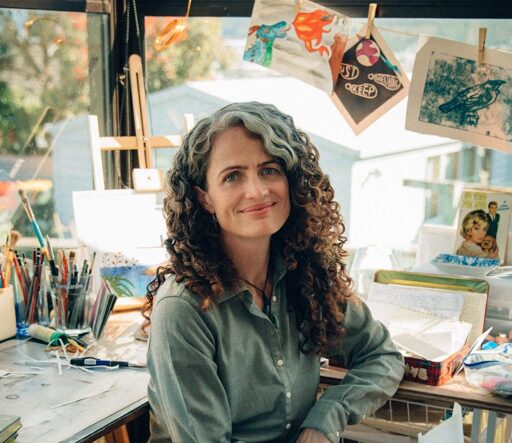
Nadine Hura. (Photo: Ebony Lamb)
This is an edited version of a piece published as a guest blog for Te Tira Whakamātaki, Aotearoa’s Indigenous Biodiversity Network. Visit their website to find out more about how you can prepare for a possible outbreak of H5N1 in your rohe, including helpful resources for whānau and ringatoi (artists).
Nadine Hura (Ngāti Hine, Ngāpuhi, Pākehā) is a writer whose work connects literature, social policy and environmental justice. She has written extensively forE-Tangata*,The Spinoff,and other platforms. A māmā, poet and essayist, Nadine lives in Titahi Bay, Wellington, while pursuing her writing and advocacy for the protection of Papatūānuku and revitalisation of mātauranga Māori. Her first book, Slowing the Sun, was published in 2025 by Bridget Williams Books.*
H5N1: WHAT WE NEED TO KNOW TO KEEP SAFE
Do not touch or move sick or dead birds or animals. Keep people and animals away. Seeing dead or dying taonga species can be incredibly distressing. Responses should be guided by both tikanga and safety. Report sightings of three or more sick or dead wild birds or marine mammals in a group to the hotline 0800 80 99 66. Take a photo, record your exact location, and be aware of pathways for spreading the virus, including contaminated footwear, vehicles, clothing or equipment.
Report sightings of dead or sick animals to the Māori Biosecurity Network, Mātaki. This register is critical as we know that kaitiaki on the whenua and moana notice things long before any agency does. It will also help collate a tangible record of the mahi Māori are doing and help make a case for it to be properly funded.
In some situations, contact may be unavoidable. In such cases, follow strict hygiene practices. Use disposable gloves, face masks (P2/N95 only), covered clothing and closed footwear. Avoid touching your face, wash thoroughly, and disinfect equipment, footwear and clothing. Do not eat, drink, use your phone or smoke while handling birds. Avoid drinking or food preparation. Health NZ has information including practical guidelines for workplaces and recreational groups, as well as symptoms, diagnosis and treatment.
Verify sources of information can be trusted. There are some alarming conspiracies already circulating about bird flu, so be vigilant about the sources of information you’re hearing and sharing, especially with whānau who have been vulnerable to misinformation in the past.
Protect pets and domestic animals H5N1 is transmitted through snot, poo and flesh, so you don’t want your dog sniffing out a carcass before you’ve had a chance to call them back. Keep them on a leash wherever the risk might be elevated.
Protect backyard chickens and pet birds The best way to keep your birds safe is to prevent them having contact with infected birds or contaminated materials and environments. Make enclosures bird-proof, keep your birds away from open ponds, lakes, creeks, and keep pet birds inside or under cover, separate from wild birds. Always maintain good hygiene, clean footwear and wash clothing. See this video and this information booklet for more info.
Don’t feed wild birds. Note to self: backyard feeding isn’t natural. Plant a harakeke. If you’ve been feeding your pals for a long time, DOC recommends slowly weaning them.
INFORMATION, RESOURCES, AND SUPPORT SPECIFICALLY FOR MĀORI
Prepared by Te Tira Whakamātaki for DOC, the HPAI H5N1 guide for Māori Communities is an excellent starting place for whānau, hapū and iwi. A short summary is included here:
○ Don’t wait for an outbreak. Agree in advance who will respond if sick or dead birds are found, how reporting will happen, and who will inform MPI as well as whānau and the wider community. Discuss and agree tikanga protocols and share it (a simple on-page plan is better than none!).
○ Share info within whānau and communities including what HPAI is, what to look for, and what to do. Discuss it at hui, share this guide and make sure kaitiaki, marae and committees and land managers are informed.
○ Identify areas in your rohe where birds and marine mammals are present such as coastlines, wetlands, rivers, forests, and sites of cultural importance. Knowing your baseline helps you spot changes. Consider mapping key locations where taonga species are known to gather or breed.
○ Connect early with local councils, DOC and other agencies HPAI will not affect every rohe in the same way, so local knowledge, relationships and leadership will be essential. Iwi and hapū may want to engage early with councils, DOC, Health NZ and MPI to understand what support is available, clarify expectations, and ensure local priorities and tikanga are recognised. In some cases, iwi or hapū may choose to take their own actions, such as placing a rāhui or setting local protocols, to protect people, species, or sites of significance. Building relationships before an event means your tikanga, priorities, and local knowledge will be understood when the pressure is on.
○ Report sightings and confirmed cases to Te Tira Whakamātaki’s HPAI reporter www.ttw.nz/hpai
Ngā Tikanga mō ngā Mahi toi me ngā manu: HPAI and Cultural harvest. While we do know that these guidelines exist (they were previously published on DOC’s website), they do not currently appear to be available. As soon as MPI re-publishes them, this link will be updated. In the meantime, please reach out to Te Tira Whakamātaki for support and advice.
PRACTICAL THINGS YOU CAN DO
Give money: There are organisations all over the country doing everything they can to protect our native wildlife. No amount of coin you can spare is insignificant. I highly recommend donating to Te Tira Whakamātaki, or any Indigenous-led group, as they are much less likely to receive government support. The Ecosanctuary Project also has a map of groups you could potentially support nationally.
Get involved on the ground: A thriving ecosystem is our best defence against H5N1. Predator Free NZ has everything you need to get trapping, including toolkits, resources suitable for tamariki, and guides. Use the map-search tool to find your local group and join it now.
Lock-in emotionally:
Make sure your dog has done the kiwi aversion training. Get it done.
Understand the mahi on the ground: If you want to see, feel, and understand the real-world impact of native restoration mahi, follow Capital Kiwi on social media or check out their YouTube channel. There’s heaps of inspiring interviews about the work Rāwiri and the team at Capital Kiwi are doing — but trigger warning for spontaneous crying and good surprises.
Read more: Bill Morris’s reporting from Ngāi Tahu’s southernmost island (otherwise known as the Auckland Islands) in 2016 (What’s killing the sea lions) gives deep context to the catastrophe we are potentially facing. Highly recommend these features written prior to the arrival of bird flu in 2024 (Skyfall) and two weeks ago, after it arrived (Deadliest avian flu in history).
Watch: Fall in love and wonder with the taonga species we share this land and ocean with: Our Big Blue Backyard can still be accessed on TVNZ+. Earlier episodes are available on the NZ Geographic website.
The post Why we need a ‘One Cuzzy’ approach to bird flu appeared first on E-Tangata.
From E-Tangata via This RSS Feed.