

Bullets:
Iran has been the target of economic sanctions for decades.
North Korea and Russia are also under heavy sanction, and locked out of most of the USD and SWIFT financial networks.
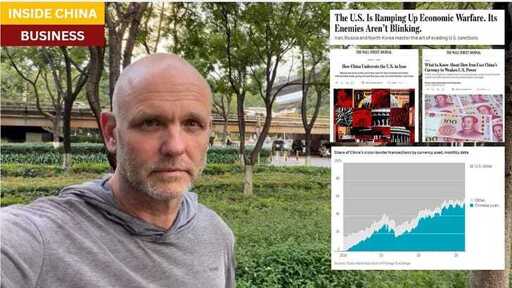
But China has developed comprehensive alternate platforms, and massive volumes of global trade are now conducted outside Western systems, and oversight.
CIPS and mBridge allow China’s trading partners to do business faster and cheaper, and to ignore sanctions from the US and Europe.
Inside China / Business is a reader-supported publication. To receive new posts and support my work, consider becoming a free or paid subscriber.
Report:
Good morning.
Iran has been under economic sanction for decades. North Korea, for years. Russia has been under heavy sanctions since 2022. And being under sanction by the West used to be a big problem. But the BRICS countries have set up new financial trading platforms, parallel systems to the US dollar and SWIFT-based systems. The plumbing is largely in place, and trade outside the USD is growing fast.
Most countries outside North America and Western Europe would strongly prefer to have a faster system, which costs less than routing their settlements through banks in the United States or in the EU. That’s to say that the demand was always there, but the technology has finally caught up to match the urgency of governments and businesses in the Global Majority countries.
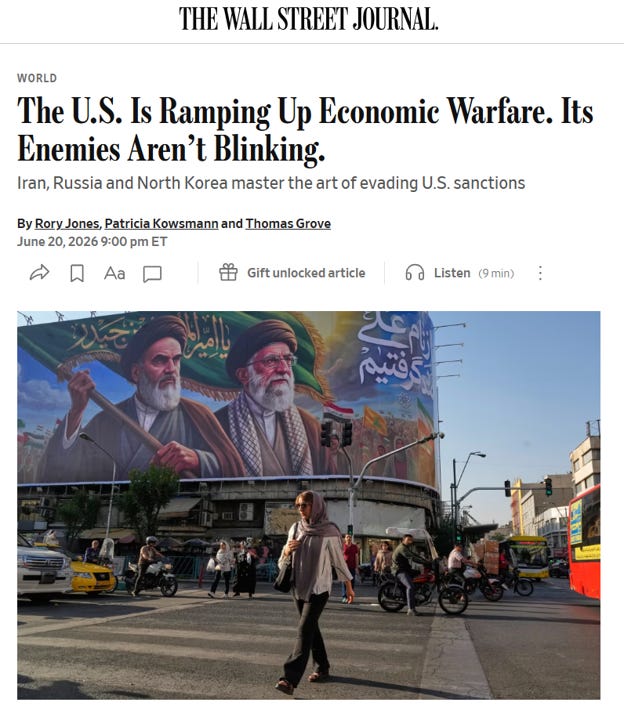
As countries move toward those non-dollar and non-SWIFT financial networks, economic sanctions simply lose their power. Over the past year and a half, the United States hundreds more NEW sanctions on Iran, and billions of dollars’ worth of trade still happens, anyway, between Iran and the rest of the world. Governments can and do ignore the threats and sanctions from Washington and Europe, as they figure out ever-more creative ways to just go around them.
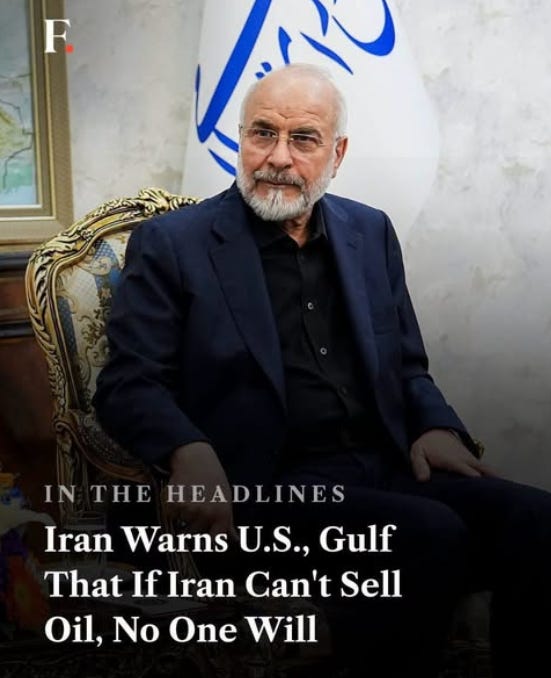
Hard force still does work, to a large extent—the US Navy is blockading Iranian ports, since the economic sanctions have failed to stop the Iranian oil trade. Iran’s position, is that if they cannot export oil through the Strait of Hormuz, then neither can other Gulf States, and so there are effectively two blockades of marine traffic, outbound and in. Iran is still selling oil via tankers that do slip through the US Navy blockade, and also over land networks.
These new financial systems, operating outside the US dollar, have developed while even more new economic sanctions being piled on. In the seven years ending in 2024, sanctions by the United States more than tripled. And previously that was a big deal—so-called “economic pariahs” would simply be cut off from the ability to do business at all, because anyone trying to do business with them would be sanctioned as well.
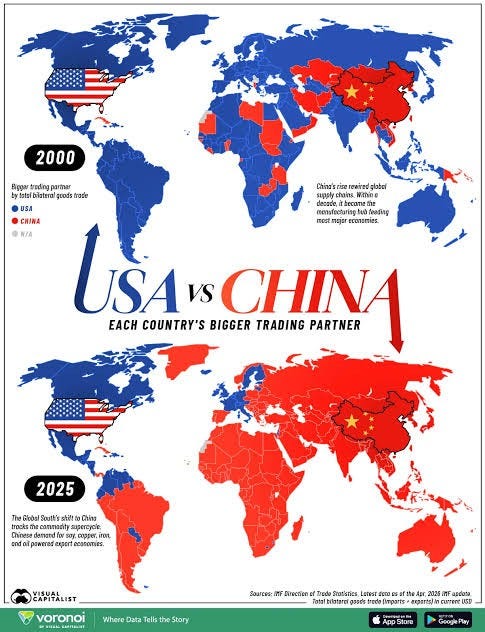
China is the elephant in the room, first by virtue of its enormous trading relationships across the world, and because the financial systems here are now bullet-proof against sanctions for business done back and forth with China. Iran, for example, sells oil to China, who in turn sells products and services back to Iran.
Our analysts are blind to how large those trading volumes are—these are all just guesses on their part, because nobody sees it. And China presents another problem for sanctions enforcement, because shutting Chinese banks out of Western trading systems means empty shelves and warehouses in Western markets, and a complete lockdown of Chinese raw materials and intermediate goods that supply factories in North America and Europe.
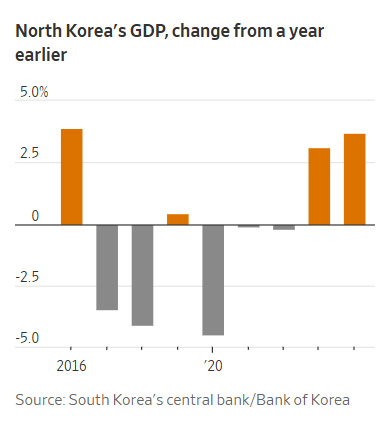
North Korea is a great and surprising example of how economic sanctions simply failed, because their relationships with Russia and China are tight. Its economy is booming, and Pyongyang is “flouting” Western sanctions on them, and on Russia, and is having no trouble stocking up on oil and raw materials.

Satellite images show the progress of North Korea’s economy, compared to five years ago. Oil storage facilities are growing, to meet soaring demand from new car buyers. Trade volumes between North Korea and China are hitting multi-year highs—eight years—which exactly matches the growth in the economy there, also at the highest level in eight years:
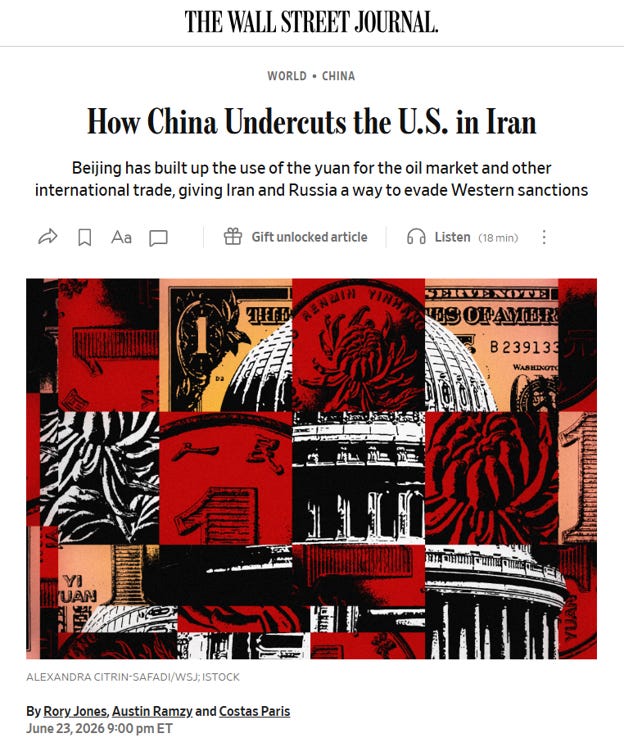
This piece is a terrific primer on how China’s new financial system is making it all possible. These regimes are under heavy economic sanctions, and are nevertheless trading at the highest levels in years. But when doing business with China, it’s like the sanctions aren’t even there.
All global trade that is settled in US dollars goes through American banks. That allows American Treasury officials to see where the money is coming from, and where it’s going, and they can stop it. Regulators can simply freeze the funds as soon as they hit the correspondent bank, coming in or out.
But in 2015 the Cross-Border Interbank Payment System kicked off, which is alternative payments platform. The CIPS system is simpler, and faster, than SWIFT: banks on the CIPS network send payment instructions through Shanghai, who settles the funds at banks on both sides of trade. It may seem like SWIFT is a similarly smooth process, but it is not, in comparison. Not even close. Under SWIFT, the transfers take longer, and cost more.
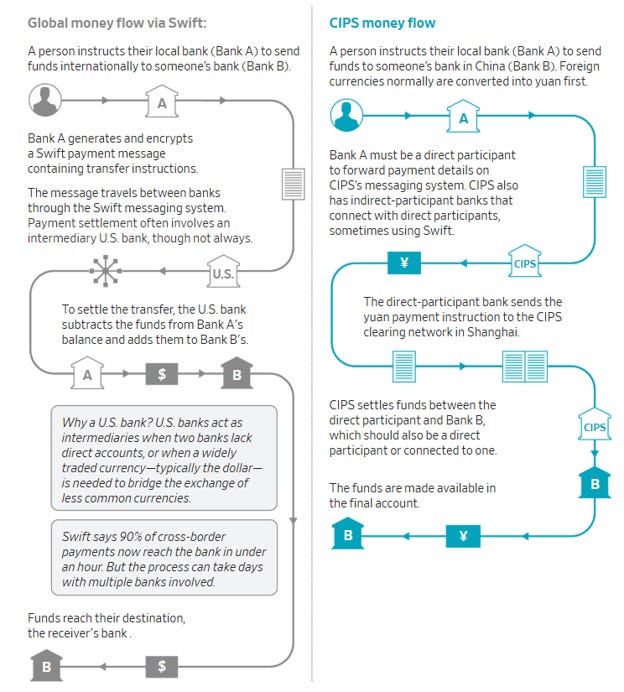
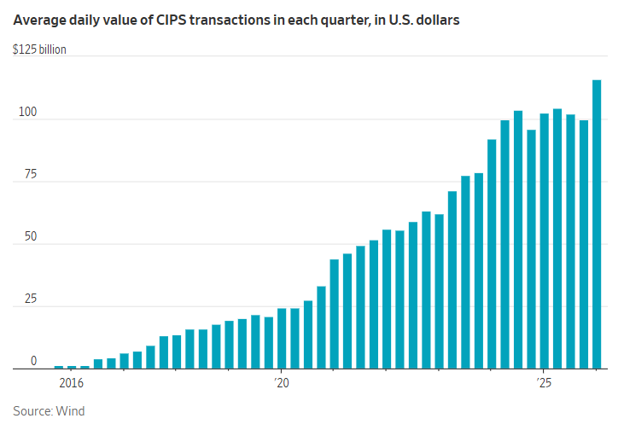
None of those funds go through Western banks, so funds flowing through the CIPS cannot even be seen, let alone stopped. Iran can’t do much business in US dollars, so they simply do it in Chinese renminbi instead. China uses their renminbi to buy Iranian oil, who pays for engineering projects and equipment from China, also in RMB. The system scaled up slowly, over a decade, and now is operating at scale. Daily volume is $115 billion, and jumped by 20% since the war on Iran began this year.
Teheran knows they can ignore the threat of sanctions, given their use of China’s financial system, which “operates beyond Washington’s reach.” Hengli is a major Chinese refiner, who either did or did not buy oil from Iran—our analysts are only guessing, remember—but the company nevertheless just said that from now on, their oil trades would be in renminbi. Outsiders won’t be able to see what they’re doing, and crude suppliers need to be on CIPS to do future business with Hengli.
This is a new world as far as Washington and Brussels are concerned. As trade moves to the Chinese yuan for settlement, and thereby outside the US dollar and US banks, the economic impacts of sanctions go away. CIPS today is well established as a viable cross-border system, that has survived real-world testing in the face of sanctions against North Korea, and Iran, and Russia.
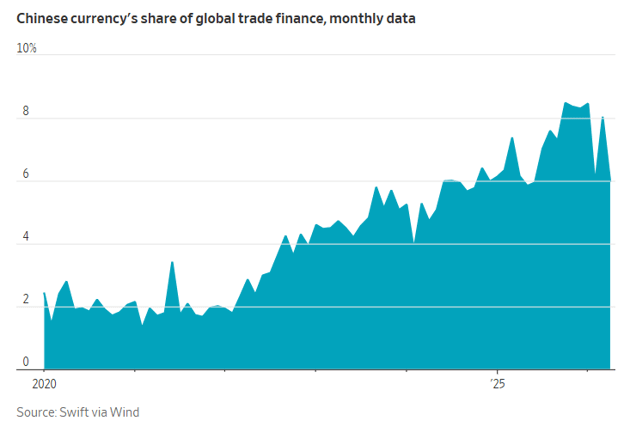
Western officials put heavy sanctions on Russia in 2022, and seized Russian FX reserves held in custody by European banks. That coincided, almost exactly, with the rise in China’s share of global trade settlement from 2%, to between 6 and 8%:
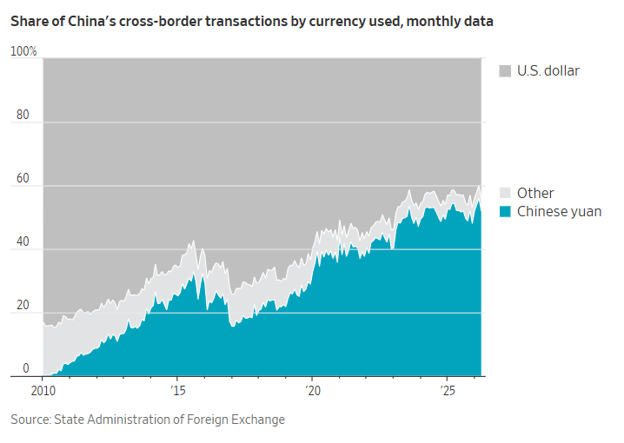
Fifteen years ago cross-border trade settled in Chinese renminbi went from statistically zero, to 50%:
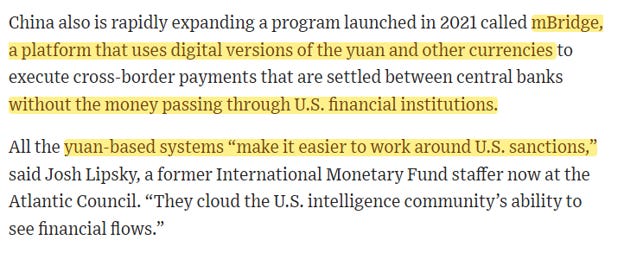
Recently China introduced the mBridge platform, which settles trade between central banks directly, again without touching financial institutions in Western countries. The renminbi-based systems “make it easier to work around US sanctions.” “They cloud the US intelligence community’s ability to see financial flows.”
Yes, that was the point. Countries can trade. Their economies can grow. When SWIFT was built, it was revolutionary. A messaging system that allowed companies across the world to do business, without even knowing each other. It was designed to be fast, and efficient.
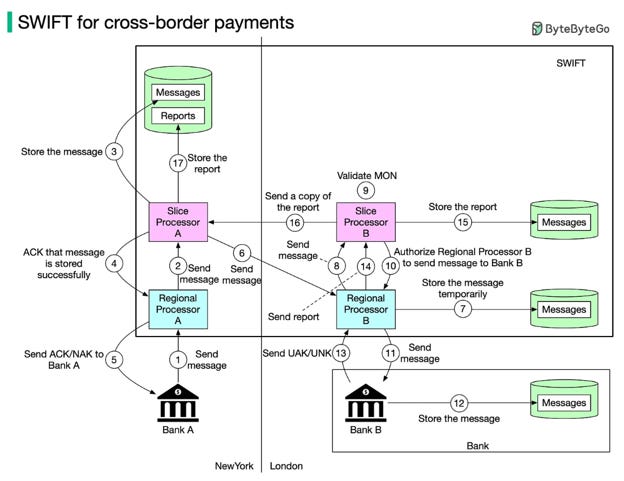
Now it’s the opposite, and the purpose of SWIFT today is to slow everything down, so that banks can charge high fees for pressing a button, and so intelligence agencies can see where the money is going and help officials and regulators put sanctions on.
But for countries hooking up to CIPS and mBridge, none of that matters anymore.
Be Good.
Resources and links:
U.S. sanctions struggle to curb Iran, Russia, North Korea evasion tactics - WSJ
https://www.investing.com/news/economy-news/us-sanctions-struggle-to-curb-iran-russia-north-korea-evasion-tactics--wsj-4751650
The U.S. Is Ramping Up Economic Warfare. Its Enemies Aren’t Blinking.
https://www.wsj.com/world/the-u-s-is-ramping-up-economic-warfare-its-enemies-arent-blinking-fdd49238?mod=wsj\_furtherreading\_pos\_1
The World’s Most Surprising Economic Success Story Is…North Korea
https://www.wsj.com/world/asia/north-korea-economy-success-e80f7062
What to Know About How Iran Uses China’s Currency to Weaken U.S. Power
https://www.wsj.com/world/what-to-know-about-how-iran-uses-chinas-currency-to-weaken-u-s-power-38fcf046
How China Undercuts the U.S. in Iran
https://www.wsj.com/world/china/yuan-sanctions-dollar-alternative-73b23c2f
How China Helped Iran Cushion the Blow of Sanctions and Fund Its War Machine
https://www.wsj.com/world/middle-east/how-china-helped-iran-cushion-the-blow-of-sanctions-and-fund-its-war-machine-6fa2847d
SWIFT payment messaging system
[ ByteByteGo Newsletter
SWIFT payment messaging system
You probably heard about SWIFT. What is SWIFT? What role does it play in cross-border payments? You can find answers to those questions in this post…
Read more
4 years ago · 32 likes · Alex Xu](https://blog.bytebytego.com/p/swift-payment-messaging-system?embedding_publication_id=3320368)
China vs. America: Who the World Trades With Most
https://www.visualcapitalist.com/mapped-chinas-global-trade-takeover/
Iran Turns to China Rail Link to Try to Bypass U.S. Blockade
https://www.supplychainbrain.com/articles/44061-iran-turns-to-china-rail-link-to-try-to-bypass-us-blockade
Inside China Business, China isn’t dumping dollars. They’re dumping banks, and setting up a new financial system
Inside China / Business is a reader-supported publication. To receive new posts and support my work, consider becoming a free or paid subscriber.
From Inside China / Business via This RSS Feed.