

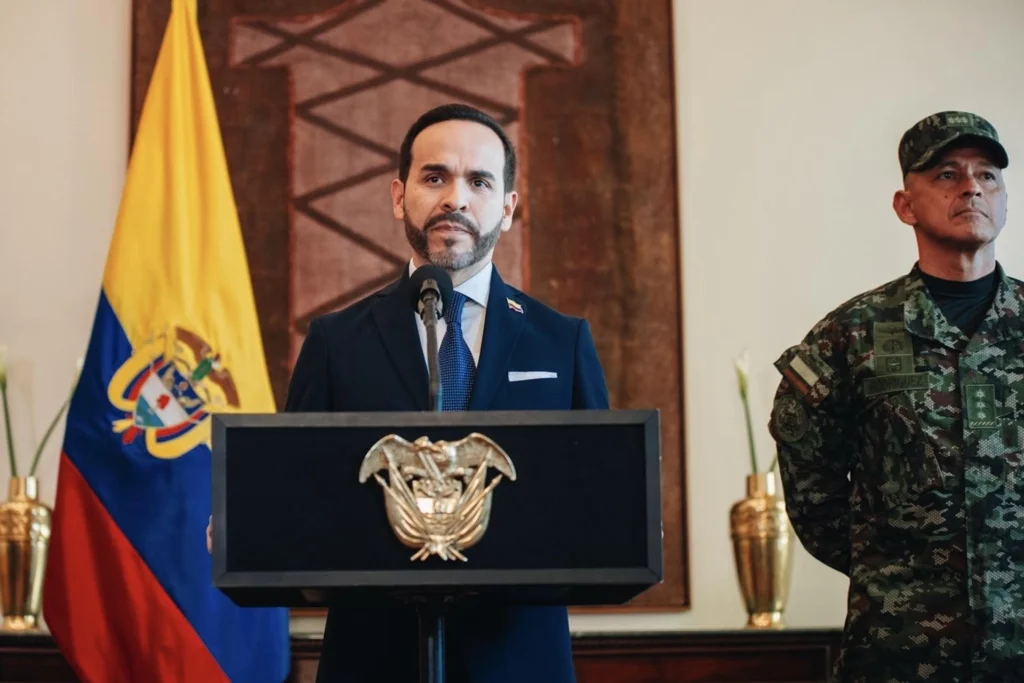
Former FARC-EP combatants asked the Colombian government of Abelardo De la Espriella to clarify institutional, budgetary, and security measures for implementing the 2016 Final Peace Agreement over the next four years.
Former members of the extinct Revolutionary Armed Forces of Colombia-People’s Army (FARC-EP) delivered a letter requesting the current Administration to provide precise information about its plans for the 2016 Final Peace Agreement.
Among the main concerns highlighted in the document stands the future of the Special Jurisdiction for Peace (JEP) and the continuity of the Framework Implementation Plan (PMI).
RELATED: Colombian Senator Cepeda to Challenge Suspension of Peace Stations’ Opinion Programming
The signatories requested accurate information regarding the timelines, the resources allocated for the execution of the pact, and the actions designed to guarantee the comprehensive security of those who signed the agreement. They also demanded clarity about the compliance with the orders issued by the different judicial instances of the nation.
Additionally, the former combatants want to know whether the new Government contemplates modifications, cuts, or budget redistributions destined to the implementation of the Final Peace Agreement. In the same letter, the signatories asked to see the technical studies that would support public statements referring to the possible elimination of the Office of the High Commissioner for Peace and the Unit for the Implementation of the Final Agreement.
The request received the backing of recognized former leaders of the extinct guerrilla organization, including Rodrigo Londoño, Pablo Catatumbo, Rodrigo Granda, and Jaime Alberto Parra. Their endorsement gives institutional weight to the demand, reflecting the concern of the reincorporated population about the continuity of the commitments assumed in Havana.
A diez años de la firma del #AcuerdoDePaz
Para la #Reincorporación es fundamental que el nuevo Gobierno…
— Reincorporación Comunes (@CNRCOMUNES) August 21, 2026
Text reads: “Ten years after the signing of the Peace Agreement, the signatories continue to keep our word and work every day for reconciliation, reintegration and transformation of our territories. For the reintegration it is essential that the new government provides clarity on the future of implementation and real guarantees for the fulfillment of the commitments made by the Colombian State. Peace cannot remain in uncertainty, nor can progress made during these years be reversed. The security and life of the people and signatories of Peace access to rights, sustainability of projects, peace is built with deeds and fulfilling what has been agreed is a responsibility of the State, knows the demands for clarity from the former secretariat to the government De la Espriella.”
A Historic Accord
The Peace Agreement between the Government of Colombia and the FARC-EP is an extensive document resulting from negotiations carried out between 2011 and 2016, in which victims, civil society, and members of the armed forces participated. With this pact, a relevant step was taken to rebuild the social fabric, seeking to satisfy the rights of victims to truth, justice, reparation, and guarantees of non-repetition, in addition to promoting coexistence and the fulfillment of the Social State of Law.
The first is the Final Agreement for the termination of the conflict and the construction of a stable and lasting peace, of which two versions are preserved: the initial and the final. The second component corresponds to the minutes of the conversation tables generated during the process. Finally, the file includes the proposals presented by citizens and various organizations during 2016 for the formation of the Final Peace Agreement.
Los comparecientes, integrantes del último Secretariado de las extintas FARC-EP, reiteramos públicamente, ante las víctimas y la sociedad colombiana, nuestra plena disposición para iniciar el cumplimiento de las sanciones propias determinadas por la JEP como máximos responsables. pic.twitter.com/O5TSovU9nv
— Rodrigo Londoño (@TimoComunes) August 17, 2026
Text reads: “The participants, members of the last Secretariat of the defunct FARC-EP, publicly reiterate, to the victims and Colombian society, our full readiness to begin compliance with the sanctions determined by the Special Jurisdiction for Peace (JEP) as the highest responsible.”
The letter from the former combatants arrives at a moment of political transition, in which the implementation of the accord faces new institutional scenarios. The demand for transparency regarding the Special Jurisdiction for Peace (JEP, in Spanish), the implementation budget, and the security guarantees for the signatories reflects a broader concern: the defense of the commitments that allowed the demobilization of one of the oldest guerrilla groups in the region. The response of the Government of De la Espriella will define the next stage of a process that remains fundamental for the stability of Colombia.
From teleSUR English via This RSS Feed.