

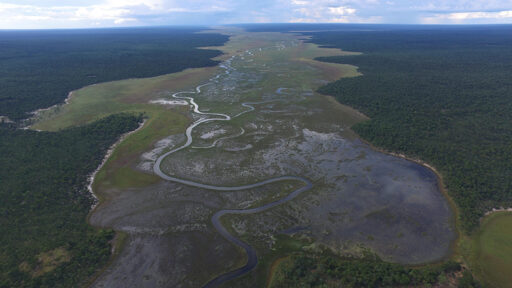
The Southwestern African nation of Angola has much more peatland than previously thought, new research suggests. In a study published on August 20 in Philosophical Transactions of the Royal Society, researchers mapped out peatlands in the Angolan Highlands Water Tower (AHWT). This vast landscape stores and regulates freshwater in central Angola and feeds freshwater systems across southern Africa including the Okavango Basin. The researchers estimate that overall peatlands cover between 2.28–2.94 % of the of the AHWT. They found 8,662 km² (3,344 square miles) of peatland cover with high certainty (81–100% probability) and 11,167 km² (4,311 square miles) with low certainty (51–100% probability). Peatlands are areas of land where the surface layer consists of plant material that has partially decomposed. According to the study, they cover around three per cent of the world’s land surface but are estimated to store up to a third of the world’s soil carbon. In October 2025, Angola designated an area of 53,000 km² (20,463 square miles) in the AHWT as the country’s first Ramsar Site or Wetland of International Importance. The site was selected due to its sponge effect which absorbs, retains, filters, and ultimately supplies freshwater into the rivers that carry water to wetlands far and wide. A water tower is a highland area that produces a large amount of water, relative to its spatial scope. Study author Mauro Lourenço collecting the peat material during the research for this study. Image courtesy of Jennifer Guyton. One of them is the Okavango Delta in…This article was originally published on Mongabay
From Conservation news via This RSS Feed.