

The project will be installed in Rio Grande do Norte and is expected to begin operations in 2027.
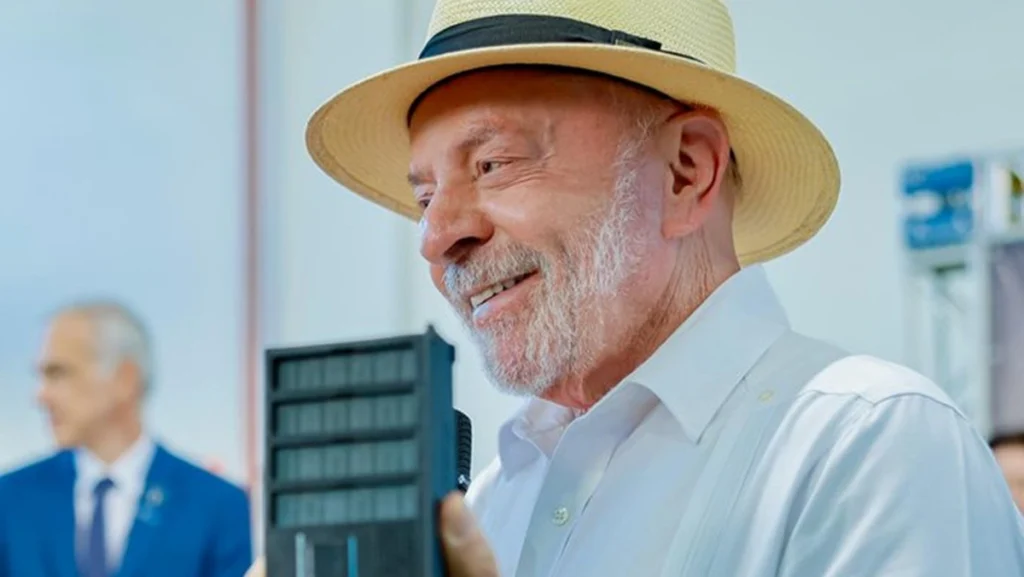
On Thursday, President Lula da Silva launched a tender to build one of the 10 largest supercomputers in the world, with the aim of developing artificial intelligence tools in Brazil. The investment in the supercomputer is expected to total about US$192 million.
RELATED:
Brazilian Workers’ Party Expands Coalition to Sustain Lula’s Reelection Bid
“More than technology, it is an opportunity for Brazilian youth. We want our young people, researchers, and academics to have the opportunities that our generation did not have and to demonstrate that Brazil is second to none,” he said.
“To achieve sovereignty, we need knowledge, technology and education. Brazil can and must think big,” Lula da Silva stressed, adding that “Neither the Chinese nor the Americans are better than us. We are going to enter this market.”
The supercomputer will be installed at the Augusto Severo Technology Park of the Federal University of Rio Grande do Norte. It will begin operations in 2027 and will have a data processing capacity of 7,200 petaflops, placing it among the 10 machines with the greatest capacity in the world dedicated to AI.
Lula anuncia Supercomputador e amplia plano de IA, em Macaíba, Rio Grande do Norte.#Brasil #Brazil pic.twitter.com/mUkImH2blr
— Hugo Borges (@hbj_r77032) August 20, 2026
The text reads, “Lula announces Supercomputer and expands AI plan in Macaiba, Rio Grande do Norte.”
The tender conditions include requirements such as technology transfer by the company that takes on the project, the hiring of Brazilian suppliers and the training of about 5,000 local workers. Currently, the only supplier with the technology necessary to meet the tender requirements is Nvidia.
On Thursday, the Brazilian government also announced plans to build a second supercomputer, with lower processing power, which will be installed in Rio de Janeiro through an agreement between the National Education and Research Network and Chinese companies Huawei and iFlytek.
The investment in this computer is estimated at US$245 million over five years, and operations are expected to begin in July 2027. The agreement will allow for the development of AI language models in Portuguese, as well as expanding the country’s computing capacity.
A third initiative announced on Thursday is a long-term strategy, with a horizon of 10 to 15 years, aimed at expanding Brazil’s capacity to develop chips and reduce its dependence on foreign countries.
The initiative will be based on RISC-V architecture, an open and nonproprietary technology, and will be carried out in collaboration with Barcelona’s innovation ecosystem in Spain.
teleSUR/ JF
Source: EFE
From teleSUR English via This RSS Feed.