

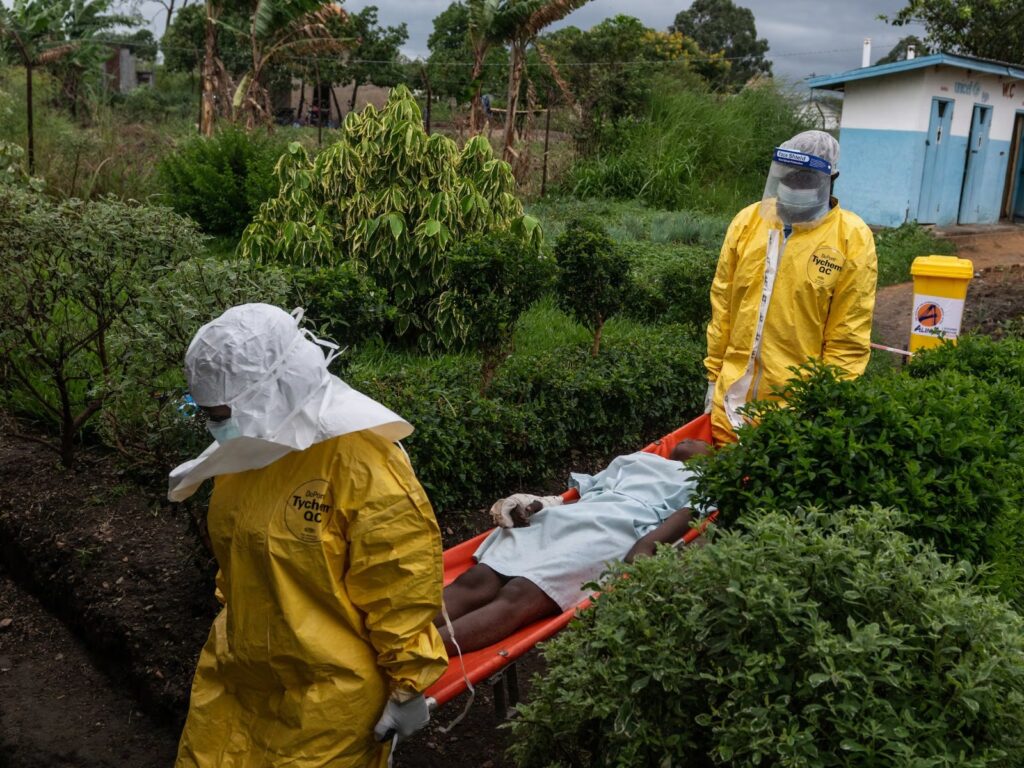
On Thursday, Julien Harneis, the United Nations (UN) humanitarian coordinator for Ebola, reported via teleconference from Bunia, in eastern Democratic Republic of Congo (DRC), the epicenter of the deadly epidemic that began almost 100 days ago, on the severity of the humanitarian situation.
RELATED:
WHO Convenes Emergency Committee in Response to Ebola Outbreak in DR Congo
“The epidemic outbreak is growing exponentially” and currently covers an area larger than France. This alarming spread of the epidemic coincides with a pressing liquidity problem that is preventing the payment of health and community workers, who are on the front lines of the fight against this disease in the region,” he pointed out.
“In the last three months, 2,500 people have died, half of them in just the last twenty days,” Harneis detailed. The death toll also reflects the high risk to medical personnel, as 160 health workers contracted the virus while caring for patients, of whom 63 died after becoming infected. From the ground, the UN representative described a complex reality fraught with obstacles to an effective fight against Ebola.
The region faces regular attacks against health facilities, vehicles, and workers, in addition to armed conflict and serious logistical problems stemming from the poor condition of the road network. Harneis exemplified this precariousness by noting that last week he was trying to reach a heavily affected area and it took him more than three hours to travel 60 kilometers.
The current Bundibugyo virus disease (BVD) is the largest Ebola disease outbreak ever recorded in the Democratic Republic of the Congo (DRC), irrespective of Ebola virus species. On 17 May 2026, WHO declared the Bundibugyo virus disease outbreak in the DRC and Uganda a Public… pic.twitter.com/UXO5AaC94g
— World Health Organization (WHO) (@WHO) August 21, 2026
The violence against the The health response has intensified considerably. In the last six months, 260 attacks have been recorded, but increasingly, these are targeting those working on the Ebola response. Half of all attacks in July targeted healthcare workers.
Adding to this security crisis is the collapse of the banking system in the affected area, which has caused a severe liquidity problem. The origin of this problem was the order issued by the Kinshasa government in the early days of the outbreak to suspend commercial flights between the capital and Bunia, which transported cash to local banks. Mobile transactions are not an alternative due to poor connectivity.
This situation makes it impossible to pay healthcare workers. “We can’t get the money to pay them, which is causing a lot of frustration among them,” Harneis commented. Unlike past outbreaks, the government has now assumed responsibility for paying salaries, with the exception of community workers, who are paid by NGOs.
Regarding the course of the epidemic, Harneis warned that if the situation is not addressed… If more resources are sent to remote areas, the epidemic will cause many more deaths and spread, posing a risk to neighboring countries. However, he maintained that if the decision is made to invest now, transmission could be slowed and even stopped within months.
What happened, how the virus spread, and what the response revealed about global health preparedness — watch the video to learn more.#Ebola #Congo #Africa #Health #teleSUREnglish pic.twitter.com/0uByGoXwlM
— teleSUR English (@telesurenglish) August 20, 2026
From teleSUR English via This RSS Feed.