

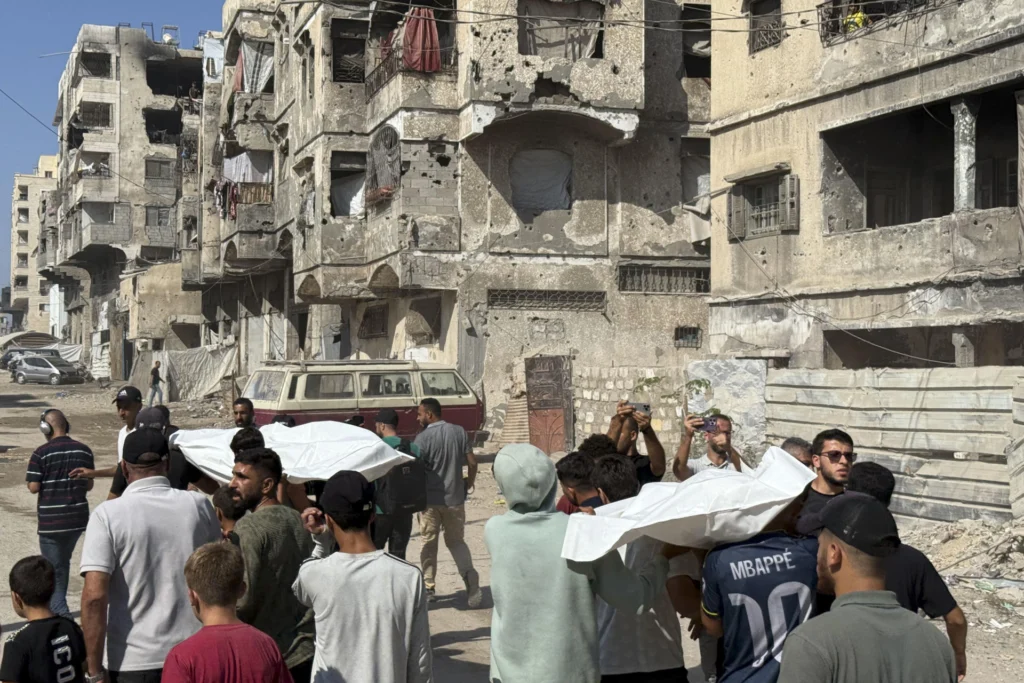
Israel has spent more than $142 billion to finance its genocidal campaign against the Gaza Strip since 2023, a figure projected to reach $169 billion, making it the longest and most costly war in the country’s history.
The Israeli War Ministry plans to allocate nearly $500 billion to the military sector over the next decade to sustain operations in the besieged enclave.
The ministry’s director general, Amir Baram, detailed this projection in a strategic document preparing the army for an intense decade of combat, a financial commitment that Prime Minister Benjamin Netanyahu assumed without identifying the origin of the funds, while press reports anticipate the end of the annual $3.8 billion U.S. aid package.
RELATED: Israel Admits Attack That Killed Hind Rajab and Her Family in Gaza
Israeli officials told Haaretz that Tel Aviv ignored financial costs when it launched the military offensive. Emergency mobilizations had no budgetary limits and kept reservists in active service unnecessarily. Troops fired ammunition indiscriminately under orders from their officers, who urged attacks on unarmed civilians without any existing danger.
Days after October 7, 2023, Israel mobilized some 220,000 people, doubling its size and exceeding the capacity of its own supplies. According to Haaretz, one military division entered the Gaza Strip without receiving prior training to operate in the area. “You send them to Gaza and you don’t have the right equipment. Everyone fought for tactical helmets and protective vests from whatever they could find,” a senior officer described.
Israeli press review: Israel’s genocide in Gaza costs over $140bn
Meanwhile, Mamdani features in Likud election billboard, Israeli authorities take over an Unrwa school and clinic, and a 1,300-year-old Islamic-era commercial hub is uncovered near Tel Aviv
— Middle East Eye (@MiddleEastEye) August 18, 2026
U.S. Weapons and Humanitarian Catastrophe
Washington accelerated the massive flow of military assistance and weaponry to Tel Aviv since October 2023, beyond the 10-year memorandum of understanding that expires in 2028. Between 2025 and 2026, the U.S. administration notified Congress of possible arms sales worth at least $19 billion in advanced aircraft, missiles, bombs, helicopters and armored vehicles. Some commercial agreements involve future contracts with deliveries distributed over several years. The U.S. government invoked emergency authorities to evade congressional review of nearly $4 billion in munitions and equipment. Since October 7, 2023, the United States has delivered at least $21.7 billion in military assistance to Israel.
Despite the overwhelming rejection of the international community toward the military offensive and the exorbitant financial costs of the war, Tel Aviv maintains the bombings over the Palestinian enclave. According to official data from the health authorities, the genocidal campaign has claimed the lives of more than 73,391 people since its beginning, leaving a civilian population plunged into an unprecedented humanitarian catastrophe.
Turkiye, Egypt and Qatar strongly condemn recent Israeli air strikes on Gaza in a joint statement, saying that Israel must comply with its obligations under a ceasefire agreement and refrain from steps that could escalate tensions.
LIVE updates: https://t.co/1GvM2RajOT pic.twitter.com/2Tmu8X2uRQ
— Al Jazeera English (@AJEnglish) August 20, 2026
The figures reveal a double tragedy: the human cost measured in thousands of Palestinian lives and the economic cost that Israel’s own government assumed without budgetary controls. For analysts, the war has transformed into a business for arms manufacturers and a burden for Israeli citizens, who will pay the debt for decades. Meanwhile, international organizations continue to denounce the blockade, the destruction of civilian infrastructure and the systematic violation of international law in Gaza, where more than two million Palestinians remain trapped under siege with no end in sight.
From teleSUR English via This RSS Feed.