

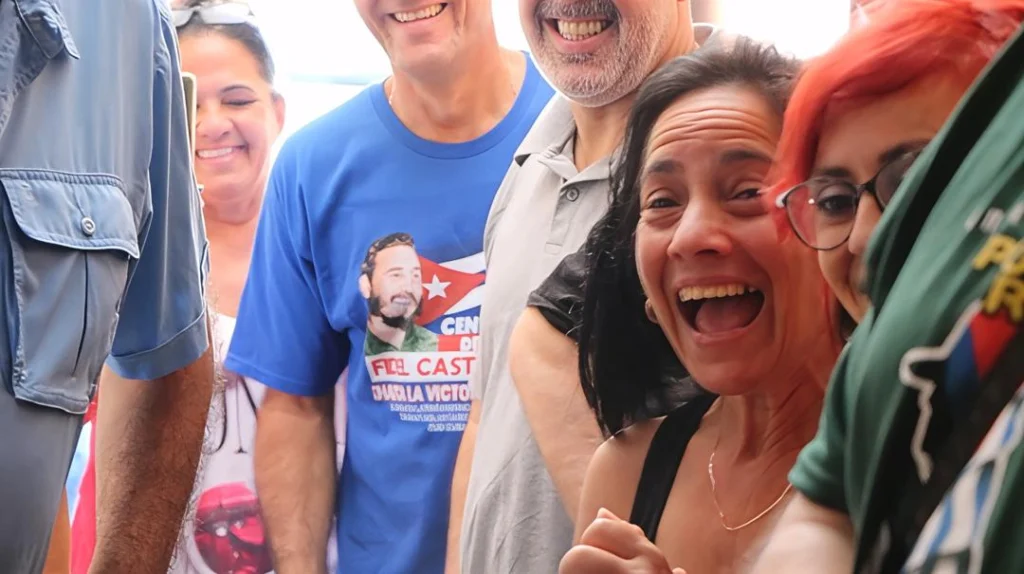
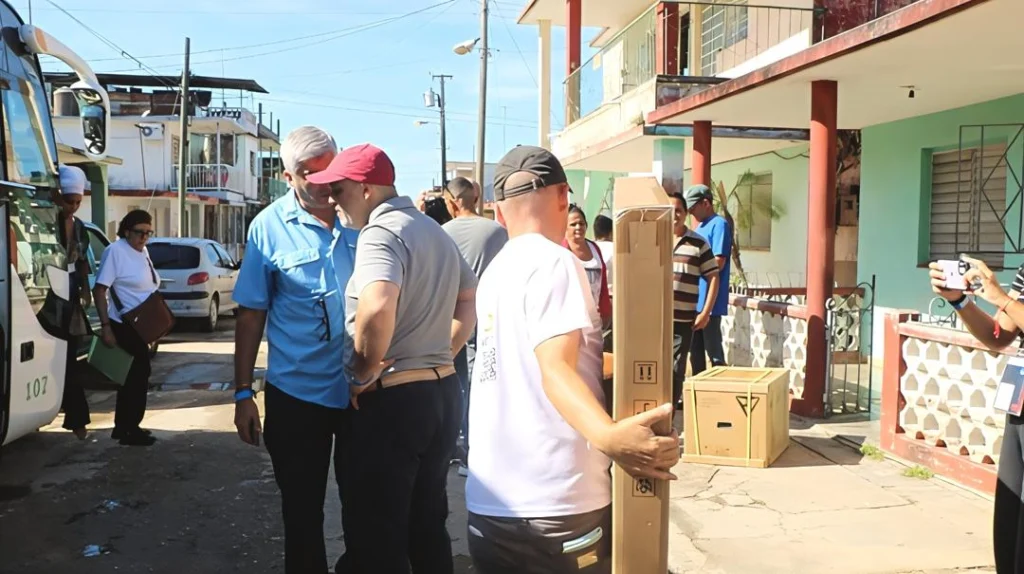
After an hour’s drive from Havana, we arrive in Caimito, province of Artemisa. Its rural streets are quiet; the sun and greenery dominate everything.
Someone fans themselves on a front porch, someone rides by on a bicycle and looks at the bus carrying us: enormous, out of place among the little houses. At first glance, perhaps you couldn’t tell that behind these doors there’s a silent genocide taking place.
RELATED: UN Human Rights Experts Warn of a ‘Silent Gaza’ in Cuba
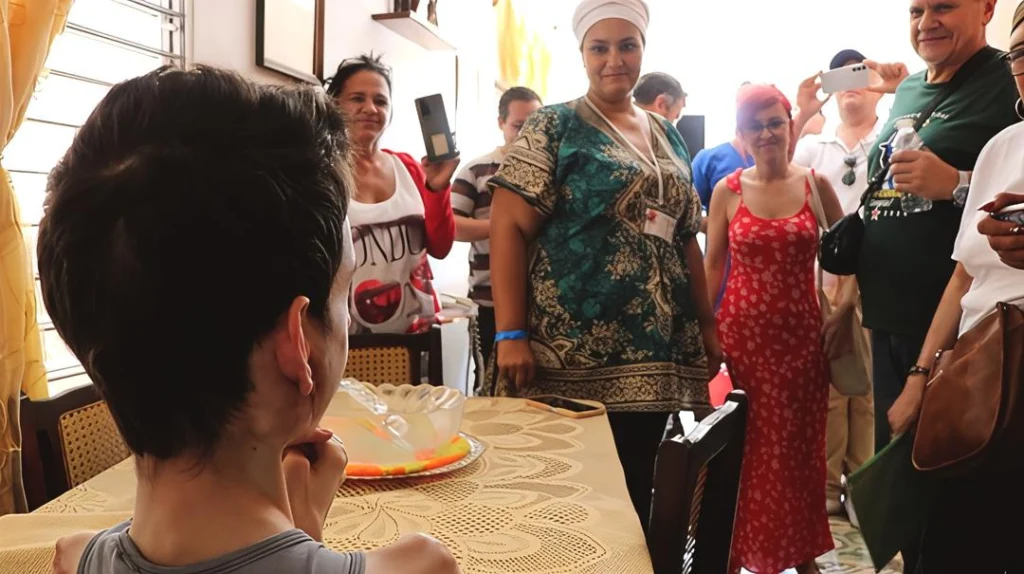
Kenia comes out to greet us, arms outstretched and wearing a huge smile; her mother, visibly moved, waits a little farther back. They were expecting us. Soon we fill the house with apologies and requests for permission. In the living room is Adrián: in part, the reason for our visit.
Adrián is 27. In fact, he is turning 27 today, so there is a double reason to celebrate. He is into the tech world and is particularly interested in learning about the digital economy. When he was one year old, he was diagnosed with calcinosis cutis, a skin condition that causes calcium deposits to accumulate in the tissues. Over time, the disease has caused progressive deterioration in his arms and legs, as well as a tendency to develop skin lesions that carry a high risk of infection.
There have been many treatments aimed at improving his quality of life. He was even given a new home in a more remote part of the municipality, away from the main avenues, to avoid dust and pollution from traffic. But one recommendation proved decisive: keeping the house well cooled, particularly through air conditioning, to reduce the risk of infection. From that point on, his mother, Kenia, recalls, their trips to the hospital began to decrease.
Talking about the impact on Cuba’s energy system of the economic, commercial, and financial blockade imposed by the United States can sound technical, cold, impersonal. For Adrián, it means blackouts that prevent him from keeping the environment at the temperature he needs to avoid an infection.
Everything worsened after January 29 of this year, when the United States imposed a total oil blockade on the island through a new Executive Order. Since then, only one oil tanker has entered the country -enough to supply energy for just a couple of weeks. The blackouts became increasingly severe: today, they can last more than 22 hours a day, sometimes even longer.
A Long Journey of Solidarity
The trip from Havana to here took us about an hour. But the journey itself was much, much longer. It began months ago and many miles and countries away, when the Argentine Movement of Solidarity with Cuba began organizing meetings, both in person and online.
Just weeks after the attack on Venezuela, the United States imposed the total oil blockade on Cuba, a country that depends on imports for 70% of its energy production. It was a brutal blow to an energy system already under siege: fewer hours of electricity to refrigerate food, to cook; fewer hours in operating rooms at hospitals, less production in factories. And for Adrián, fewer hours of the air conditioning that protects him from infection, fewer hours with the cellphone and television that, despite his illness, give him a way to entertain himself and keep learning.
The call was open to anyone who wanted to join: in person, at the Argentine-Cuban Friendship House in Buenos Aires, and online, reaching the entire network of solidarity groups and Friendship Houses across the country. The response came quickly.
“Estamos con Cuba”: We Stand With Cuba
Denouncing is not enough. That was the first point of consensus. It was necessary to devise a concrete strategy for providing solidarity and assistance. A campaign that would also allow us to tell, again and again, what is happening in Cuba and why; what it has to do with us here in the south of the continent; and, above all, what we can do. A campaign focused on information, but one that would speak of real stories, specific experiences, of people with names and surnames affected by impersonal measures: stories like that of Adrián and his mother, Kenia.
And it had to be done together. How can we, if we are so far away? How can we, considering the crisis we are facing here? How, when just meters away, retirees are once again being repressed by the police?
The answers came collectively, meeting after meeting, conversation after conversation. How? By joining forces, with different strategies, each in their own territory, but with a common goal: raising funds to bring solar panels to Cuba. How? By explaining that defending the humanity and sovereignty of our continent is not something happening far away; it is one of our everyday struggles. That Cuban solidarity runs through the stories of many of our families and organizations. That there are still many of us who believe that a political decision cannot leave a pediatric emergency ward without power, or leave someone who needs it without medicine.
That is how the campaign of unity and solidarity emerged. That is how We Stand With Cuba came to be.
The message spread through social media, messages, and community radio stations. Online meetings extended the effort across the country. And those retirees who take to the streets to fight for their livelihood every Wednesday also joined in: there was no contradiction between one objective and the other. On the contrary.
As the months passed, more efforts came together, and solidarity took to the streets. On May 30, hundreds marched through the streets of Buenos Aires denouncing the blockade and calling on people to join the solidarity effort, the collective effort. And on July 4, a day of celebrations in the aggressor country, organizations once again came together to shout: Cuba is not alone!
Entregan en #Cuba equipos fotovoltaicos a familias con niños electrodependientes
Son 45 kits de equipos fotovoltaicos donados por el MAS CUBA, tras una campaña que involucró a más de un centenar de organizaciones de todo el país.https://t.co/3bOluzyckE pic.twitter.com/bx9VcBjCpN— CAPAC (@infocapac) August 10, 2026
Text reads: “Delivery of photovoltaic equipment to families with electrodependent children in Cuba. There are 45 kits of photovoltaic equipment donated by MAS CUBA, following a campaign that involved more than one hundred organizations from all over the country.”
Through the daily, sustained effort, donations arrived every day from an entire people willing to challenge the empire’s voracity. Meanwhile, U.S. authorities issued one executive measure after another, seeking to close every door, even preventing solidarity aid from arriving: measures that today keep at least 7,000 containers of much needed supplies far from Cuban soil.
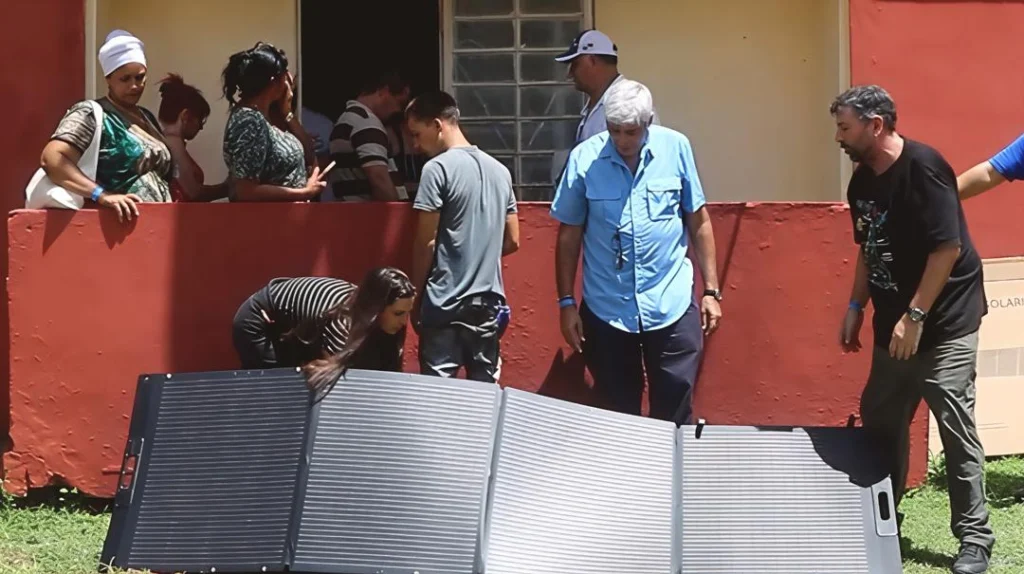
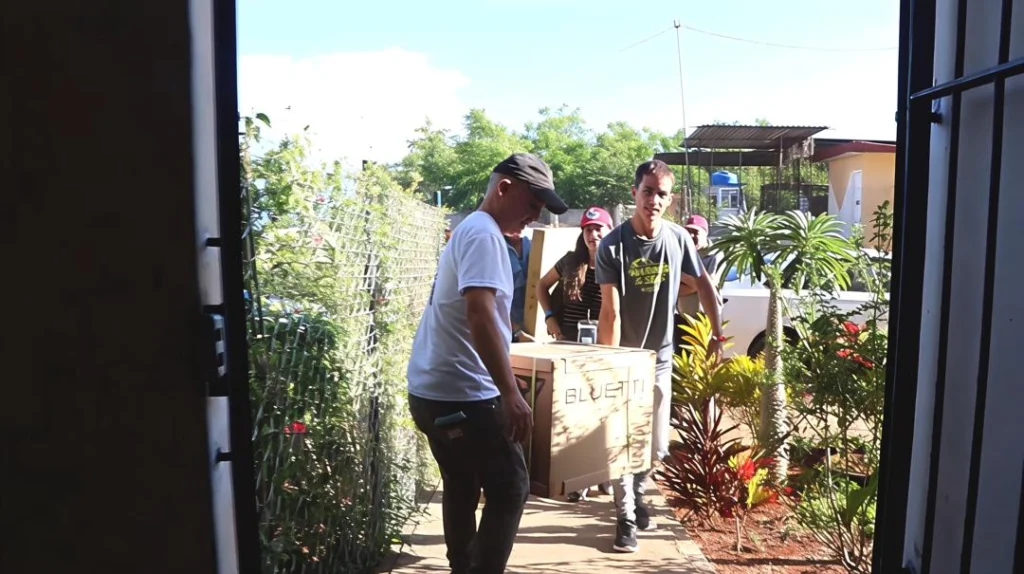
But determination proved stronger, and on July 30 the impossible became reality. A container loaded with 45 solar kits, each with a capacity of 3 kW, arrived at the Port of Mariel, ready to be distributed to the homes of those who need them most. One of them was destined for Adrián.
A Testament to What Is Possible
I am writing in a hurry, jotting down ideas before the last bar of battery runs out. This is how we live. But we do not resign ourselves, because that last bar may be enough to tell Adrián’s story, the story of all the Adriáns who live on this island. And to tell the story of a solidarity movement that, through sheer determination, managed to cross the continent precisely when it seemed that nothing more could be done.
The bus leaves Caimito behind, and the town returns to its usual tranquility. Of the 45 kits that arrived, five will stay here. Others will remain in Havana; many are heading east.
They are not enough to put an end to the injustice of the blockade.
But they are a testament to what is possible.
Just as Cuba is, every day.
From teleSUR English via This RSS Feed.