

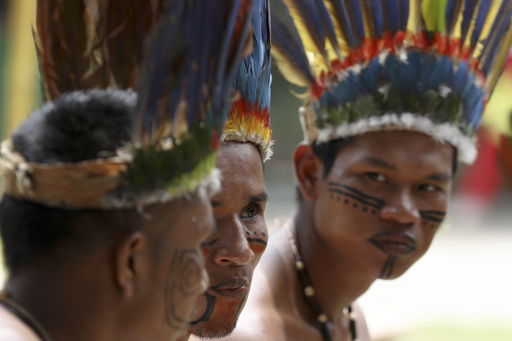
Francisco Hernández Cayetano, president of the Federation of Ticuna and Yagua Communities of the Lower Amazon (FECOTYBA), is raising the alarm about the latest threats related to drug trafficking in the Amazon’s tri-border area. Living along riverbanks and lowland forests in the remote area where Peru, Colombia and Brazil meet, the Ticuna and Yagua people find themselves in a hotspot for crime — and it is embedding in their communities. Tri-border areas in the Amazon often have a weak state presence that allows drug traffickers and other criminal groups to move drugs, gold and timber freely. As a 2024 report by Crisis Group, an independent organization, revealed, criminal activities in these areas can bring insecurity, violence and environmental damage to Indigenous peoples and their territories. “Our concern is very strong because most of the communities — almost 60 to 70% of the forests — are deforested due to drug trafficking,” Hernández tells Mongabay. “This causes certain problems, for example, children working in the [coca] fields, as well as women. It’s hitting us hard, especially the Ticuna youth.” Hernández, who comes from a Ticuna community known as Cushillo Cocha in the lowland rainforest region, says that the arrival of drug traffickers and illegal miners has brought social instability, deforestation and the contamination of waterways by chemicals used for mining and cocaine production. It has also created the conditions for a serious substance abuse problem among Indigenous youth. Drawn to coca fields for work, Ticuna children start smoking, taking drugs and drinking…This article was originally published on Mongabay
From Conservation news via This RSS Feed.