

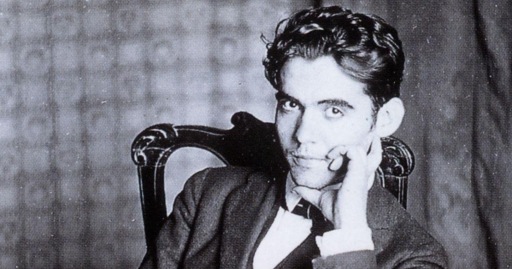

August 18 marked 90 years since the murder of Federico García Lorca, the great Spanish poet and dramatist who was executed by Franco’s fascist forces near Granada in 1936, during the first weeks of the Spanish Civil War.
Those who murdered Lorca may have believed that a bullet could silence his voice. History proved otherwise. His poetry, theatre and enduring humanism survived his killers, turning him into one of the most internationally recognised figures of Spanish literature and a lasting symbol of the democratic and anti-fascist Spain that Francoism sought to destroy.
Through his poems and plays, Lorca explored love and death, passion and loneliness, oppression and freedom. He despised despotism and stood against social injustice, exploitation and discrimination. Although he never joined the organised communist movement, he was a committed anti-fascist and an outspoken critic of the social order of his time. His work repeatedly gave voice to the poor, the marginalised and the persecuted, exposing poverty, alienation, racism and the suffocating conventions of bourgeois society.
Born in 1898 in Fuente Vaqueros, near Granada, into a relatively prosperous rural family, Lorca developed an early passion for music and literature. His mother, a teacher, encouraged his musical education, and music would later leave a profound imprint on the rhythm and imagery of his poetry.
During his student years in Madrid, Lorca became part of an extraordinary generation of Spanish artists and intellectuals. Among his friends were Salvador Dalí and filmmaker Luis Buñuel. By the 1920s and early 1930s, his reputation had spread far beyond Spain, reaching Latin America, France and the United States.
The military uprising launched in July 1936 by reactionary generals led by Francisco Franco unleashed a campaign of terror against republicans, communists, socialists, trade unionists, intellectuals and others identified with progressive Spain. Granada fell quickly to the Nationalist forces, and thousands were arrested and executed.
Lorca, whose sympathies were firmly on the side of the Republic and who had repeatedly expressed anti-fascist views, soon became a target. His homosexuality also made him particularly vulnerable in the deeply reactionary atmosphere fostered by the Francoist forces.
He was arrested in Granada on August 16, 1936. Shortly afterwards, he was taken to the area between Víznar and Alfacar and executed without trial. His body was thrown into an unmarked grave. Its precise location has never been conclusively established.
His words travelled far beyond the mass grave in which his killers attempted to bury him. His plays and poems were translated into dozens of languages and became part of the cultural heritage of humanity. “Blood Wedding”, “Yerma” and “The House of Bernarda Alba” remain landmarks of modern theatre, while collections such as “Gypsy Ballads” and “Poet in New York”, along with his celebrated “Lament for Ignacio Sánchez Mejías”, established him among the greatest poets of the 20th century.
Ninety years after his assassination, Federico García Lorca remains alive through his work. The dictatorship that murdered him has passed into the darkest pages of history, but the poet it tried to silence continues to speak to millions.
Lorca’s fate remains a powerful reminder of what fascism - an offspring of capitalism - represents when it turns its hatred against culture, freedom and human dignity. His murder belongs to one of the darkest chapters of Spanish history. His poetry, however, belongs to the world.
From In Defense of Communism via This RSS Feed.