

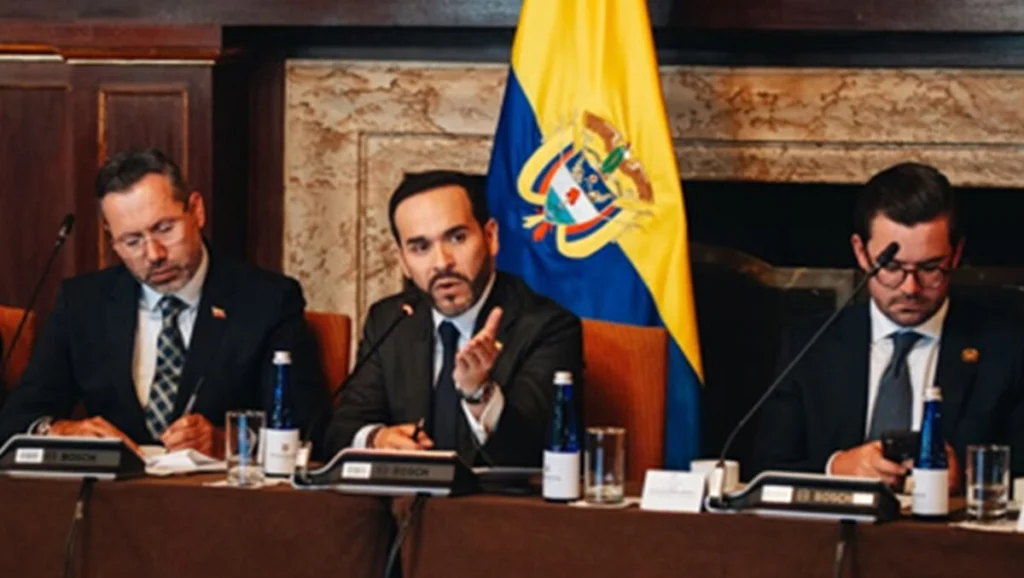
De la Espriella declared a 30-day state of emergency in 15 departments as authorities reported hundreds of deaths.
On Wednesday, Colombian President Abelardo de la Espriella declared an “Economic, Social and Ecological State of Emergency” because of the magnitude 7.4 earthquake that struck on Aug. 10.
RELATED:
Colombia Earthquake: Cali Faces Three-year Recovery Process
Through a decree, he established a 30-day state of emergency in 15 departments to “confront the crisis and prevent the spread of the effects of the disaster.”
According to data presented by De la Espriella, the earthquake left 314 people dead, although the Institute of Legal Medicine confirmed that it has received and identified 319 bodies.
The natural disaster affected 471 municipalities, where 262,154 people were affected, while 4,437 people were injured and another 262 remain missing. The material damage is also significant, with 30,664 homes destroyed, 136,946 damaged, 302 buildings collapsed and 5,809 properties suffering structural damage.
In Colombia, the economic emergency is a legal mechanism to channel national and international funds and accelerate the country’s reconstruction.
These govts are collaborating with the US military in joint operations against Latin America, supposedly to combat drug trafficking:
– Ecuador (President’s family traffick cocaine)
– Colombia (President is a cartel lawyer)
– Honduras (Ruling party led by convicted trafficker) pic.twitter.com/V92OXTYk67
— Ollie Vargas (@Ollie_Vargas_) August 13, 2026
During the emergency, the Executive branch will be able to issue legislative decrees with the force of law to adopt any additional measures it deems necessary “to confront the crisis and prevent the spread of its effects,” as well as carry out the budgetary and public credit operations necessary to implement them.
Previously, De la Espriella said he would create a “Miracle Fund” to channel resources toward the reconstruction of hospitals, educational centers, properties, roads, and airports.”
His administration is also reportedly organizing temporary relief measures for affected families, including the payment of public utility bills, rental subsidies for those who lost their homes, tax and financial relief, and support mechanisms for merchants and small business owners.
The earthquake had its epicenter in the municipality of San Jose del Palmar, in the department of Choco. It is considered one of the largest natural disasters recorded in the country in recent decades.
teleSUR/ JF
Source: EFE
From teleSUR English via This RSS Feed.