

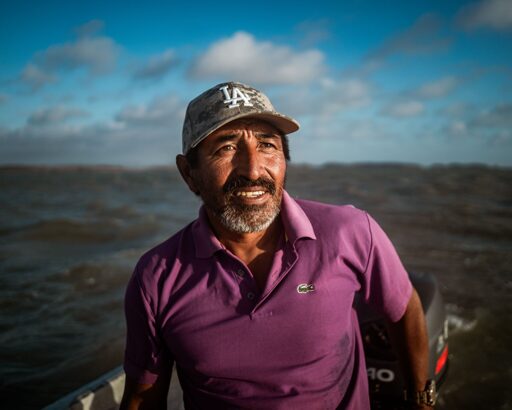
LA GUAJIRA, Colombia — Feet from the ocean, four sharks and a ray lie dead on the wind-battered sand. Above them stands Wilfrido Arends, 46. The blade of a short knife glints in his hand. Carefully, he bends down to cut a small fin from the underside of one shark — an endangered species known as a blacknose (Carcharhinus acronotus). He hands the sample to a woman next to him, who places it delicately in a vial. A tape measure is passed over the still glistening back of the dead shark. Each measurement is read out and noted down. Arends, a fisher from Colombia’s Wayuu Indigenous community, is spearheading shark research and conservation in Punta Gallinas, a Wayuu community where shark meat is part of the traditional diet. Home to around 50 families, the community sits at the northernmost tip of South America. “If we wipe out our sharks, I think that further down the line we will miss them,” says Arends, who is known locally as “Caracas.” Together with researchers from Colombian shark conservation initiative Proyecto Puyuii, Arends and other Wayuu fishers are documenting shark diversity in the largely unstudied waters of La Guajira. “There’s almost no data on anything,” says Diego Cardeñosa, a marine biologist at Florida International University in the U.S. A member of Proyecto Puyuii, he has been training Wayuu fishers to record the shark species they catch. Wayuu fishers and Puyuii researchers measure the carcass of a caught blacknose shark, an endangered species. Image by…This article was originally published on Mongabay
From Conservation news via This RSS Feed.