

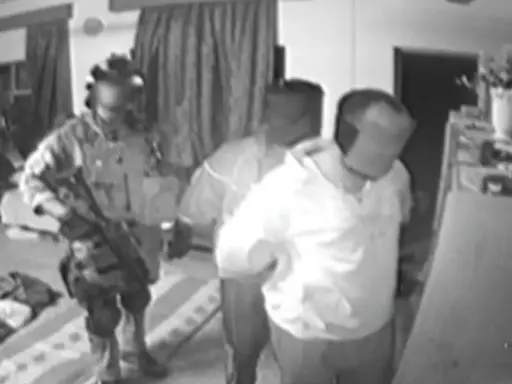

The UK media has consistently mis-framed SAS war crimes allegations while marginalising the voices of alleged victims. That’s according to a new report by Action on Armed Violence (AOAV) which delves into how the press has responded to the ongoing scandal. The report looks at a wide range of media coverage — with the Canary getting a positive mention for our work.
The study, titled ‘Witch hunts or war crimes? How the British media talks about allegations of SAS killings of civilians in Afghanistan‘, was published on 18 August. The Haddon-Cave inquiry into allegations of extrajudicial killings in Afghanistan at the height of the war is still underway. AOAV has covered the issue extensively; their top-tier work can read here.
SAS — Secrecy versus justice
As AOAV rightly points out, the UK special forces benefits from state secrecy. However, this also makes investigating allegations extremely hard:
That secrecy has helped sustain the SAS’s global reputation, but it has also made allegations of wrongdoing particularly difficult to examine.
The war in Afghanistan brought the challenges of investigation “default heroes” into sharp focus, as claims emerged that members of UK Special Forces had unlawfully killed detainees and civilians during night raids. Furthermore, those killings were – it is becoming very clear – inadequately investigated.
eventually led to the creation of the Afghanistan Inquiry, a statutory investigation examining possible unlawful activity by UK Special Forces between 2010 and 2013 and the adequacy of earlier military investigations.
However, the way the UK media has covered the issue is highly questionable. AOAV has set out to address those shortcomings.
Lawfare and warfare
The press response to these allegations reflects a set of deep problems. While the inquiry has certainly opened a doorway into the secret world of special forces operations:
terms such as “lawfare”, “witch hunt” and the “hounding” of veterans have become increasingly prominent.
These terms obfuscate the real issues, creating:
a powerful competing narrative: whether scrutiny of alleged abuses should be understood primarily as a matter of law and accountability, or as an attack on soldiers and military effectiveness.
For example, terms like ‘witch-hunt’, lawfare and ‘hounded’ have been used to delegitimise questions about alleged SAS killings.
A broad narrative emerged of veterans being unfairly ‘hounded’ by lawyers, subverting the perpetrator-victim relationship.
The term ‘lawfare’, generally used to describe a weaker actor using the courts to undermine a bigger actor, has:
become widely seen as a pejorative term to describe use of the law to achieve a non-legal aim.
It has often been used by ex-military figures in right-wing media to attack the investigations. The Canary is a notable exception:
The only use of the term outside of the right-wing media was its explicit rejection in Canary News.
And alleged victims appear to have been given very different coverage from military figures:
Coverage in general rarely platformed the perspectives of the affected Afghan families, choosing instead to focus on the perspectives of military figures and those involved in the inquiry itself – commentary from former military figures appeared [at] five times the frequency of the affected families.
Ultimately, the authors found that the allegations had up-ended a comfortable and widely held mythology about the SAS:
The Afghanistan Inquiry has forced the British media to confront allegations that cut against one of the most enduring narratives surrounding the SAS: that of an elite force defined by professionalism, secrecy and heroism.
And while the centrist and left-leaning media has focused on the allegations:
the right-wing media have shifted attention towards the supposed consequences of scrutiny, portraying investigations as “lawfare”, a “witch hunt”, a betrayal of soldiers or even a threat to national security.
AOAV director Iain Overton said there was more than the SAS’s reputation at stake here:
The way these allegations are reported helps determine whether alleged abuses committed in Britain’s name are treated primarily as questions of evidence, law and accountability, or as attacks upon the institutions accused of committing them.
The current inquiry, he added, represents “an unusual moment of insight”:
that breaches the sacred secrecy surrounding British Special Forces. But the British media response also makes it clear how difficult it remains for that breach to translate into a public debate in which the experiences of alleged victims carry the same weight as the reputation of the regiment.
Many horrors emerged from the War on Terror. And many more will emerge. It is the responsibility of the press to cut through the myths, obfuscations and lies which have characterised the post-9/11 world. It should do so without favour to any state, individual or organisation. Parts of the media are clearly failing in that task. This report is an important corrective. The UK media should heed the warning.
Featured image via the Canary
By Joe Glenton
From Canary via This RSS Feed.