

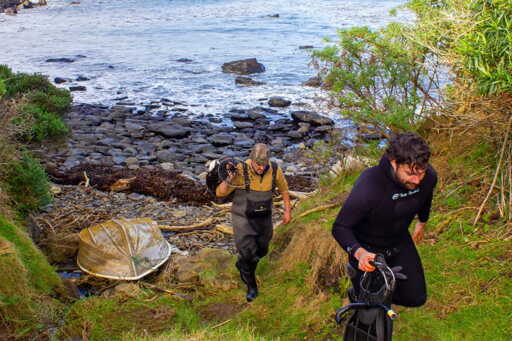
DUNEDIN, New Zealand — At a U.N. meeting in 2015, Aotearoa New Zealand’s then Prime Minister John Key made a major announcement that drew praise from international conservation groups: His administration would turn a swath of waters far larger than the country’s land mass into a marine protected area (MPA). The Kermadec Ocean Sanctuary, planned for New Zealand’s northern waters, would have been one of the largest fully no-take MPAs in the world, but the sanctuary violated Māori fishing rights enshrined decades earlier. Key’s government had done relatively little to consult with Māori groups about the proposal, many of whom resisted the plan, calling for more recognition of their authority and their role in ocean governance. The sanctuary plan fell through. Yet, even as Key’s top-down exercise drew criticism, a more bottom-up approach to marine governance was underway in the country’s far southeast. There, Māori leaders helped develop a network of small MPAs, five of which became official on July 1, 2026, after more than a decade of grassroots and governmental work. A key aim is to protect seabed habitats, offshore canyons, rocky reefs, tidal lagoons and kelp forests. The network, called Te Au Roa o Te Rakihouia, is co-managed by the regional Māori tribe Kāi Tahu (Ngāi Tahu in standard Māori), and the Department of Conservation. The reserves are the first in the country to be co-managed by Indigenous people and the government using shared decision-making and a joint marine ranger team. The network name refers to the long wake…This article was originally published on Mongabay
From Conservation news via This RSS Feed.