

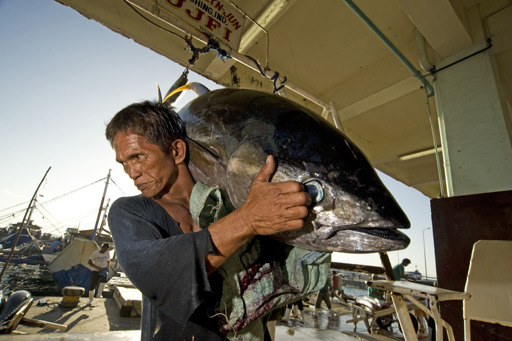
The Philippine Supreme Court has struck down a regulation requiring commercial fishing vessels to continuously transmit their locations and submit electronic catch reports, a decision small-scale fishers say could make it harder to protect coastal grounds already strained by overfishing and competition from larger operators. The high court upheld a lower-court decision that invalidated Fisheries Administrative Order No. 266 (FAO 266), which required all Philippine-flagged commercial fishing vessels to install tracking systems and electronically report catches and other operational information. The court issued its decision on Jan. 21, 2026, and announced it publicly on Aug. 3, 2026. The Department of Agriculture’s Bureau of Fisheries and Aquatic Resources (BFAR) filed a motion for reconsideration of the court’s decision on Aug. 14. Without continuous tracking, fishers say authorities may struggle to detect commercial vessels entering municipal waters — the coastal zone generally extending 15 kilometers (9 miles) from shore and reserved primarily for small-scale local fishers. “If some vessels could still enter municipal waters even when monitoring devices were installed, it could become even worse now that the Supreme Court has declared the requirement unconstitutional,” Pablo Rosales, president of Pangisda Pilipinas, a national fisherfolk alliance, told Mongabay by phone. Some fishers and scientists also raised concerns that greater commercial fishing pressure could further reduce the number of fish available to coastal communities. A skipjack purse seine fishery operation underway on the deck of a Philippine fish carrier/supply boat. Image © Alex Hofford / Greenpeace. Tracking commercial fishing FAO 266 formed part of…This article was originally published on Mongabay
From Conservation news via This RSS Feed.