

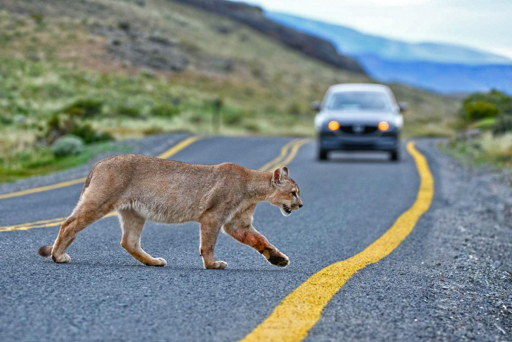
If you’re a black-tailed deer on the Olympic Peninsula in the U.S. state of Washington, you’re always surrounded by friends and family. You are free-range, with abundant food to forage in familiar woods and meadows. But you’re also vigilant because you’re a prey species and your ideal habitat is also home to your top predators: Cascade mountain wolves (Canis lupus fuscus), cougars (Puma concolor) and black bears (Ursus americanus). Avoiding the animals that will hunt you and your fawns is an integral part of how you move across the landscape. Cougars, padding on giant, soundless paws, are to be especially feared, as you are their favorite meal. As such, cougars directly impact where you go to find food, water and rest, and when you do it, according to a new study in the journal Current Biology. The study reinforces the idea that the presence of cougars, also known as pumas, mountain lions and some 40 other names in English, alters how their prey uses the landscape. In doing so, they keep humans safer by pushing the region’s black-tailed deer (Odocoileus hemionus columbianus) away from roads and potential collisions with vehicles. Nationwide, there are 1.6-2.1 million accidents involving deer every year in the U.S., killing 200-440 people and costing about $10 billion a year, according to data cited in a 2025 study. The cats aren’t patrolling the highways and chasing deer away from traffic, of course. “The deer know where they’re most likely to be at risk of an encounter with a…This article was originally published on Mongabay
From Conservation news via This RSS Feed.