

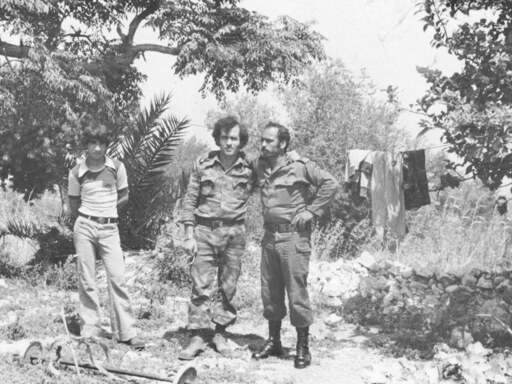

The catastrophic defeat of the regular Arab armies in the June 1967 War had left the burgeoning Palestinian resistance movement as the sole force actively committed to maintaining an armed struggle against Israel.
According to the historian Edgar O’Ballance, the very first fedayeen assault launched against Israel from Lebanese territory took place on 1 June 1965, when a small, clandestine band of Palestinian fighters slipped across the unguarded international boundary and detonated explosives at a house in the border hamlet of Yiftah.
However, this early incident remained an isolated event. It was not until October 1968 that Palestinian commandos began entering southern Lebanon in significant, organised numbers.
The Rise of Border Infiltration
Although the primary operational sanctuaries and command posts for fedayeen cross-border incursions were initially concentrated in the Hashemite Kingdom of Jordan prior to the events of Black September 1970, Palestinian commandos began establishing a tangible military presence in the rugged terrain of southern Lebanon by late 1968.
The official response of the Lebanese state to the prospect of a structured, highly organized fedayeen raiding campaign targeting Israel from Lebanese soil was predictably hostile. This stance fully accorded with Beirut’s long-standing, anxious desire to maintain absolute tranquility along its southern frontier.
As the historian Kamal Salibi observed, whilst the Lebanese authorities might have been willing to quietly condone a strictly limited degree of Palestinian military training within refugee camps on Lebanese territory, the one development they were utterly determined to prohibit was Palestinian commando infiltration from Lebanon into Israel.
While Israel argued that the former international frontier between Palestine and Lebanon could only be regarded as a temporary armistice demarcation line so long as Lebanon remained formally in a state of war with Israel, the Lebanese authorities were desperate not to provide Tel Aviv with any pretext to question this frontier or force even the slightest territorial alteration upon it.
The Structural Limits of the Lebanese State
Nevertheless, three insurmountable structural obstacles combined to thwart Beirut’s desperate efforts to control and suppress Palestinian guerrilla activities in the south.
The first limitation was the acute numerical and technical inadequacy of Lebanon’s armed forces. By 1968, the Lebanese Army had reached a total strength of approximately 13,200 personnel. Such a modest force was severely hard-pressed to enforce state authority or discipline over the rapidly expanding ranks of fedayeen in Lebanon, who were receiving substantial financial, logistical, and diplomatic backing from patron Arab states, most notably Syria.
The second limitation constraining Beirut’s capacity to deal with the armed Palestinians was the historical, skeletal presence of the central government in southern Lebanon. This administrative vacuum granted fedayeen forces relative freedom of operational movement. As Michael Hudson noted in early 1970, the only tangible evidence of Lebanese governmental authority in the small hamlets of South Lebanon was frequently a shabby, one-room police post with a faded national flag hanging over its entrance. Guerrillas were cordially received in these impoverished frontier villages, despite the appalling military danger they carried with them, largely because they ministered to the pressing medical and economic needs of the local peasantry far more effectively than the Lebanese state had ever managed to do.
The third and by far the most formidable obstacle preventing Beirut from curbing the commandos was Lebanon’s chronic, existential lack of consensus regarding its core national identity. Whereas the majority of Lebanon’s Muslim citizens and certain Christian communities (particularly members of the Greek Orthodox sect) viewed Lebanon as an intrinsically Arab state obligated to support the Palestinian national liberation movement, the Lebanese economic and political ruling class – predominantly Maronite, though containing aligned Muslim elites – viewed Lebanon as a neutral mercantile bridge between East and West. This elite urged that the country remain strictly aloof from the broader Arab-Israeli conflict.
In April 1969, the Prime Minister of Lebanon, Rashid Karami, succumbed to political paralysis and tendered his resignation, succinctly summarizing the government’s agonizing dilemma by stating that there were two irreconcilable camps in Lebanon: one asserting that commando action must be conducted from Lebanon regardless of the consequences, and the other maintaining that the commandos represented a mortal threat to Lebanese sovereignty. Consequently, no cabinet could adopt either posture without fatally fracturing the nation.
The Escalation in the Arqub
During the early months of 1969, fedayeen activity within Lebanon was almost exclusively confined to establishing logistics base camps in the remote, rugged foothills of Mount Hermon (the Arqub region) and securing mountain supply trails running into the Arqub from Syrian territory. In time, this semi-autonomous enclave would become widely known as ‘Fatehland‘, named after Harakat Fateh (Fateh Movement), the largest and most politically dominant of the autonomous fedayeen organisations. Gradually, the administrative presence of the Lebanese state completely vanished from the Arqub.
In response, the Lebanese Army took up static defensive positions along the western bank of the Hasbani River in an effort to contain the Palestinians and prevent them from establishing operational staging bases near the old international boundary. Commando activity originating from Lebanese territory was consequently restricted, for the most part, to artillery bombardments and raids targeting Israeli positions in the newly occupied Syrian Golan Heights.
By the spring of 1969, however, fedayeen units began probing westward along the Hasbani River, inevitably provoking armed clashes with the Lebanese Army. The first major military confrontation occurred on 14 April 1969, when the Lebanese Army forcibly evicted armed Palestinians from the strategic village of Dayr Mimas. Open, violent warfare raged throughout the autumn of 1969 as the Lebanese military attempted, with partial success, to bottle up the fedayeen east of the Hasbani River and intercept the flow of arms and reinforcements arriving from Syria.
The Cairo Agreement
On 3 December 1969, active hostilities between the army and the guerrillas were temporarily halted following intense Egyptian diplomatic mediation, culminating in the signing of the secret ‘Cairo Agreement‘ by Lebanese Army Commander Jean Njeim and PLO Chairman Yasser Arafat.
Explicitly designed to regulate complex Lebanese-Palestinian relations, the Cairo Agreement functionally partitioned southern Lebanon into three distinct operational zones:
- The Eastern Sector (The Arqub): The fedayeen were granted virtual autonomy and legal freedom of movement to conduct armed resistance operations.
- The Central Sector: Primary responsibility for territorial defence remained formally with the Lebanese Army, but a limited fedayeen presence in specified, restricted locations was explicitly permitted.
- The Western Sector (Coastal Plain): No armed Palestinians were to be permitted outside the confines of the designated Palestinian refugee camps.
The Geopolitical Trap
In reality, the Cairo Agreement settled nothing, serving merely to codify a temporary stalemate, while severely compromising Lebanese state sovereignty. Fedayeen raids into the occupied Golan Heights continued unabated, and punitive Israeli retaliation against Lebanese civilian infrastructure predictably followed. The Lebanese government found itself caught hopelessly in the middle of a destructive triangular conflict.
As Michael Hudson perceptively observed, a strategic victory for the Lebanese government was directly proportional to its functional capacity to seal off the commandos from Israeli territory, and thereby avert devastating Israeli military reprisals. For the Palestinian commandos, however, such an outcome represented total strategic defeat and the neutralization of their movement. Lebanon’s security gains were inherently the Palestinians’ operational losses. Conversely, enhanced commando access to the Israeli frontier guaranteed severe Israeli retaliation; thus, commando gains translated directly into Lebanese territorial and human losses.
As an aggressive third party to this structural conflict, it was in Israel’s supreme strategic interest to actively hinder any workable modus vivendi between Beirut and the PLO. Tel Aviv achieved this by applying unrelenting military pressure on the Lebanese state, systematically exacerbating internal sectarian divisions and ensuring that the fragile compromise forged in Cairo would ultimately collapse under the weight of fire and political paralysis.
Featured image via the Palestinian Museum Digital Archive
From Canary via This RSS Feed.